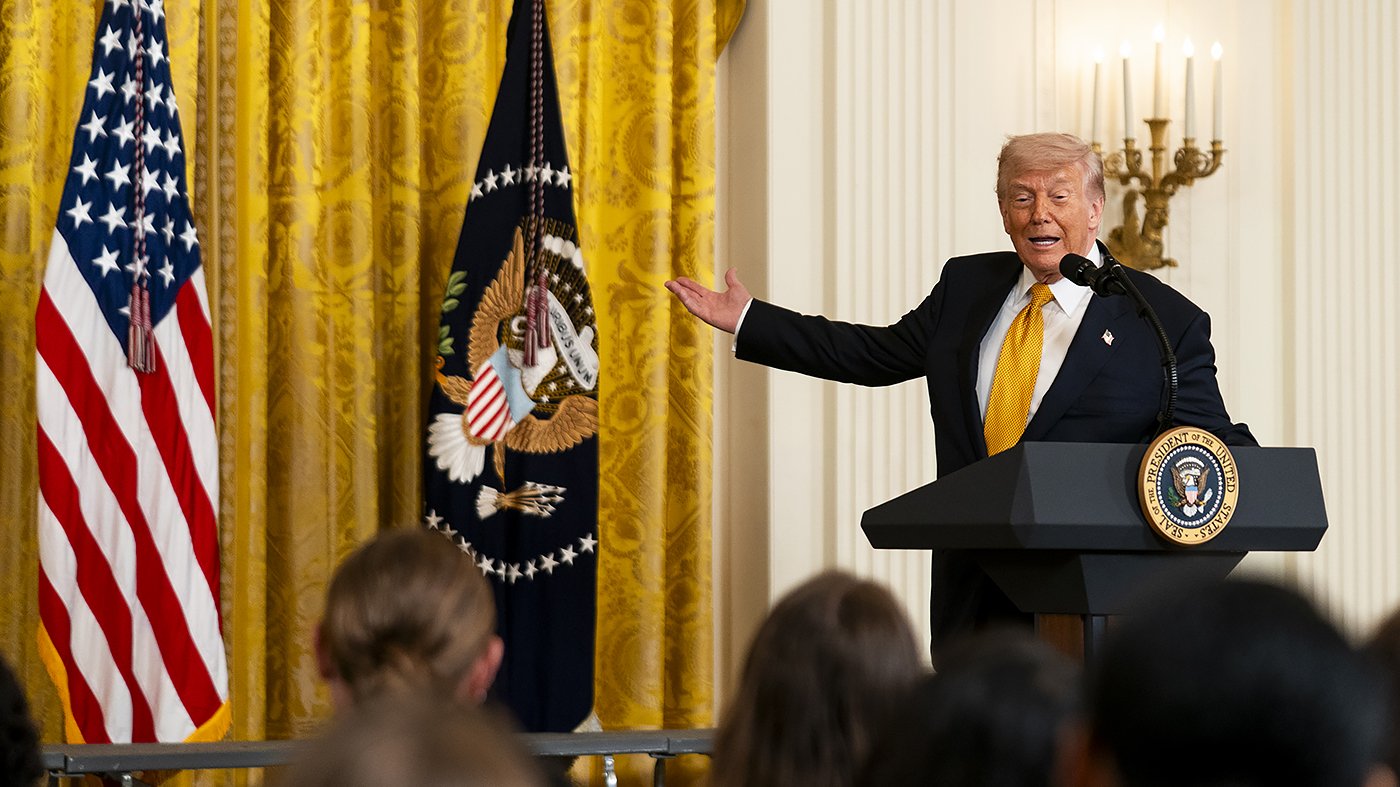
President Trump announced Friday that the White House ballroom is expected to open in September 2028, near the close of his second term. In a post on Truth Social, he framed the project as a response to China's ballroom, writing, “China has a Ballroom, and so should the U.S.A.! It’s under construction, ahead of schedule, and will be the finest facility of its kind anywhere in the U.S.A.” The message included a photo of Trump walking alongside Chinese President Xi Jinping during his recent visit to Beijing.
“Thank you for all the support I have been given in getting this project going. Scheduled opening will be around September of 2028,” Trump added. This marks the first time the president has offered a concrete timeline for the ballroom, which has been under construction after crews began work on the ground floor this week.
The ballroom project has drawn sharp criticism since Trump ordered the demolition of the White House East Wing to make way for the new structure. The National Trust for Historic Preservation filed a lawsuit to block construction, arguing that the plans lacked adequate public review. In April, a federal appeals court allowed underground work to proceed, but legal battles continue.
Lawmakers from both parties have raised alarms over the cost. On Tuesday, the White House submitted a spending plan to Senate Republicans detailing how $1 billion would be allocated for ballroom security. That funding was included in a budget reconciliation proposal from the Judiciary and Homeland Security committees.
The project's price tag has become a political flashpoint, with Democrats and some Republicans questioning the expenditure amid other pressing national priorities. The controversy adds to broader tensions over Trump's second-term agenda, including his confrontations with independent institutions. For instance, the administration recently faced a tough courtroom battle as D.C. Circuit judges grilled Trump's legal team over executive orders targeting law firms.
Trump's emphasis on the ballroom as a symbol of national prestige echoes his frequent comparisons to China. During his Beijing trip, he also claimed Xi Jinping pledged not to arm Iran, though Chinese officials denied that any such commitment was made. The ballroom announcement appears designed to bolster Trump's legacy as a builder, but critics see it as a costly vanity project.
Construction crews are now working on the underground portions of the ballroom, which is expected to host state dinners and other high-profile events. Supporters argue it will enhance U.S. diplomatic capacity, while opponents point to the lack of transparency and the enormous security costs. As the 2028 opening approaches, the ballroom is likely to remain a contentious symbol of Trump's presidency.