President Trump has carried out more military strikes against more nations than any modern U.S. president, a record that sits uneasily alongside his stated ambition to be remembered as a peacemaker. Yet a narrow opportunity for a historic diplomatic breakthrough remains open—one that could redefine his legacy.
The Nuclear Threat: Three Horses of the Apocalypse
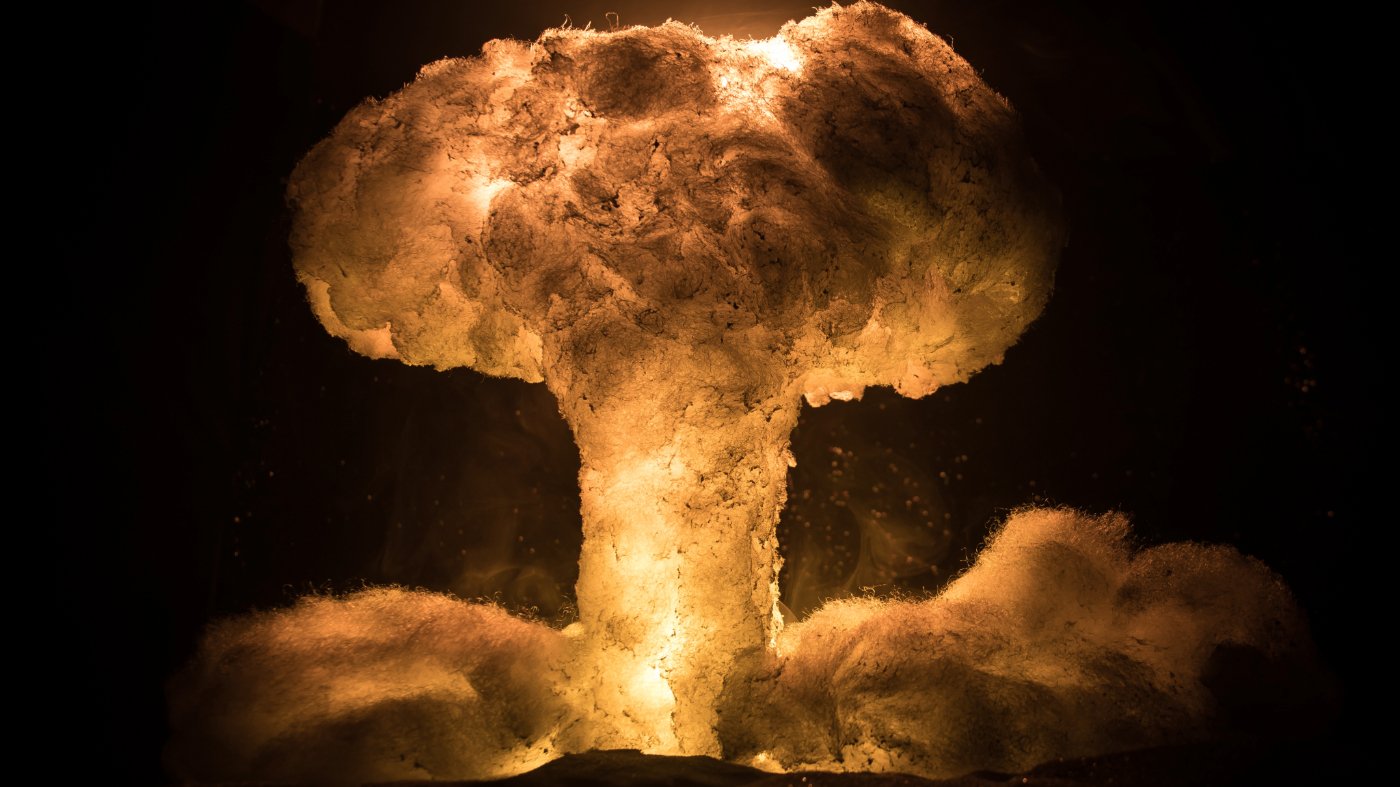
The world today faces three existential threats: climate change, unregulated artificial intelligence, and the spread of nuclear weapons. Of these, nuclear arms are the most immediately dangerous. A single miscalculation or rash decision by a nuclear-armed leader could obliterate civilization in half an hour. The Bulletin of the Atomic Scientists has set its Doomsday Clock at 85 seconds to midnight, the closest humanity has ever been to man-made Armageddon.
America’s president holds sole authority over roughly 100 U.S. nuclear weapons deployed in at least five NATO countries: Belgium, Germany, Italy, the Netherlands, and Turkey. This leaves those host nations vulnerable to retaliation if an impulsive order were ever given. The only permanent solution, experts argue, is to abolish these weapons entirely.
A Treaty Under Strain
The Treaty on the Nonproliferation of Nuclear Weapons (NPT), in effect since 1970, has been signed by 191 countries, including five nuclear powers: the U.S., Russia, China, the United Kingdom, and France. India, Israel, and Pakistan never joined; North Korea withdrew in 2003 to build its arsenal; Iran has violated the treaty while remaining a signatory. Over the past 75 years, more than 20 arms-control agreements have cut global warhead numbers from 60,000 to about 12,187. But the last remaining pact between the two nuclear superpowers—Russia and the U.S.—expired in February. Both nations are now expanding or modernizing their arsenals, while China races to catch up.
Trump’s Record: Bombs and Threats
Trump has authorized hundreds of attacks on or in countries including Iraq, Syria, Afghanistan, Somalia, Yemen, Nigeria, Venezuela, and Iran. He has threatened or hinted at military operations in Colombia, Mexico, Cuba, and even Greenland. His administration renamed the Department of Defense to the Department of War and is seeking a $1.5 trillion military budget for fiscal 2027—the largest ever. One of his closest advisers, Stephen Miller, openly argues that “the real world is governed by strength, force, and power.” Miller and Defense Secretary Pete Hegseth posture like the muscle-bound duo from Saturday Night Live, offering to “pump you up.”
Trump’s most consequential military mistake, critics say, was tearing up the Obama-era Iran nuclear deal. He promised a better agreement but instead launched attacks on Iran. Bombing countries back to the Stone Age, however, is no substitute for arms control. As internal GOP debates over Iran policy show, even within his own party there are deep splits between hawks and war-weary senators.
The Umbrella Is Leaking
For decades, the U.S. has discouraged nuclear proliferation by extending a “nuclear umbrella” over allies—promising to defend them if attacked. This covers 31 non-nuclear NATO members, Japan, the Philippines, South Korea, Australia, and, informally, Taiwan. In 1969, the U.S. even threatened nuclear retaliation against the Soviet Union if it attacked China. But Trump has punched holes in that umbrella by casting doubt on America’s commitment. As a result, NATO members are considering expanding their own nuclear capabilities, and public support for nuclear arms has grown in South Korea and Japan.
Geopolitical tensions add fuel to the fire. Vladimir Putin has made overt nuclear threats against countries helping Ukraine. Trump himself threatened that Iran’s “whole civilization will die tonight, never to be brought back again” if it blocked oil shipments through the Strait of Hormuz.
A Narrow Path to Redemption
Despite his record, Trump could still offer the world an artful deal: a stepwise reduction of the U.S. nuclear arsenal toward complete elimination, contingent on reciprocal moves by other nuclear powers. Parties to the NPT would also agree to strengthen compliance monitoring and impose harsher penalties for cheating. Such a proposal would require Trump to abandon the brute-force counsel of advisers like Miller and instead embrace the kind of diplomacy that has eluded him.
Most of the world agrees that a nuclear war can never be won and should never be fought. The question is whether Trump will seize this fleeting moment to turn his bellicose record into a genuine peace legacy—or let the opportunity slip away.