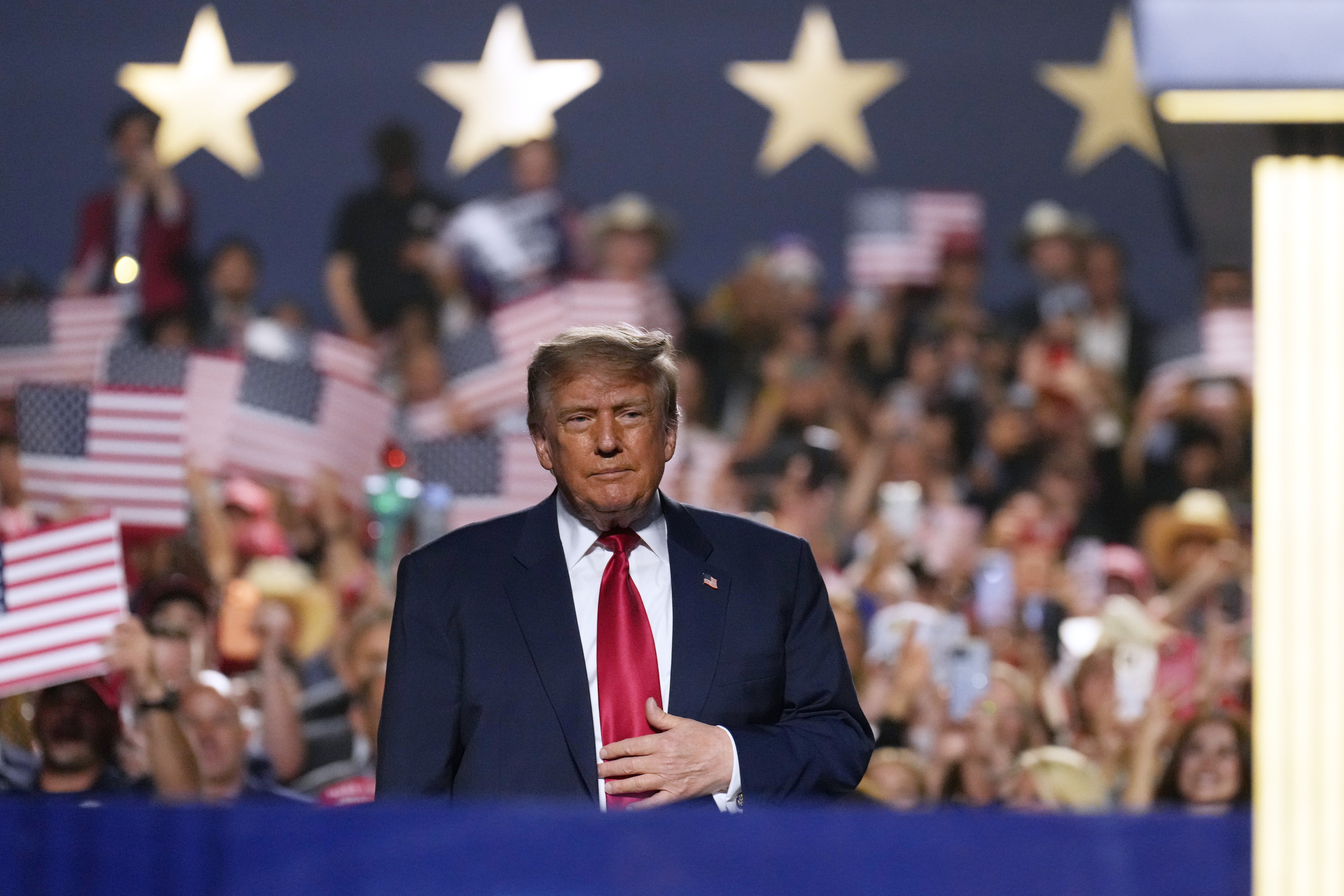
At the Republican convention in Dallas, Donald Trump turned a midterm election into a personal rally, asking voters to "pretend that I'm on the ballot." That's an invitation worth accepting—not for the spectacle, but for a clear-eyed look at his performance.
The convention itself was a study in Trump's grip on the GOP. He had attendees raise their right hands and pledge allegiance to the "greatest president in the history of the United States," then joked about cheating in elections. The moment was bizarre, cringeworthy, and deeply inappropriate for a sitting president. But it also highlighted a familiar pattern: every provocation becomes the story, pushing aside substantive debate.
Rather than get lost in another round of outrage, it's more useful to apply a business lens. Trump has spent his career touting his executive prowess, so let's evaluate him on key performance indicators—his own.
Approval and the Economy
Start with his approval rating. The latest Reuters/Ipsos poll puts him at 33 percent, the lowest of his presidency, down from 47 percent at the start of his second term. Among independents—the voters he needs to win—Democrats lead by 36 to 22 percent in congressional preferences. That's a striking signal for a president who wants the midterms to be a verdict on him.
On the economy, Trump's record is mixed. He won office partly on anger over affordability, yet 71 percent disapprove of his handling of the cost of living, including four in ten Republicans. The economy hasn't collapsed, but prices remain a sore spot. He does deserve credit for a quieter border—a key promise he's largely kept.
Foreign Policy and the Wars
Trump's foreign policy KPIs are more troubling. He promised to avoid prolonged wars, but the U.S. is now seven months into a conflict with Iran. The Strait of Hormuz is disrupted, energy prices have risen, and the fighting threatens to spread through Yemen and the Bab el-Mandeb strait. There may be arguments for confronting Iran, but it's not what he sold to voters—he promised strength would bring peace.
On Ukraine, Trump repeatedly claimed he could end the war in 24 hours, even before taking office. Nearly 20 months later, the war grinds on. American negotiators are still trying to broker a deal, but Russia and Ukraine remain far apart. Perhaps no president could resolve this quickly, but that's beside the point: Trump set his own metric, and he's failed it.
The Verdict
Trump has supplied his own benchmarks for years: wars would end, prices would fall, adversaries would respect strength, and his dealmaking would succeed where traditional diplomacy failed. Some promises have been kept; many have not. The Dallas convention showed a party leaning into fear, but voters are focused on costs.
As the midterms approach, Trump wants a referendum on himself. Voters should oblige—not out of adoration or hatred, but by checking the dashboard. Look at the promises, the numbers, and the state of the world after nearly two years of his presidency. That's the real test. And as his own KPIs show, the results are far from a triumph.