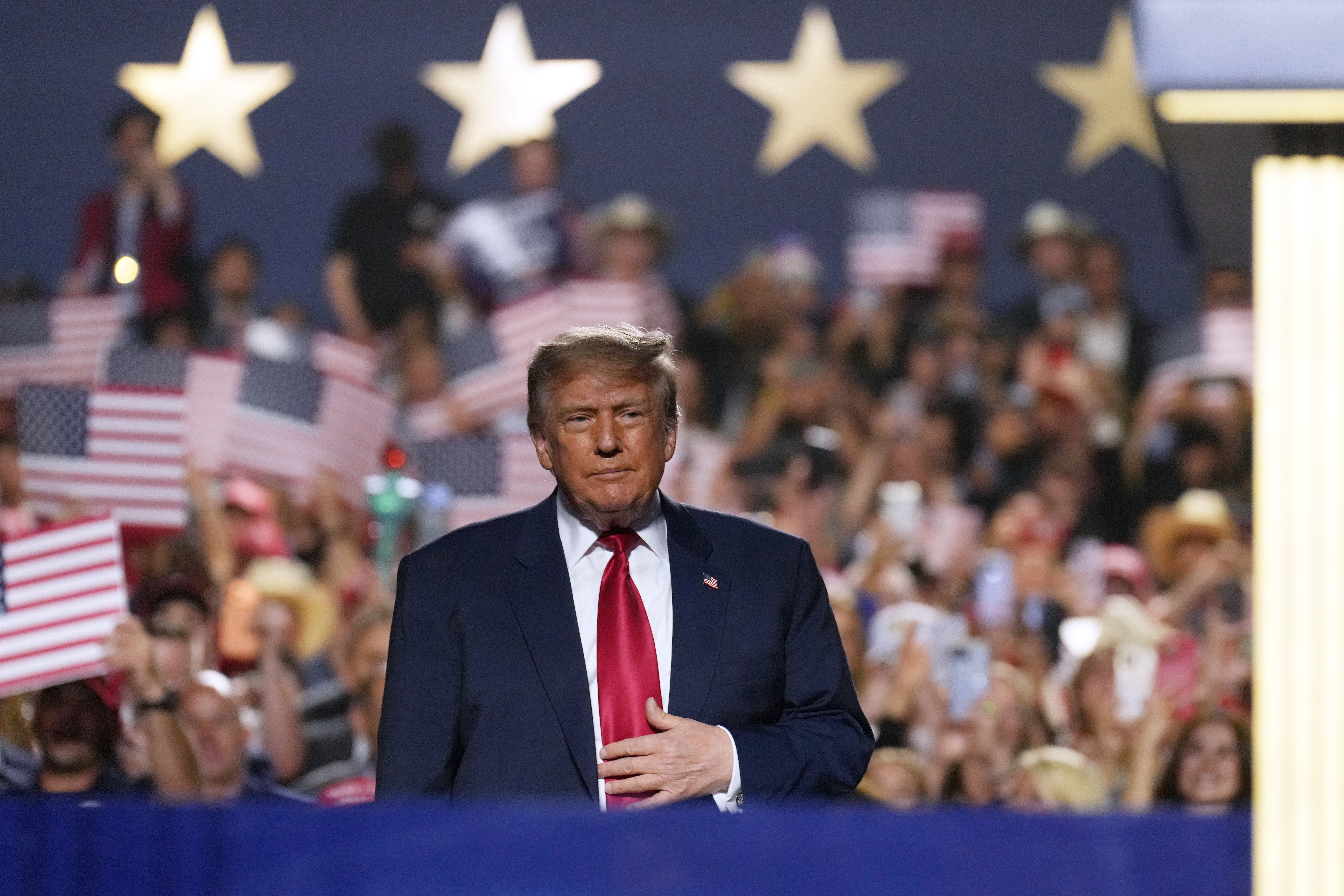
At the Republican convention in Dallas, Donald Trump turned a midterm election into a personal rally, complete with a pledge to the "greatest president in the history of the United States." He even joked about cheating in elections—an inappropriate remark from a sitting president who has long made baseless claims about voter fraud. But the more useful moment came when he told voters to "pretend that I'm on the ballot." Let's take him up on that.
Trump has always asked to be judged as an executive. So let's use an executive tool: a performance review. His own promises and metrics are the measure. And by those, the record is decidedly mixed.
Approval and the Economy
Trump's approval rating has sunk to 33 percent in the Reuters/Ipsos poll—the lowest of his political career. He started his second term at 47 percent. Among independents, the numbers are even more striking: they prefer Democratic congressional candidates by 36 to 22 percent. These are snapshots, not final verdicts, but they are a key performance indicator.
The economy was a central reason for his return to office. Voters were angry about affordability. Today, 71 percent disapprove of his handling of the cost of living, including four in ten Republicans. The economy hasn't collapsed, and there are genuine wins—the border is notably quieter, a KPI where he deserves credit. A fair review counts both wins and losses.
Foreign Policy Promises vs. Reality
Trump ran as the president who would keep America out of prolonged wars. Now, the U.S. is in its seventh month of a war with Iran, with no end in sight. The Strait of Hormuz is disrupted, energy prices have risen, and the conflict threatens to widen through Yemen and the Bab el-Mandeb. There may be arguments for confronting Iran, but Trump's original promise was that strength would produce peace.
On Ukraine, Trump claimed he could end the war in 24 hours, even before taking office. Nearly 20 months into his presidency, the war continues. American negotiators are still trying to broker a settlement, but Russia and Ukraine remain far apart. Ukrainians are bracing for another winter of attacks. Trump didn't campaign on the complexity of the conflict; he promised a quick fix.
The Dashboard Test
The value of applying KPIs to Trump is that we don't have to invent the metrics—he supplied them himself. Wars would end. Prices would fall. America would prosper. Adversaries would respect strength. Some promises have been kept; others haven't.
As the midterms approach, Trump wants voters to pretend he's on the ballot. They should—not out of adoration or hatred, but to look at the dashboard. The promises, the numbers, the world he inherited versus the world he's created. That's the real test for November.