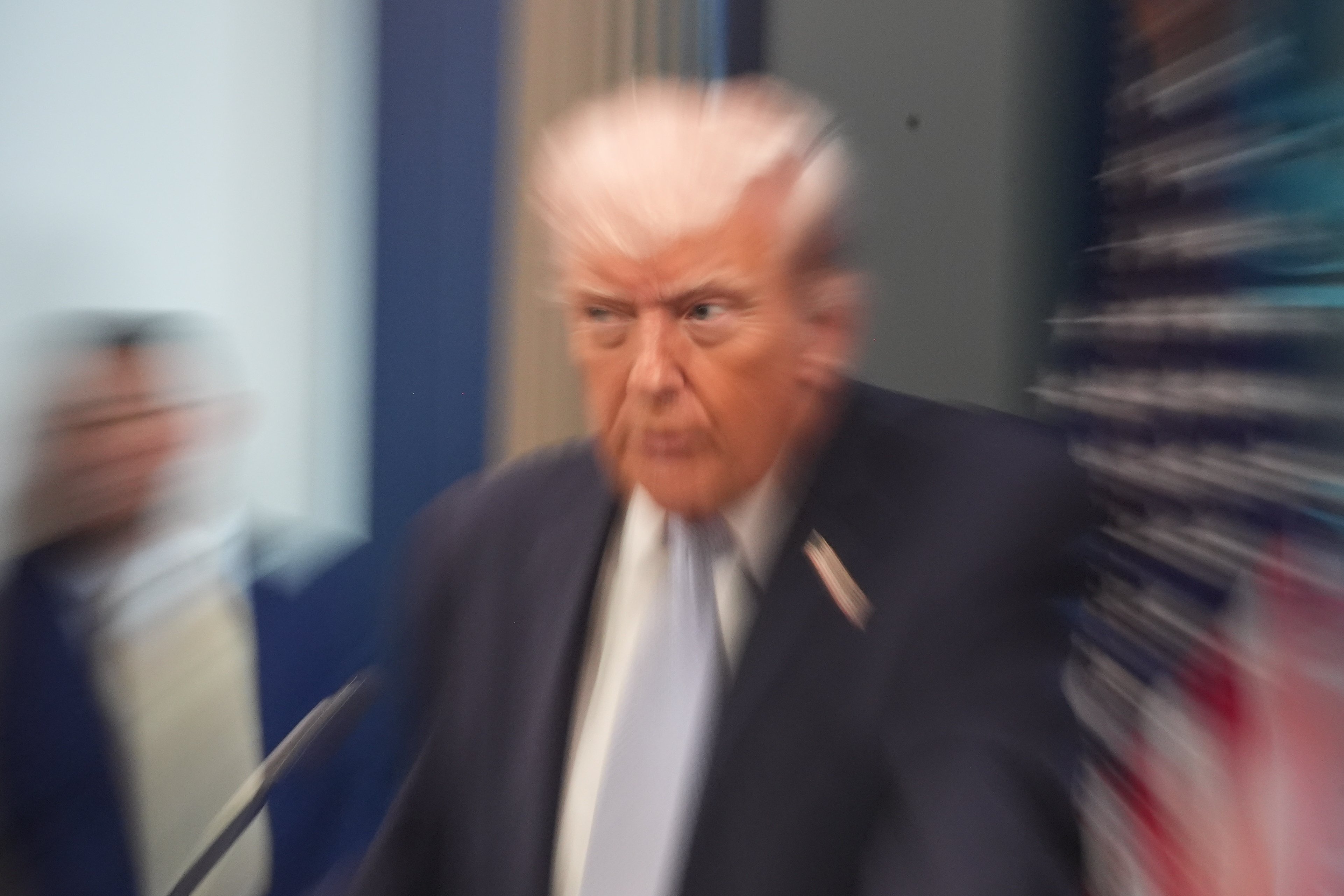
On Easter Sunday, President Donald Trump issued a public threat against Iran via his social media platform that has sent shockwaves through Washington and global capitals. The message, delivered in crude and provocative language, warned Iranian authorities to "Open the F---in' Strait" of Hormuz or face severe consequences, punctuated with the phrase "Praise be to Allah." This was not an offhand comment but a deliberate, published statement directed at a geopolitical adversary during a period of heightened military tension.
The nature and timing of the communication have forced a previously theoretical Washington conversation into the realm of immediate political reality: the question of presidential fitness and the constitutional mechanisms designed to address it. The episode represents what multiple officials have described as a direct challenge to the stability of executive decision-making at a critical juncture.
A Constitutional Safeguard Reconsidered
The 25th Amendment to the Constitution, designed to ensure continuity of government when a president is unable to discharge duties, has long been considered a political third rail. Its invocation has been viewed as a remote, almost unthinkable option. However, analysts and some lawmakers argue that threshold may no longer be hypothetical. The amendment exists not as a partisan tool but as a protective measure for the republic, intended for moments when the normal checks on executive power prove insufficient.
This debate transcends typical policy disagreements. It centers on the core capacity required for the office: measured judgment, strategic coherence, and an understanding of the global weight of presidential communication. When a president's words become erratic or inflammatory, the risks are concrete. Allies recalibrate, adversaries probe for weakness, and financial markets react with volatility. The Strait of Hormuz is a tangible global energy chokepoint; threats concerning it carry immediate implications for oil prices, military postures, and regional stability, as detailed in our coverage of the ongoing U.S. military strikes on Iranian targets.
The Institutional Amplification of Risk
A deeper concern underpinning the discussion is the modern structure of executive power. Decades of congressional deference and bureaucratic alignment have consolidated immense authority within the presidency. This system functions only if the individual wielding that power exercises restraint. When that foundational assumption is in doubt, the system does not correct—it amplifies the potential for miscalculation. The Pentagon's abrupt cancellation of a critical Iran briefing ahead of the president's deadline exemplifies the institutional disruption such rhetoric can cause.
Critics argue that normalizing unprecedented behavior poses a greater danger than confronting it. There is a tendency in political circles to rationalize volatility as unconventional strategy or to await a more definitive crisis before acting. Constitutional safeguards, however, are designed to prevent crises from reaching an irreversible point, not to respond after the fact.
A Bipartisan Threshold Crossed
Initiating a conversation about the 25th Amendment is not an act of removal but a sober acknowledgment that a line has been crossed. It is a call to evaluate, in good faith, the mechanisms the nation's founders established for precisely this category of concern. The discussion is inherently uncomfortable and politically explosive, guaranteed to draw accusations of opportunism from all sides.
Yet the alternative—accepting that the political system must absorb any level of presidential conduct, no matter how destabilizing—may represent a greater constitutional failure. The reaction has not been confined to opposition voices; significant figures within the Republican foreign policy establishment have expressed alarm. Notably, prominent conservative commentator Tucker Carlson publicly condemned the threat as 'vile', while reports indicate broader GOP support for a conflict with Iran is wavering.
The immediate global repercussions are already unfolding. Iran has reportedly begun mobilizing civilian defenses ahead of the president's deadline, and key allies like the UK have felt compelled to publicly urge caution. The situation underscores that in an interconnected world, presidential rhetoric is never just words—it is a catalyst for action and reaction on a global scale.