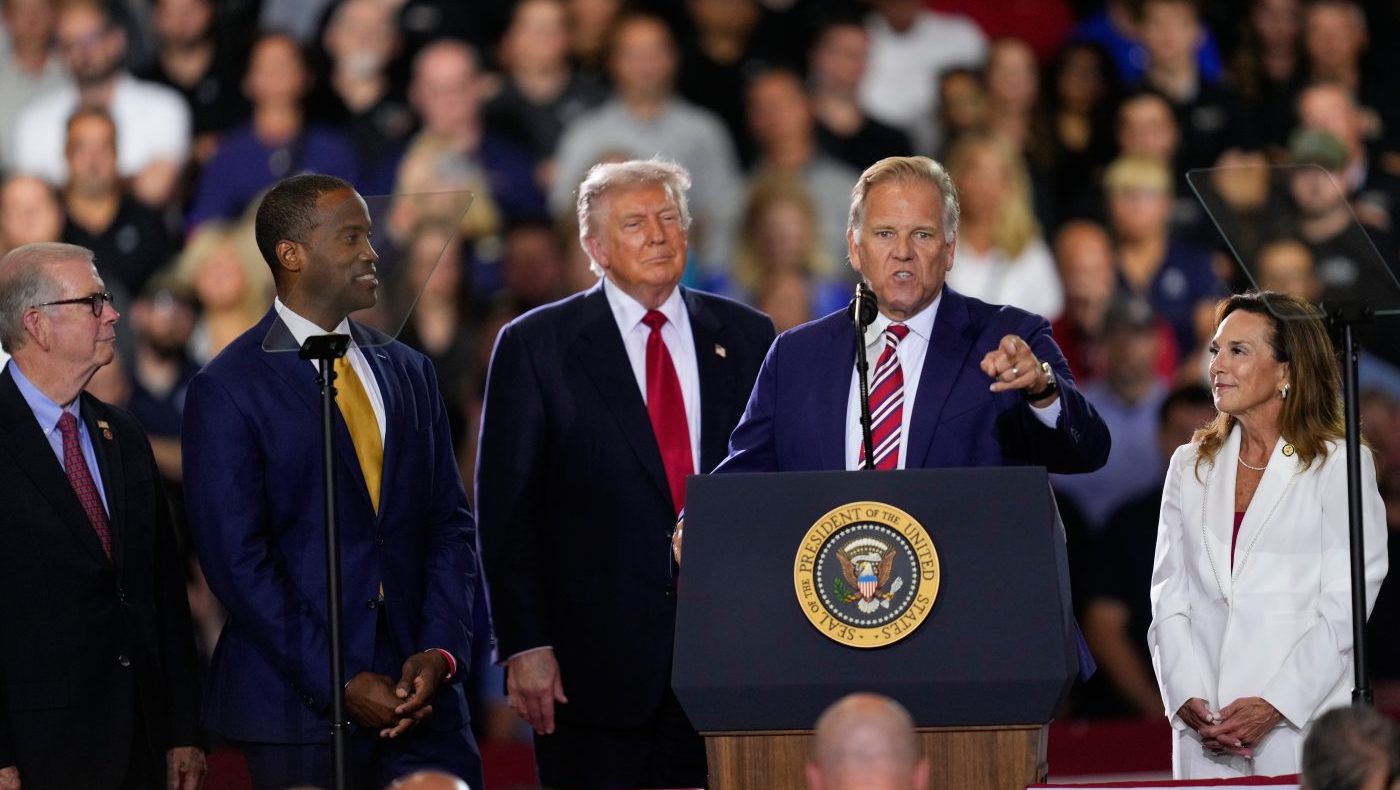
Three months before the general election, Michigan Democrats are grappling with internal divisions after a primary that exposed a near-even split between the party's progressive and centrist wings. But strategists say President Trump's presence on the ballot could be the glue that holds them together in the race against Republican Mike Rogers.
The primary saw Rep. Haley Stevens, the establishment-backed candidate, lose to Abdul El-Sayed, a progressive former health official. Despite the setback, party leaders quickly urged unity, citing the threat of a Trump-aligned Senate. In her concession, Stevens warned that Trump and Rogers "want us to come out of this primary tired and divided," while Governor Gretchen Whitmer, who had backed Stevens, called Republicans a "rubber stamp for the Trump agenda" and endorsed El-Sayed. The two appeared together at a unity breakfast on Thursday, embracing on stage.
El-Sayed has already set an aggressive tone against Rogers, who he says left Michigan for Florida to "lick every single boot Donald Trump owns to beg for his endorsement." Democrats are banking on Trump's unpopularity in the state—where his approval sits at 37 percent, down from 45 percent in January—and his economic record, particularly tariffs that have hit Michigan's auto industry and trade with Canada.
"Frankly I'm not that worried as long as Abdul talks more about costs and corruption than today's intraparty fight. Democrats really hate Trump," said Andrew Mamo, a Democratic operative who advised Mallory McMorrow before she suspended her Senate bid. Even some Republicans concede Trump's polarizing effect. "They will eat whatever shit sandwich is put in front of them if the end goal is putting a check on Trump in Congress," said Jason Cable Roe, a Michigan-based GOP strategist.
Trump's approval rating in Michigan is a key factor, with Democrats pointing to his handling of the economy and foreign policy. "The president ran the economy into a ditch with tariffs and a war of choice in the Middle East. As always, Donald Trump is the Sword of Damocles for Republicans: no one turns out voters like Trump, but no one enrages voters like Trump," said Adrian Hemond, a Democratic consultant.
However, not all Democrats are eager to unify behind El-Sayed, whose staunch anti-Israel stance has drawn criticism. Sen. John Fetterman (D-Pa.) said he couldn't support someone who "embraces people that love Hamas or that thinks America deserved 9-11," referring to El-Sayed's campaign appearances with left-wing influencer Hassan Piker, who made controversial comments about Israel and the September 11 attacks. Fetterman argued El-Sayed's victory puts the seat in play for Republicans, saying he could "100 percent" lose to Rogers.
Recent polling shows a tight race, with an EPIC-MRA poll giving Rogers a three-point lead, within the margin of error. DDHQ's forecast gives El-Sayed a 55 percent chance of winning. Republicans, including Trump, have celebrated El-Sayed's nomination, with Trump calling him a "Communist loser who hates Jews and Israel" on Truth Social. The Senate Leadership Fund and the National Republican Senatorial Committee have already launched ads labeling El-Sayed "dangerously radical."
Trump escalated his attacks at a Las Vegas event on Wednesday, saying "This guy hates Jews" and "hates Israel." Some Republicans, however, worry these attacks are counterproductive. Roe called Trump's remarks "a mistake," saying Trump is "helping Abdul rally the moderates within the Democratic coalition to him because Trump is making this a binary choice between Trump and El-Sayed." He advised, "Let Mike Rogers run his campaign and stay out of it."
As the general election approaches, the question remains whether El-Sayed can maintain Democratic unity and overcome the GOP's offensive. The party's success may hinge on Trump's continued presence as a rallying point, even as internal fractures persist.