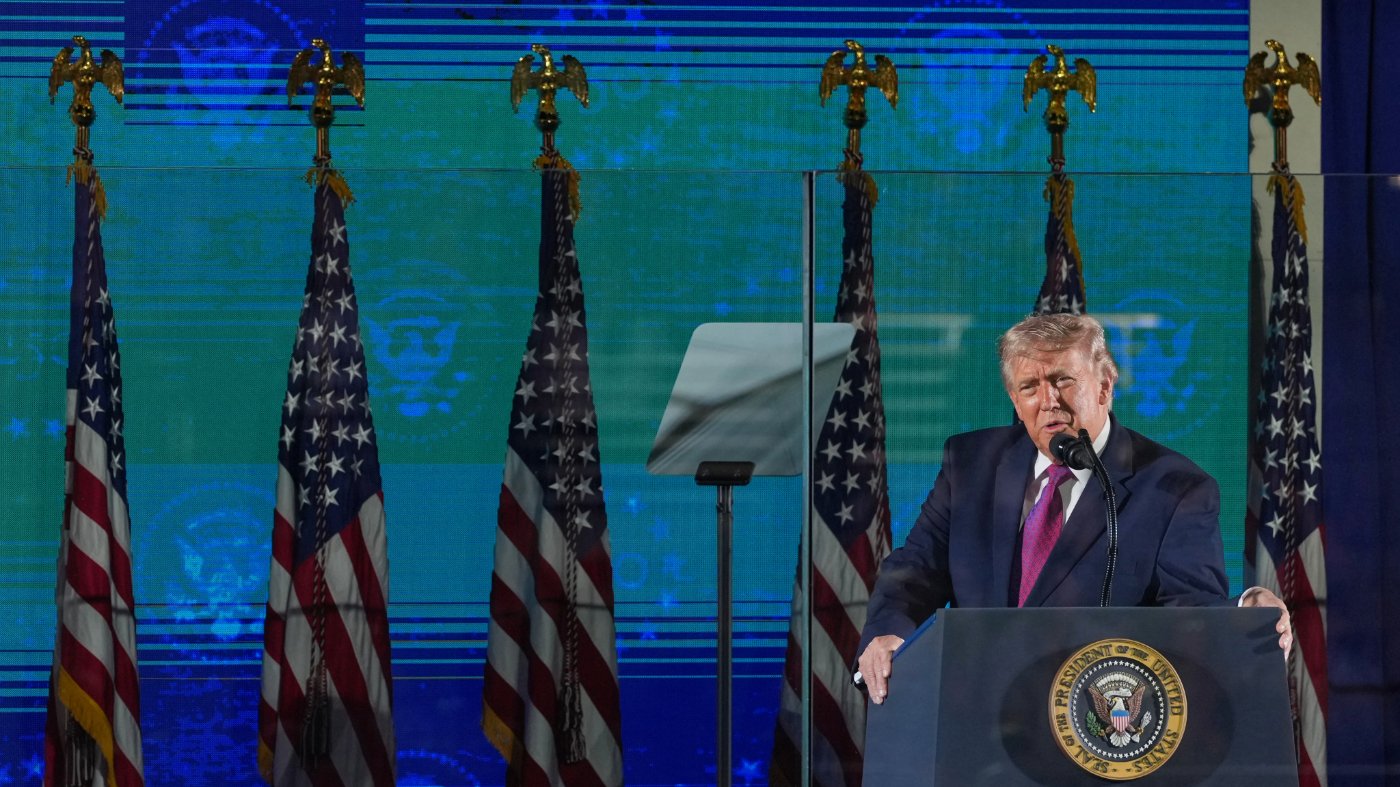
President Donald Trump's declaration that America will never be a communist country carries a direct message for Venezuela, where his administration is pursuing a phased strategy to dismantle 25 years of Chavista rule. Speaking ahead of the nation's 250th anniversary celebrations, Trump vowed to 'vanquish communism quickly,' a pledge that aligns with ongoing U.S. operations in Caracas.
The cornerstone of this effort is Operation Absolute Resolve, launched January 3, which succeeded in capturing and extracting Nicolás Maduro. Six months later, the administration faces questions from some critics who argue the approach is empowering remnants of the communist regime. However, the White House insists it is methodically dismantling the dictatorship's infrastructure, not embracing it.
The three-phase plan—stabilization, economic recovery, and transition—remains intact despite the devastating twin earthquakes that struck Venezuela on June 24. The U.S. has learned from past interventions in Libya and Afghanistan, opting for precision actions designed to avoid chaos, violence, or anarchy. As CIA Director John Ratcliffe and Joint Chiefs Chairman Dan Caine visited Venezuela post-operation, their presence signaled hands-on assessment rather than improvisation.
In just six months, the administration has pressured the regime into releasing political prisoners, guaranteeing baseline freedoms of expression and assembly, and laying groundwork for a credible electoral council. On security, the U.S. secured the handover of highly enriched uranium—a feat unachieved for over three decades—captured a Hezbollah terrorist, eliminated the leader of the Tren de Aragua gang, and facilitated the first arrival of Israel Defense Forces in Venezuela for earthquake response.
Economically, the U.S. cut oil flows to Cuba, boosted Venezuelan production to an estimated 1.2 million barrels per day, and resumed relations with the International Monetary Fund and other agencies. More than 2,000 U.S. troops are now on the ground coordinating humanitarian aid and security operations in the earthquake's aftermath, highlighting the Chavista military's incompetence.
The path forward includes returning opposition leader María Corina Machado, ending the Rodríguez Cabello junta, unconditionally releasing all political prisoners, dismantling the police state, and holding free elections. As Trump's Mount Rushmore speech made clear, the U.S. is committed to ensuring a new Venezuela is not built on old dictatorial foundations.
Broader Context
This approach contrasts with tensions elsewhere, such as Trump's push for Greenland and clashes with NATO allies over spending and Iran. The administration's Venezuela strategy reflects a broader doctrine of 'peace through strength,' aiming to avoid the mistakes of previous interventions while pursuing regime change through calibrated pressure.
For now, the situation in Venezuela remains far from perfect but markedly different from six months ago. The question is whether Trump's anti-communism pledge will translate into lasting change—or become another chapter in a long history of U.S.-Venezuela struggles.