President Donald Trump on Monday flatly refused to apologize to Pope Leo XIV for his recent criticism, escalating a public dispute with the first American pontiff over the administration's foreign policy, particularly its approach to Iran.
When questioned by reporters outside the Oval Office about whether he owed the Pope an apology, Trump responded, "No, I don't." The president justified his stance by asserting that Pope Leo "said things that are wrong" and was "very much against what I'm doing with regard to Iran." Trump emphasized his position that "you cannot have a nuclear Iran" and suggested the Pope "would not be happy with the end result" of the administration's strategy.
Social Media Broadside Preceded Remarks
The president's comments followed a lengthy post on his Truth Social platform on Sunday, where he directly attacked the Pope's stance. In the post, Trump labeled Pope Leo "WEAK on Crime, and terrible for Foreign Policy," and wrote, "I don't want a Pope who thinks it's OK for Iran to have a Nuclear Weapon." He also referenced the Pope's disapproval of American military actions in Venezuela, further framing the disagreement as one of fundamental policy.
Trump told the press corps that his social media criticism was merely "just responding to Pope Leo," who had publicly voiced his disagreement with the administration's handling of the Iran conflict. "So, we believe strongly in law and order," Trump said. "And he seemed to have a problem with that, so there's nothing to apologize for. He's wrong."
Praise for the Pope's Brother
In a notable contrast, Trump praised the Pope's brother, Louis, calling him "a big MAGA person, and he's a great guy." This sentiment echoed his social media post, where he wrote of Louis, "He gets it, and Leo doesn't!" The comment highlights how Trump often frames policy disagreements through personal loyalty and alignment with his political movement.
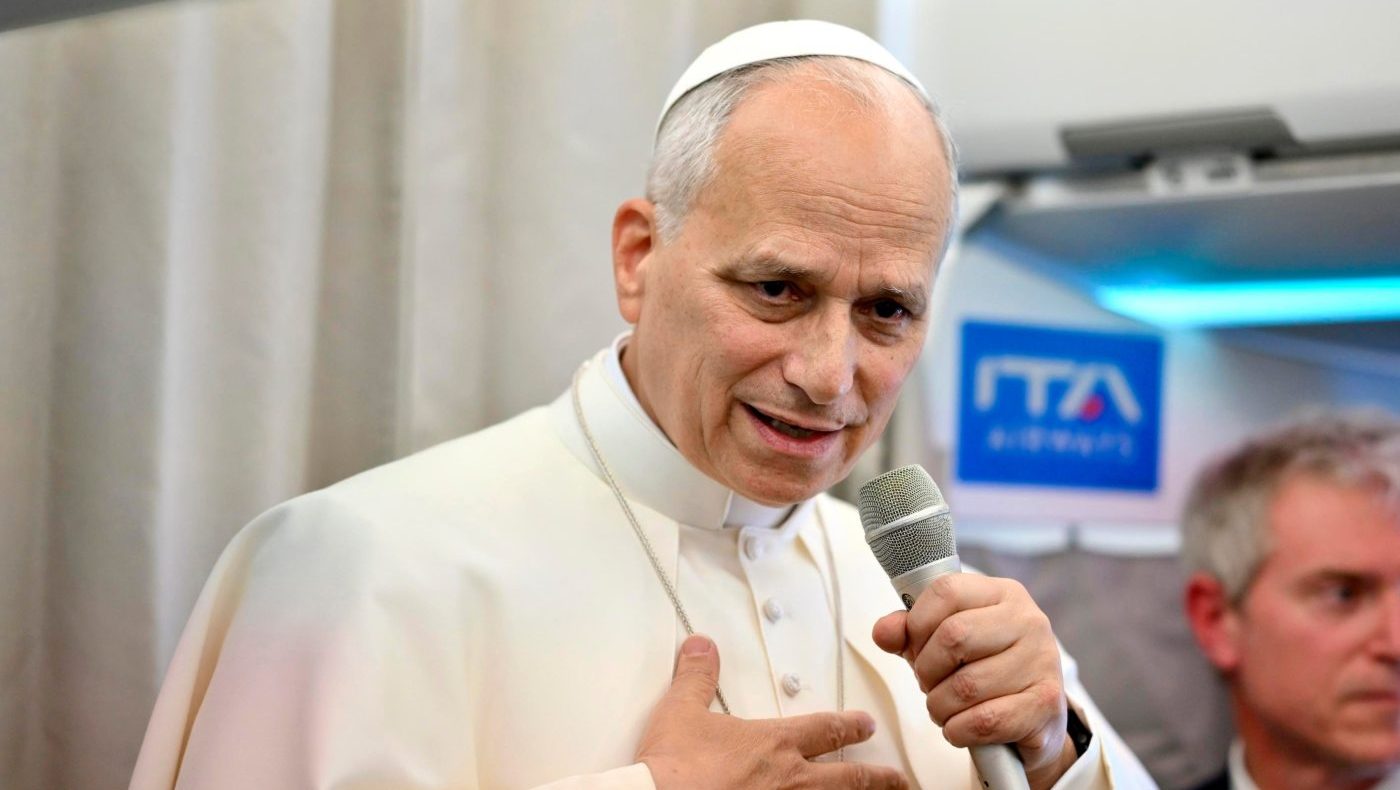
The feud was ignited on Saturday when Pope Leo publicly denounced what he called the "delusion of omnipotence" fueling the war with Iran. The Pope pushed back against Trump's criticism on Monday, stating he does not have "fear of the Trump administration." This exchange marks one of the most direct confrontations between a sitting U.S. president and a pontiff in recent history, intersecting high-stakes geopolitics with religious moral authority.
The dispute comes amid a tense period in U.S. foreign policy. The administration's recent enforcement of a Strait of Hormuz blockade followed the collapse of talks with Iran, a move that has drawn international concern and now, explicit papal condemnation. This incident is part of a pattern where Trump has publicly clashed with institutions and figures that question his approach, from attacking judicial appointees to facing growing pressure on GOP leadership over their response to his conduct.
The president's refusal to back down underscores his administration's commitment to a hardline stance against Iran, regardless of diplomatic or moral criticism. It also reflects his consistent political style of direct confrontation, a tactic seen in other controversies such as when he had to remove an AI-generated image after conservative backlash. The standoff with the Vatican is likely to further polarize opinions on U.S. interventionist policy and the role of moral leadership in global conflicts.