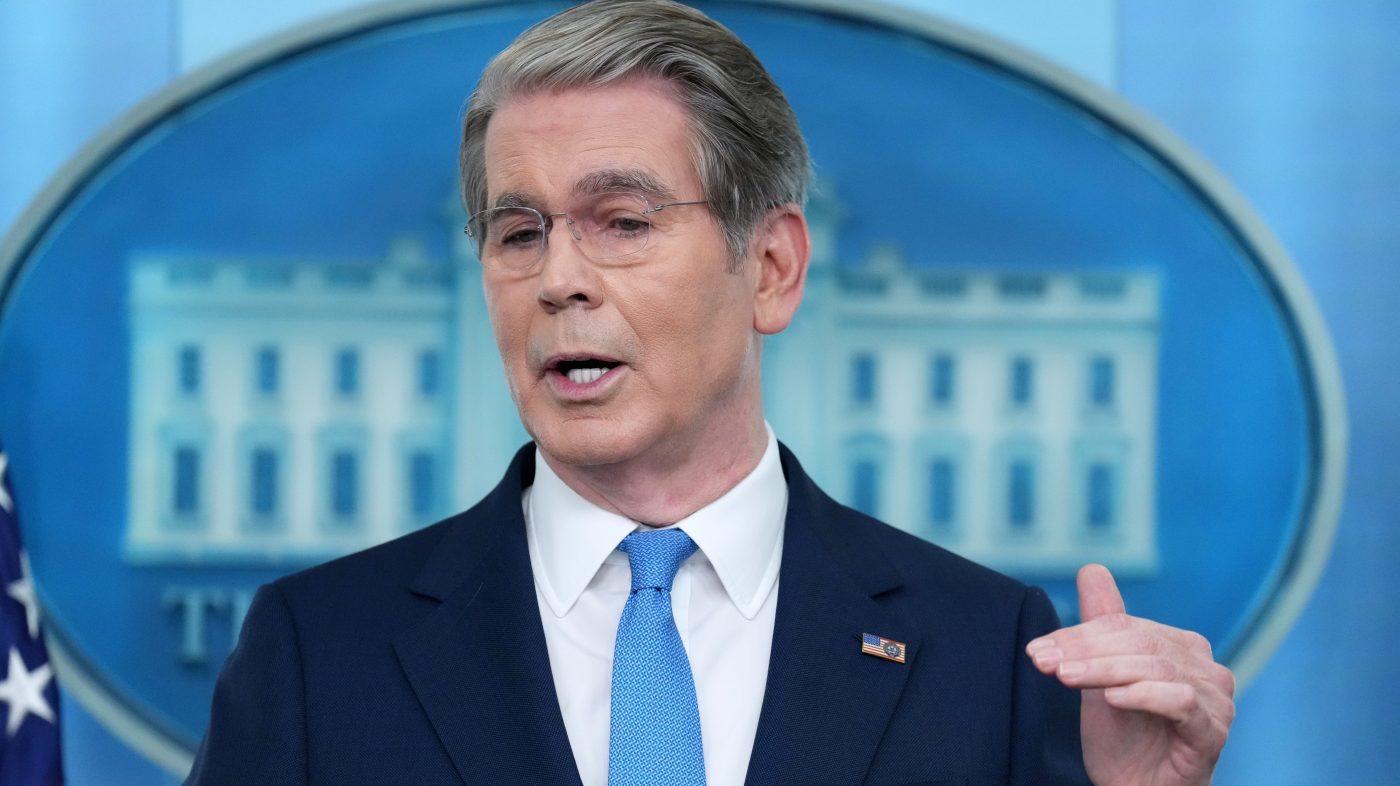
Treasury Secretary Scott Bessent sidestepped repeated questions about a reported memorandum of understanding between U.S. and Iranian negotiators during an unexpected turn at the White House press briefing on Thursday. When pressed on the agreement, Bessent cautioned reporters that it would be “a mistake to get out ahead of the president,” emphasizing that President Trump has not yet given formal approval.
Bessent acknowledged that “the teams have been going back and forth” but stressed Trump’s firm conditions. “President Trump has made it very clear — he talked about it at the Cabinet meeting — that he has several red lines,” Bessent said, referencing the administration’s demand that Iran surrender its highly enriched uranium and forswear any pursuit of nuclear weapons — a position Tehran has consistently rejected.
U.S. officials are also insisting on the full reopening of the Strait of Hormuz, a critical chokepoint for global energy supplies. Bessent reiterated Trump’s stance: “He’s not going to take a bad deal. He’s going to make a great deal for the American people.”
When asked to confirm the existence of a tentative agreement, Bessent replied, “Everything depends on what the president wants to do.” He added that he had not spoken with Trump prior to the briefing.
Earlier Thursday, U.S. sources confirmed that negotiators had reached a 60-day memorandum of understanding aimed at extending the Middle East ceasefire and reopening the Strait of Hormuz, through which 20 percent of the world’s oil and gas flows. The deal also commits both sides to negotiations on Iran’s nuclear enrichment program and U.S. sanctions, according to the agreement.
The tentative pact includes a provision barring Iran from imposing tolls on commercial vessels transiting the strait and requires Tehran to begin demining the waterway. The agreement still needs approval from senior Iranian leadership.
If commercial shipping is restored, the U.S. Navy blockade would be lifted, and Washington would issue sanctions waivers allowing Tehran to sell its oil. Bessent’s evasions come amid broader tensions over Iran’s actions in the region; the Treasury recently sanctioned Iran's new Strait of Hormuz authority, calling it an extortion scheme. Meanwhile, some lawmakers have raised concerns about the administration’s diplomatic push, with Auchincloss questioning Trump's Abraham Accords push amid the Iran talks.
Bessent’s careful wording suggests the administration is wary of overpromising before a final deal is sealed, but it also leaves room for Trump to walk away if his conditions are not met. For now, the ball is in Tehran’s court — and in the president’s hands.