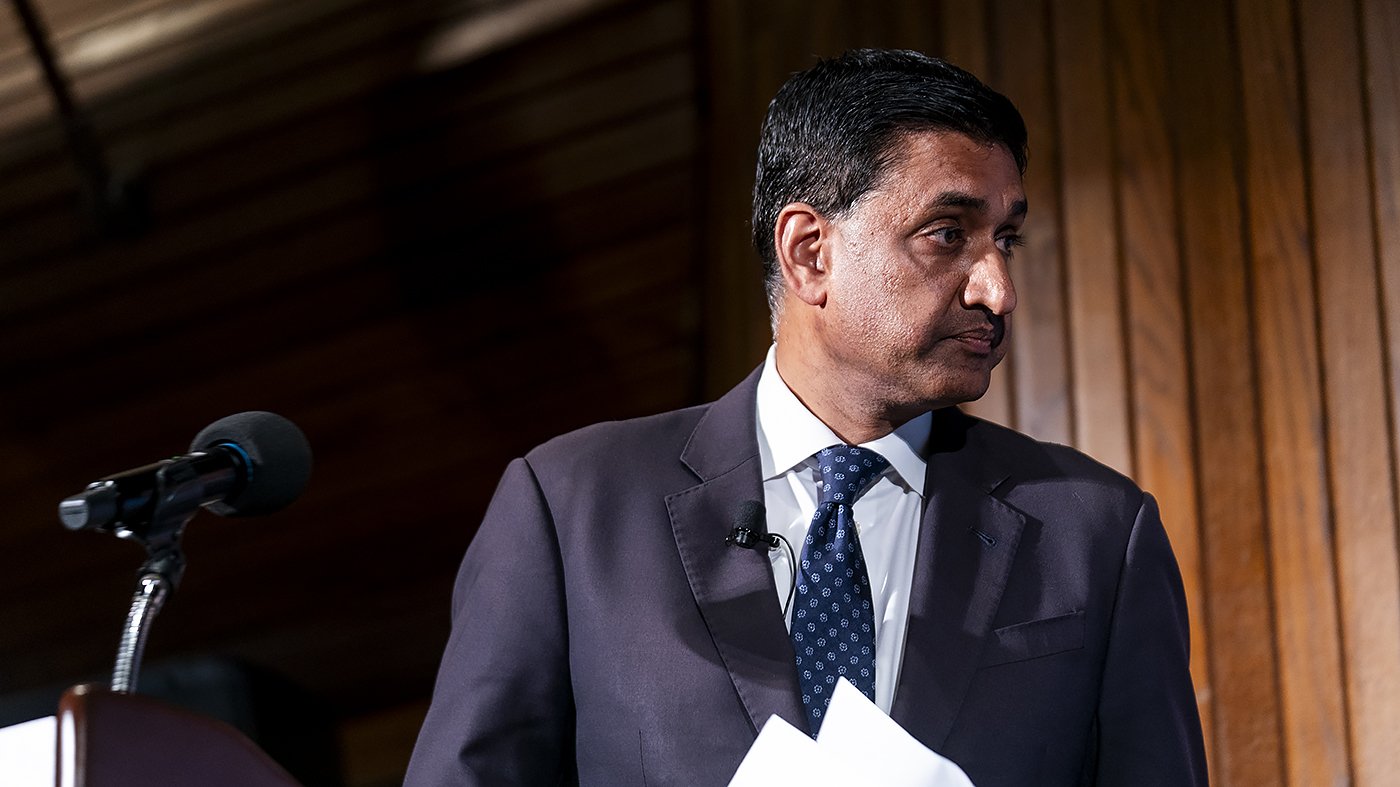
Representative Ro Khanna of California acknowledged on Sunday that he made a mistake by endorsing Graham Platner, the former Democratic candidate for U.S. Senate in Maine who withdrew from the race last week after an ex-girlfriend accused him of sexual assault. Khanna said he should have recognized the warning signs earlier.
Speaking on NBC News’s “Meet the Press,” Khanna told host Kristen Welker that he “got that call wrong” and emphasized the importance of accountability. “I endorse a lot of people, but when I make a mistake I take accountability,” he said. “And I think what people want is the humility, to take accountability if you make a call that’s wrong.”
Platner formally ended his campaign against Republican Senator Susan Collins after a former girlfriend, Jenny Racicot, told Politico and CNN that Platner had sexually assaulted her in 2021 while she was heavily intoxicated. Racicot said politics did not drive her decision to come forward, noting she agreed with Platner’s policy positions. Platner has denied the allegation and any claims of physical aggression toward former partners, attributing controversial online comments to PTSD from his military service.
Khanna’s regret extends beyond the sexual assault accusation. Welker pressed him on earlier red flags, including a tattoo on Platner’s chest that resembled a Nazi Totenkopf symbol, past online remarks about sexual assault survivors, and a New York Times report detailing allegations of aggressive behavior from former girlfriends. Khanna said that for him, “the line always was sexual assault or sexual violence,” and that he withdrew his endorsement as soon as the Politico story broke.
“I was the first person to withdraw my endorsement,” Khanna said. “But I will say I got that call wrong. And if there’s some self-reflection it is that we all need to see the signs earlier of people who may engage in domestic violence.”
Khanna noted that he was far from alone in initially backing Platner. “Look, I wasn’t the only one. You had Planned Parenthood. You had Senator Warren,” he said, referring to Senator Elizabeth Warren of Massachusetts. “You had the entire Democratic Party.” Several progressive figures and organizations later rescinded their endorsements, including Senator Bernie Sanders of Vermont, who called on Platner to drop out.
In a previous interview with CBS News, Khanna described Platner’s past behavior as “shameful” and “wrong,” but suggested it did not surprise many in Maine due to Platner’s military deployments. He also noted that Platner “took accountability” for his actions, but stressed that if there were “evidence of violence, I would not support him if there was evidence of sexual assault. I’d have zero support for him.”
Khanna’s remarks come amid broader scrutiny of how political figures vet candidates. The episode has also drawn attention to the challenges of balancing progressive policy stances—such as opposition to foreign wars and support for Medicare for All—with personal conduct. Khanna acknowledged that Platner’s anti-war and progressive positions resonated with many voters, but said that does not excuse failing to spot troubling behavior.
The fallout from Platner’s candidacy has also intersected with other political controversies. For instance, the Khanna Accuses IDF of Lying Over West Bank Detention by Settlers story shows the congressman’s willingness to challenge authority, while the Graham's Death Deals Major Setback to Trump's SAVE America Act highlights the volatile nature of Senate politics. Khanna’s own record on accountability will likely remain under scrutiny as the Platner case fades from headlines.