The U.S. Treasury Department on Wednesday imposed sanctions on a recently established Iranian agency designed to assert control over the Strait of Hormuz, escalating Washington's financial pressure on Tehran.
In a statement, Treasury identified the Persian Gulf Strait Authority (PGSA) — created by the Iranian government earlier this month to oversee the strategic waterway — as a front for the Islamic Revolutionary Guard Corps (IRGC). The department described the authority as a "new attempt by Iran's Islamic Revolutionary Guard Corps (IRGC) to monetize its campaign of state-sponsored terror by extorting vessels" transiting the strait.
The move signals that any entity cooperating with the PGSA risks exposure to U.S. sanctions, as Treasury warned that "anyone cooperating with the so-called strait authority may be providing support to and receiving services from" the IRGC.
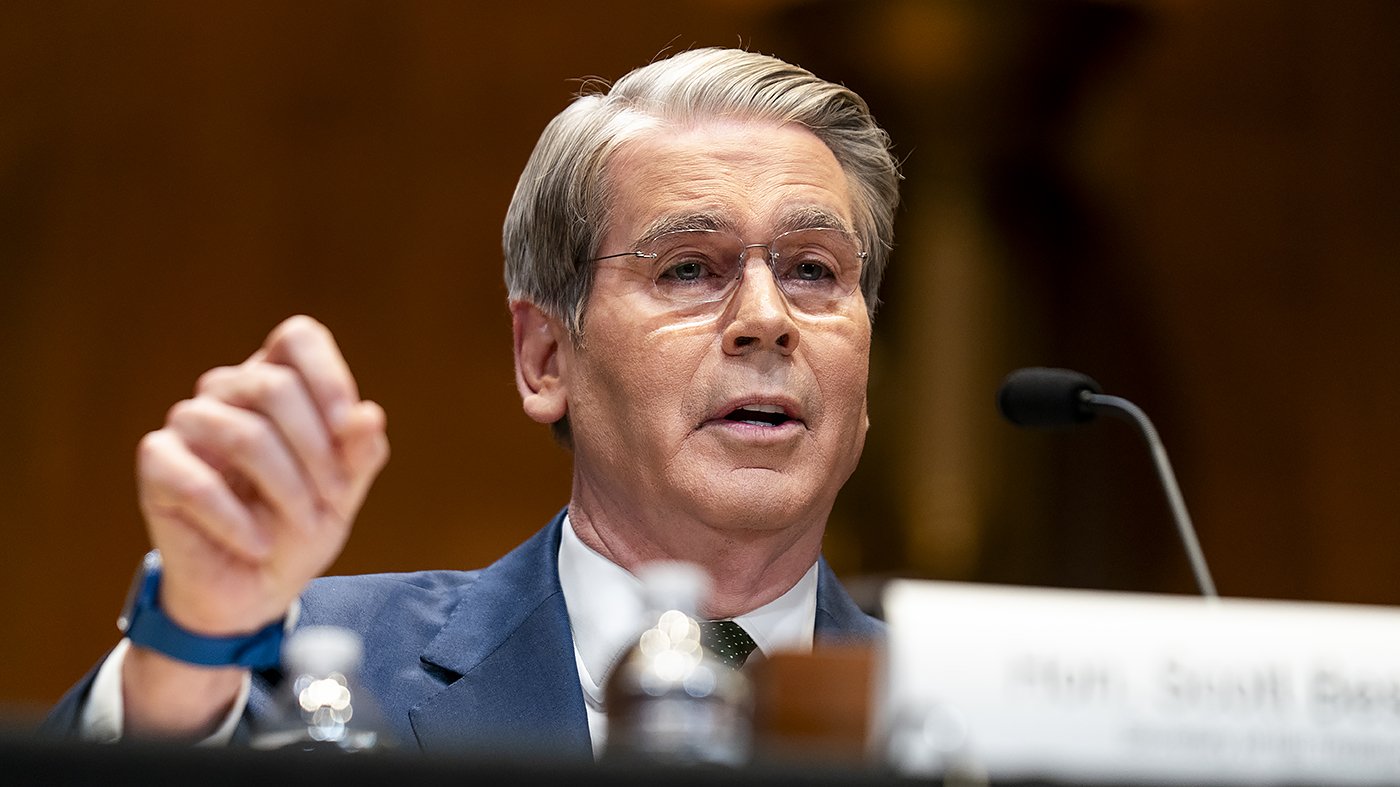
Treasury Secretary Scott Bessent framed the action as part of the Trump administration's broader "Economic Fury" campaign targeting Iran's economy. "The Iranian military's latest attempt to extort global maritime trade is proof that Economic Fury has left the regime desperate for cash," Bessent said. He added that the United States has "imposed a financial stranglehold on the world's leading state sponsor of terrorism" and "deprived the Iranian regime of revenue for their weapons programs, terrorist proxies, and nuclear ambitions."
Under the United Nations Convention on the Law of the Sea, which Iran has not signed, commercial vessels are entitled to unimpeded passage through international waterways without paying tolls to coastal states. The PGSA, however, declared that its jurisdiction extends from "the line connecting Kuh Mobarak in Iran and the south of Fujairah in the United Arab Emirates (UAE) in the east of the strait to the line connecting the end of Qeshm Island in Iran and Umm al-Qaiwain in the UAE in the west of the strait." It further stated that "frequencies in this range for passing through the Strait of Hormuz require coordination with the Persian Gulf Waterway Management and a permit from this entity."
The sanctions come amid heightened military activity in the region. Since late February, when the U.S. and Israel launched strikes on Iran, the IRGC has restricted shipping through the strait, contributing to a global rise in oil and gas prices. In response, the U.S. initiated a naval blockade of Iranian ports in April. U.S. Central Command reported that as of Saturday, its forces had diverted 100 commercial vessels as part of the operation.
The crisis has drawn attention to alternative energy sources, as officials explore ways to mitigate supply disruptions. The ongoing standoff highlights the delicate balance between military pressure and diplomatic efforts to resolve the dispute over the Strait of Hormuz.