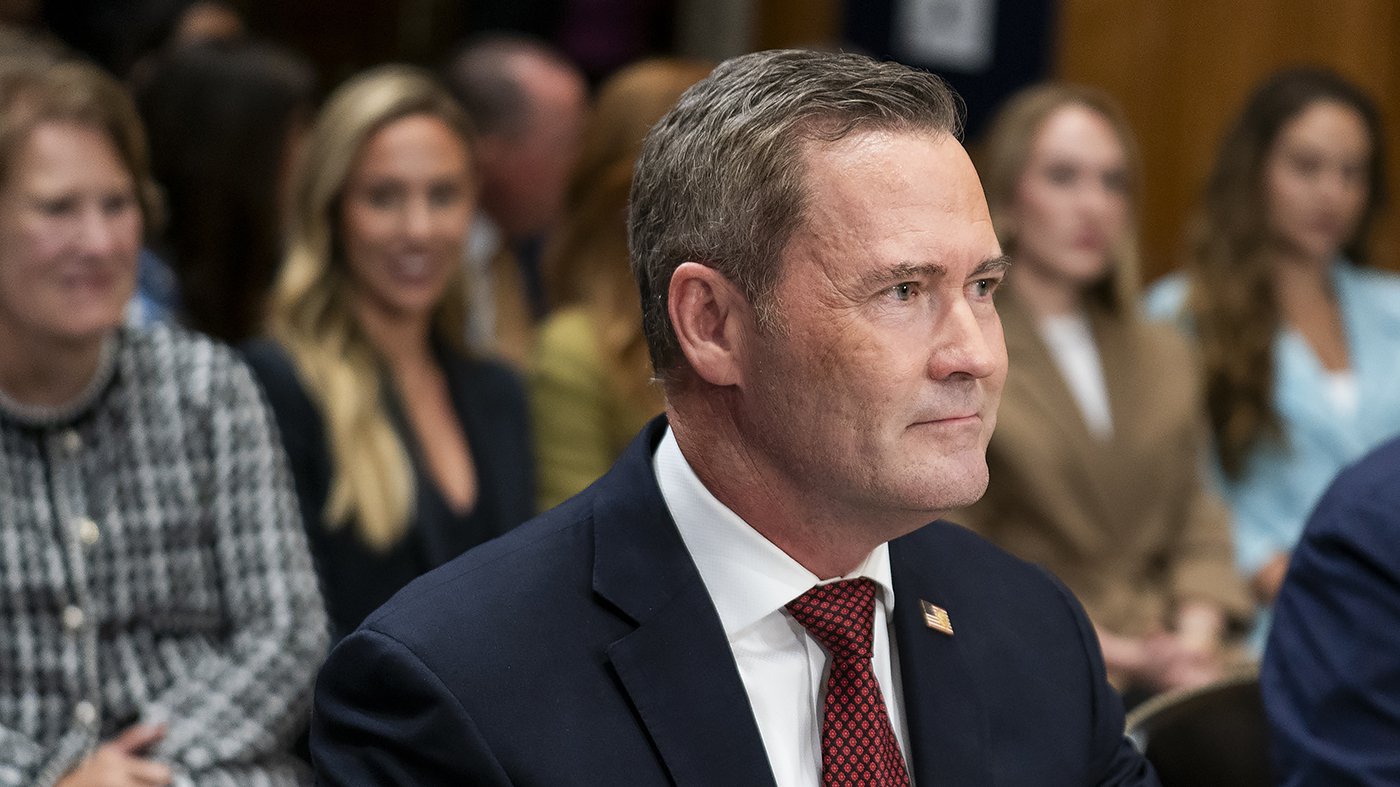
United Nations Ambassador Mike Waltz escalated the Trump administration's rhetoric against Cuba on Sunday, declaring the island nation's government a direct threat to American security. Speaking on Fox News' 'Sunday Morning Futures,' Waltz accused Beijing and Moscow of running intelligence operations from Cuban soil, targeting U.S. military installations.
'The Cuban regime is not only a threat to its own people, it's a national security threat, and this administration's not going to stand for it any longer,' Waltz told host Maria Bartiromo. He specifically alleged that China and Russia 'still have intelligence posts, signals, collection posts and military officers in Cuba right off our shores.'
Waltz's comments come amid a broader push by President Trump's team to confront what they see as a growing axis of adversaries in the Western Hemisphere. He noted that while U.S. pressure has succeeded in rolling back Chinese and Russian influence in Venezuela and parts of Central America, Cuba remains a persistent hub. 'They're no longer in Venezuela,' Waltz said. 'They're no longer in south Central America, in the way that they were, on the march, even in the Panama Canal, under the Biden administration and previous administrations.'
The administration has backed its tough talk with direct action. CIA Director John Ratcliffe traveled to Havana in May to personally deliver President Trump's warning that the United States is prepared to seriously engage on economic and security issues, but only if Cuba makes fundamental changes. The CIA confirmed the visit was intended to reinforce the president's ultimatum, which included the threat of an invasion or military response.
Secretary of State Marco Rubio, a longtime Cuba hawk, has poured cold water on hopes for a negotiated settlement, telling reporters around the same time that a deal with Cuban officials was unlikely. The administration's stance has drawn support from key Republican allies, including the late Sen. Lindsey Graham (R-S.C.), who openly called for regime change in Cuba. In a March post on X, Graham declared, 'Cuba is next,' following U.S. military responses in Venezuela and Iran. He added in May, 'I believe the liberation of the wonderful people of Cuba from the clutches of communism is close at hand.'
The tensions have sparked a war of words with Havana. Cuban President Miguel Díaz-Canel warned in May that any U.S. military intervention would trigger a 'bloodbath with incalculable consequences.' His warning followed an Axios report claiming Cuba possesses 300 drones and has developed an attack plan targeting the U.S. naval base at Guantanamo Bay.
Former Florida Gov. Jeb Bush (R) added a new layer to the threat assessment last week, asserting that Iran supplied those drones to Cuba. 'I think it's important to recognize that Iran has consistently been working with Cuba, Venezuela prior to the departure of Maduro from the regime, creating instability in not just in Cuba, but certainly in the region,' Bush said, referencing deposed Venezuelan President Nicolás Maduro.
The developments underscore a growing security challenge for the Trump administration as it seeks to contain Iranian and Russian influence close to U.S. shores. With Waltz's latest declaration, the administration appears to be laying the groundwork for a more confrontational posture toward Havana, potentially including military options that were once considered off the table.