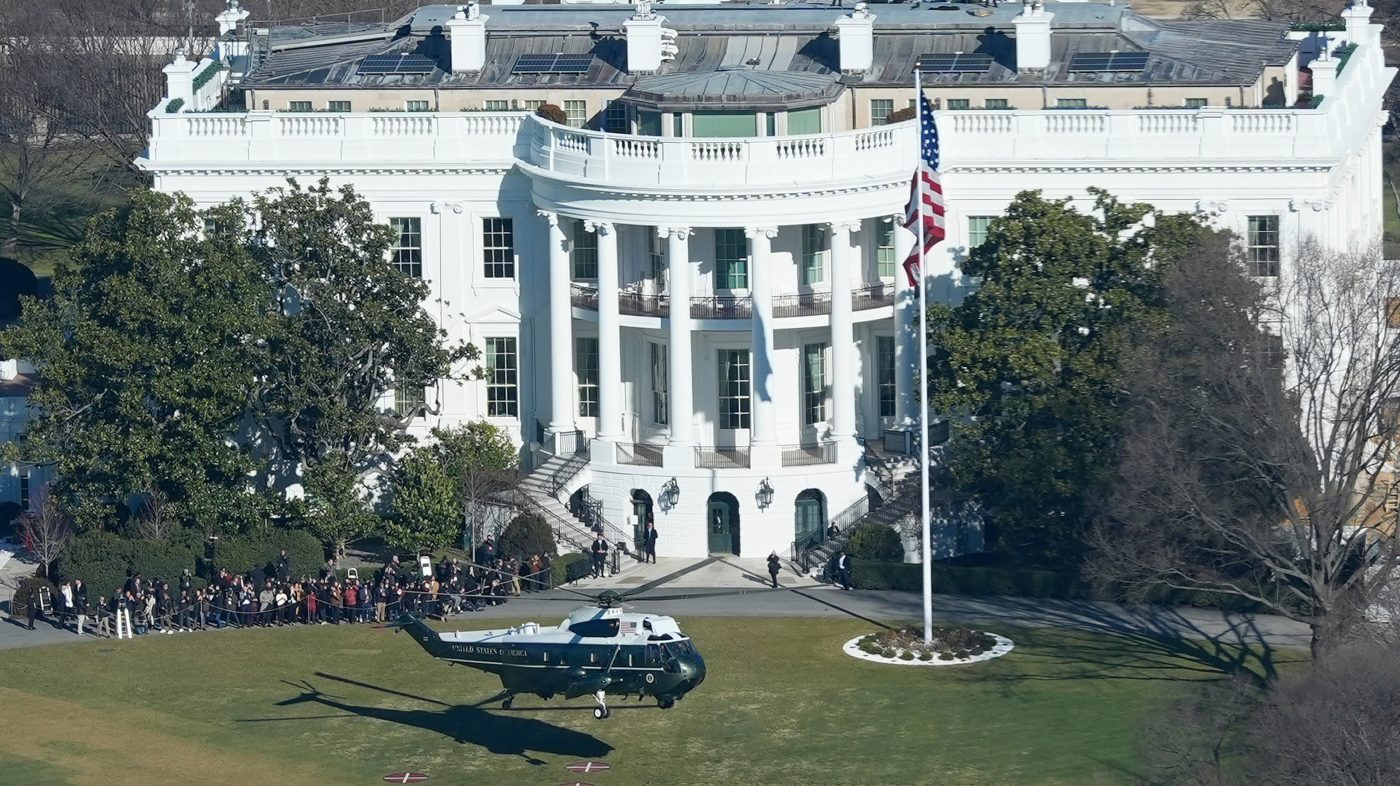
President Donald Trump is moving forward with plans to install a permanent helipad at the White House, a project designed to accommodate the new Marine One helicopter without damaging the iconic South Lawn, according to multiple reports.
Sources familiar with the discussions told The Wall Street Journal that Trump has personally raised the idea of building a dedicated landing zone for the VH-92A Patriot, the next-generation presidential helicopter. The aircraft, which is heavier and hotter than its predecessor, has a greater tendency to burn grass, making a paved surface necessary to preserve the lawn's appearance.

The Washington Post, citing three individuals briefed on the matter, confirmed that the helipad concept has been under consideration for years and is now gaining traction as Trump pushes ahead with a broader slate of White House renovations. The new pad would replace the current practice of using temporary protective mats, which have proven insufficient for the Patriot's exhaust.
This initiative is part of a series of construction and refurbishment projects Trump has pursued during his second term. The administration has already stirred controversy with a plan to overhaul the Reflecting Pool on the National Mall, which Trump recently described as “terrible” and “filthy.” That effort has become a flashpoint in his broader campaign to modernize Washington's most recognizable landmarks.
Another high-profile endeavor—the construction of a new ballroom at the White House—has sparked political turmoil. The project required demolishing the East Wing, drawing criticism from preservationists and lawmakers. On Saturday, the Senate parliamentarian ruled that a $1 billion provision to fund the ballroom could not be included in a budget reconciliation package, dealing a blow to Trump's effort to secure federal money for the project. The ruling has sent Senate GOP leaders scrambling to find alternative funding, as detailed in our report on the GOP's scramble to salvage ballroom funding after the Byrd rule defeat.
The helipad plan, while less contentious than the ballroom, underscores Trump's willingness to reshape the White House grounds to suit operational needs. The VH-92A Patriot, built by Lockheed Martin's Sikorsky unit, entered service in 2024 and has been used for shorter trips, but its high-temperature exhaust poses a risk to turf. A permanent helipad would mitigate that issue and potentially reduce maintenance costs.
Critics, however, see the project as another example of Trump's penchant for expensive government makeovers, especially as the administration faces economic headwinds. A recent poll revealed growing financial anxiety under Trump's economic policies, raising questions about whether such discretionary spending is prudent.
The White House has not yet responded to requests for comment on the helipad reports. The Hill reached out for confirmation but has not received a reply as of press time.
Trump's renovation spree has also included upgrades to the Oval Office and the West Wing, but the ballroom project has been the most divisive. The Senate parliamentarian's ruling on Saturday effectively blocks direct federal funding through reconciliation, though GOP leaders are exploring workarounds. The political fallout was evident in Kentucky, where a Trump-backed challenger ousted a sitting Republican representative in a primary, as noted in our coverage of Trump's campaign to oust Kentucky GOP Rep. Massie.
As Trump continues to push his agenda, the helipad proposal is likely to be just one of many infrastructure changes that will define his second-term legacy. Whether it will face the same level of scrutiny as the ballroom remains to be seen, but for now, the president appears determined to put his stamp on the White House—both above and below ground.