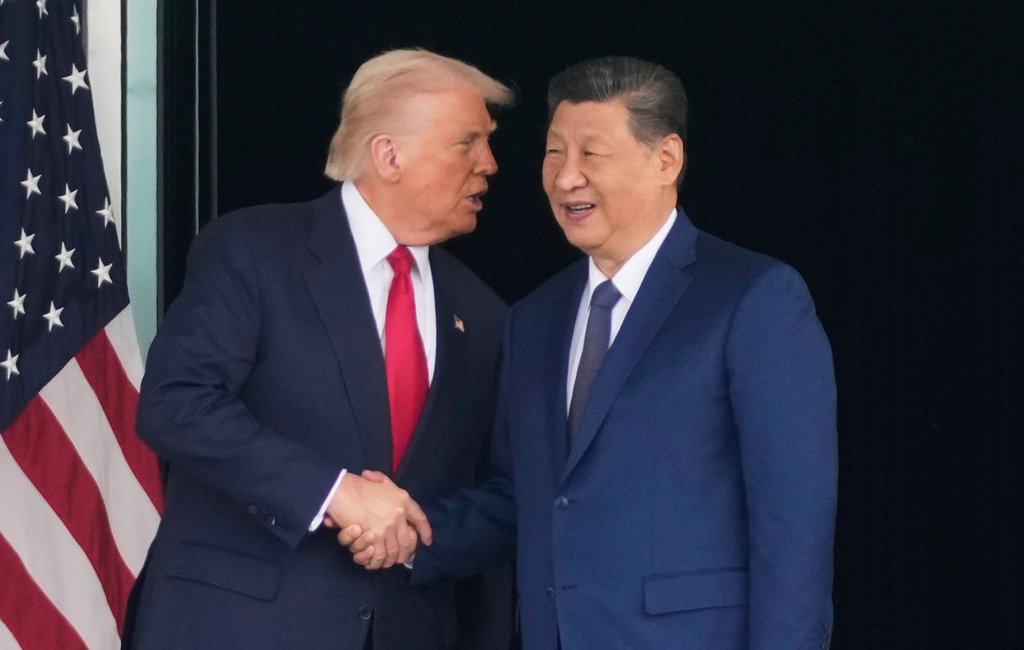
As President Donald Trump lands in Beijing for a high-stakes summit with Chinese President Xi Jinping, the agenda extends well beyond trade deficits and tariff negotiations. The deeper question, argues former US Ambassador at Large for International Religious Freedom Sam Brownback, is how Washington should respond to Beijing's intensifying campaign against religious communities at home.
China's Communist Party, Brownback writes, has built a system of control that rivals the Soviet Union in its ambition and surpasses it in technological sophistication. With a population of 1.4 billion, deep industrial capacity, and a modernizing military, the party is a far more durable adversary. Yet Brownback identifies a critical vulnerability: religion itself.
Communism cannot tolerate any authority above the state, he explains. China is officially atheist, but its governing structure is fundamentally threatened by religious loyalties that call believers to answer to a higher power. The CCP studied how religious believers helped bring down the USSR and is determined to prevent a repeat. That is why Beijing spends billions annually to monitor, control, and suppress independent faith groups.
Christians, Buddhists, Muslims, and Falun Gong practitioners all pose a challenge to party control, Brownback notes. The regime sees independent religion not as a private matter but as a potential center of loyalty outside its reach. The US, he argues, must be unequivocally on the side of those the party oppresses.
Brownback lays out concrete steps: Trump should hand Xi a list of detained religious leaders—including jailed Catholic bishops and Pastor Ezra Jin—and demand their release by name. The vice president or secretary of state should travel to Dharamshala, India, to meet with the Dalai Lama and discuss Tibet's plight, especially as Beijing claims the right to choose his successor. The White House should host persecuted Chinese Christians and Uyghur Muslims. And the founder of Falun Gong should be invited to Washington for meetings with US officials.
Beyond direct diplomacy, Brownback urges the administration to press the Vatican to speak more forcefully on religious freedom in China, including the imprisonment of Catholic bishops. He also calls for international standards to curb the export of surveillance technology used to monitor worship, identify religious minorities, and restrict online belief—a move that could reshape US-China tech competition.
American cultural institutions, including Hollywood, should also do more to tell the stories of persecuted believers, Brownback says. With global religious belief intensifying, the struggle over faith is not a side issue but a central test of Beijing's character and Washington's response.
The summit comes amid broader tensions over trade, Iran, and technology. US AI rules on China have been called 'impossible to enforce' as Trump heads to Beijing, while some analysts see Trump betting on China to help end the Iran war and rescue the economy. But Brownback insists that religious freedom cannot be an afterthought. The two systems—one that treats faith as a right, one that treats it as a threat—are fundamentally at odds.
Brownback, author of "China's War on Faith," concludes that after the summit, Trump should address the nation in prime time to explain what is at stake. The US must lead, he writes, by putting persecuted Chinese believers at the center of human-rights engagement, not on the margins.