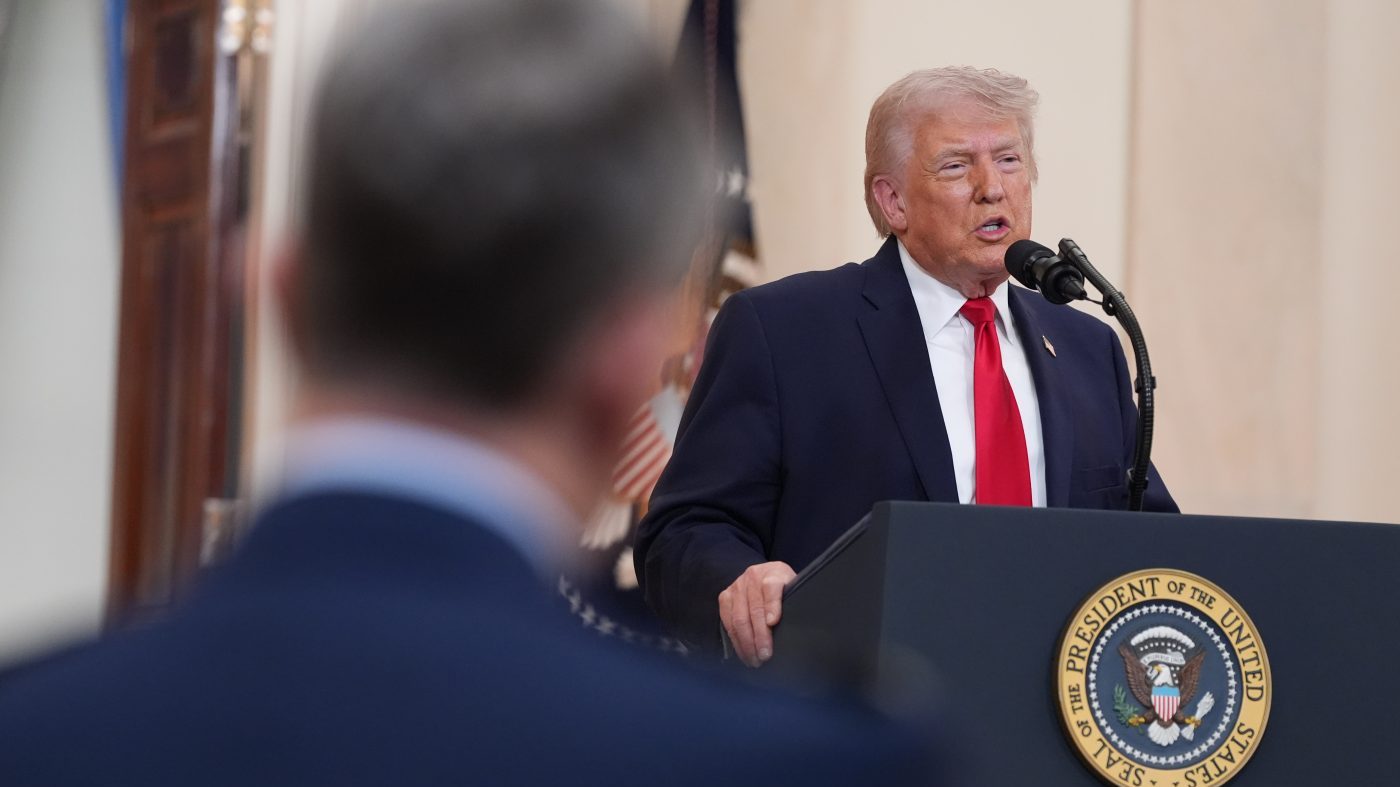
President Donald Trump escalated his ongoing conflict with the media on Thursday, directing sharp criticism at the Wall Street Journal's editorial board for questioning his handling of the Iran conflict. The dispute centers on the board's assessment that Trump prematurely declared victory after announcing a two-week ceasefire.
In a post on his Truth Social platform, Trump labeled the Journal's editorial board "one of the worst and most inaccurate" in the world. He specifically objected to their characterization that he had "declared premature victory in Iran." The president countered, "Actually, it is a Victory, and there's nothing 'premature' about it!"
Trump asserted his administration's policy would ensure "IRAN WILL NEVER HAVE A NUCLEAR WEAPON" and predicted oil would "start flowing, with or without the help of Iran." This statement reflects the administration's broader strategy of applying maximum pressure on Tehran while seeking to stabilize global energy markets.
The Journal's editorial, published Tuesday shortly after Trump announced the temporary truce, expressed skepticism about whether the United States would resume strikes if Iran failed to comply. "Will Mr. Trump really start bombing again if Iran draws out talks? Given the risks to oil prices, count us skeptical," the board wrote. They suggested the president, facing political pressure, might extend the pause beyond the two-week deadline, particularly with midterm elections approaching.
The board's analysis pointed to what it called Trump's "inconsistent rhetoric" on the conflict, noting his alternating claims of victory with threats to unleash "Hell" and end Iran's "civilization." This approach, they argued, has "raised global fears and undermined support at home and abroad." The editorial concluded that the true test would be whether Trump enforces his own deadline if Iran engages in delaying tactics.
The military context involves joint U.S.-Israel strikes in late February against Iranian targets and Iranian-backed groups like Hezbollah in Lebanon. These operations have repeatedly forced closures of the Strait of Hormuz, a critical chokepoint for approximately one-fifth of the world's oil supply. The resulting restrictions have contributed to volatility in global energy prices, which fell alongside a stock market rally following Trump's ceasefire announcement.
Trump's aggressive foreign policy toward Iran has drawn criticism from multiple fronts. Democratic lawmakers have intensified calls for his removal over what they describe as reckless threats, while his NATO rhetoric has further strained transatlantic relations amid the Iran crisis. Some analysts have noted parallels between Trump's approach and the 'madman theory' of diplomacy employed by President Richard Nixon.
In his final response to the Journal, Trump predicted the publication would "live to eat their words" and accused the board of being "quick to criticize, but never to admit when they're wrong, which is most of the time!" This exchange represents another chapter in Trump's contentious relationship with mainstream media outlets, even those traditionally aligned with conservative economic policies.
The situation continues to develop as the two-week ceasefire period progresses, with global markets and diplomatic observers watching closely for signs of Iranian compliance or further U.S. military action. The administration's next moves could significantly impact both regional stability and international energy markets in the coming weeks.