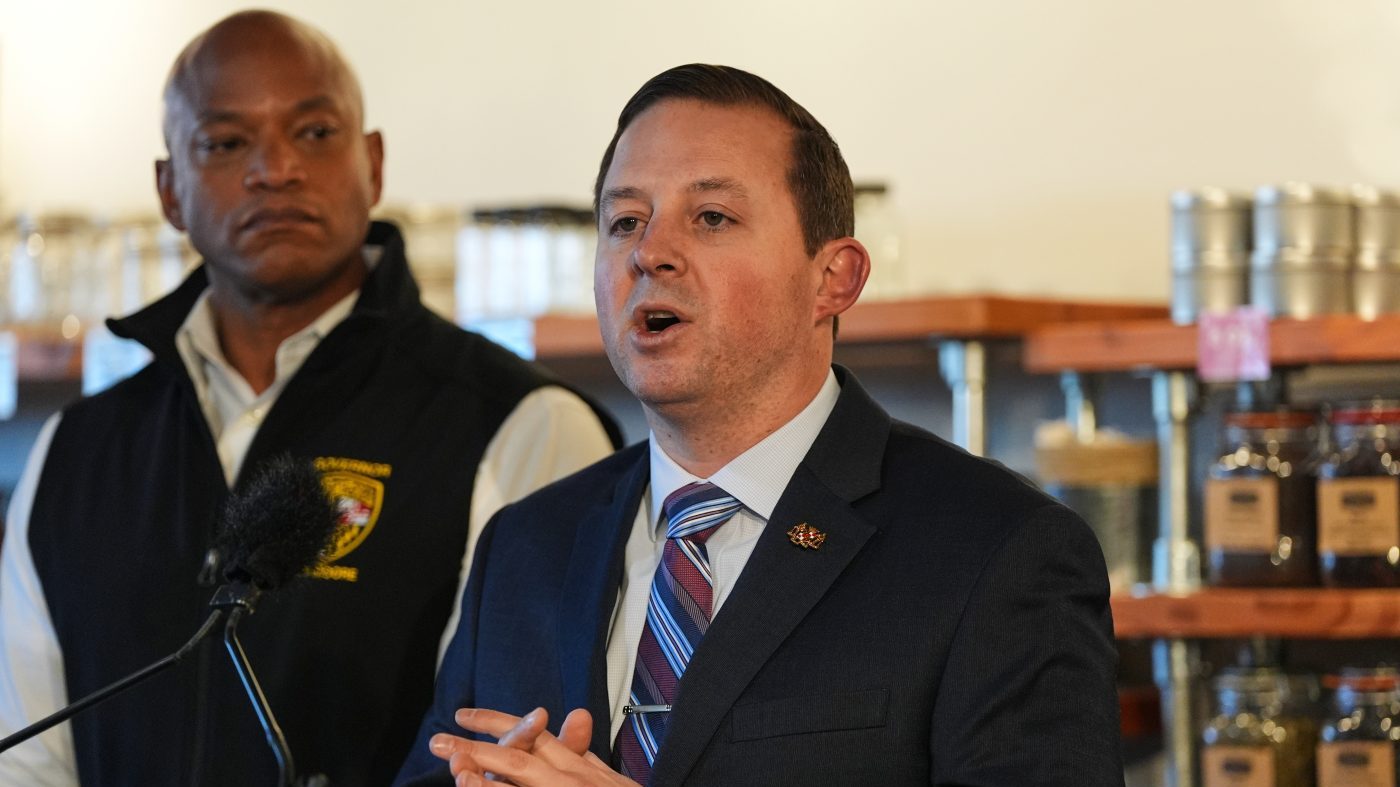
Maryland Senate President Bill Ferguson (D) has signaled a notable shift in his position on mid-decade redistricting, moving away from earlier skepticism as legal and political battles over congressional maps intensify across the country ahead of the 2026 midterms.
Ferguson had previously voiced concerns that redrawing the state's district lines could trigger legal challenges and public backlash in a state where Democrats already hold a significant advantage. That stance effectively stalled efforts backed by Governor Wes Moore and other Democratic leaders who argued that updating the map was necessary to counter Republican gains in other states.

But this week, Ferguson suggested the debate is no longer settled. “The rules have changed,” he said, adding that Maryland “must respond as the ground shifts.” The comments have opened the door to a possible special legislative session to revisit the state's congressional map.
The shift comes as a Supreme Court ruling on redistricting has accelerated efforts in several states to redraw districts. In Louisiana v. Callais, the high court allowed changes to a congressional map that critics say weakened protections against racial gerrymandering, prompting Democrats to consider countermeasures to avoid falling further behind.
Virginia has also emerged as a flashpoint. The state Supreme Court blocked a new map that would have given Democrats up to four additional House seats, ruling that officials did not follow proper procedures. The U.S. Supreme Court declined to intervene, despite pressure from Democratic lawmakers.
In Maryland, the issue had been simmering for months. A House-passed map, based on recommendations from a redistricting advisory commission, would have strengthened Democrats' hold in at least one competitive district. But the measure stalled in the Senate, where Ferguson refused to bring it up for a vote, effectively freezing the effort despite calls from national leaders, including House Minority Leader Hakeem Jeffries (D-N.Y.), for the Old Line State to act in step with other states.
Ferguson has not endorsed a specific new map or formally called for a special session, but his comments mark a clear departure from his earlier position. Representative Steny Hoyer (D-Md.), dean of the state's congressional delegation, welcomed the potential reversal in a post on the social platform X. “I agree with Senate President Ferguson’s view that the circumstances have changed, and that makes Maryland’s redistricting effort more urgent than ever,” Hoyer wrote. He added that the General Assembly should also pass the map approved by the House and present it to voters alongside a constitutional amendment on redistricting.
The developments underscore how courts are increasingly shaping the redistricting landscape, with implications for control of the House in 2026.