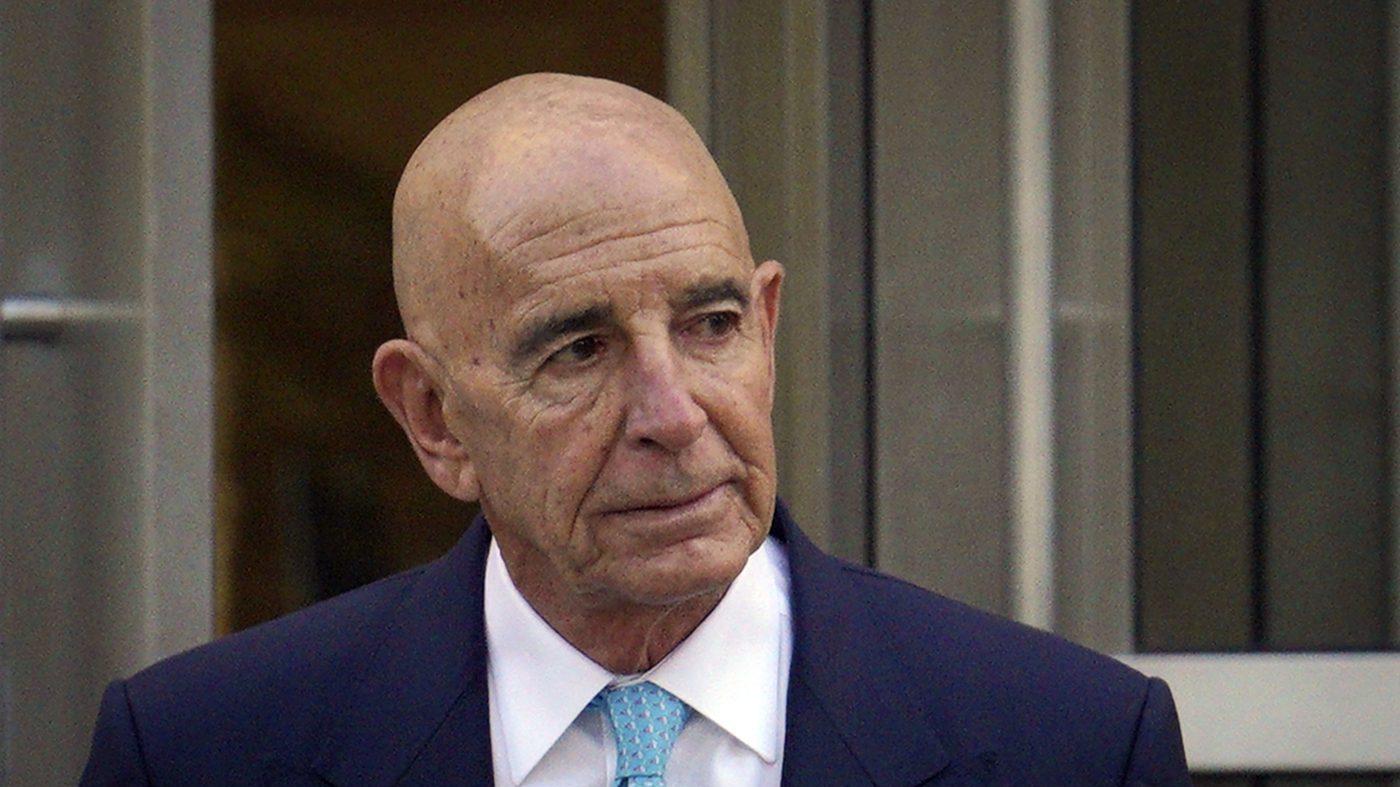
President Trump's special envoy for Syria and Iraq, Tom Barrack, on Sunday moved to clarify remarks he made last week that appeared to conflict with the administration's stance on the Golan Heights. In an interview with Lebanese Australian entrepreneur Mario Nawfal, Barrack had suggested that Israel "still" occupies the territory in contravention of United Nations resolutions, a statement that drew attention given Trump's 2019 recognition of Israeli sovereignty over the area.
Speaking to the Associated Press, Barrack said his comments were meant to describe the territory's historical status, not to endorse the UN's position. "United States policy on the Golan was set by President Trump in 2019 and is unchanged," he stated, adding that he was explaining why he does not expect Israel to annex Lebanon.
Barrack used the Golan as an example of "territory taken by force remains contested for generations" while discussing negotiated agreements, such as the recent ceasefire ending the Israel-Hezbollah war. He emphasized that Hezbollah and Iran are "the two people missing from" those negotiations, reiterating that the US does not negotiate with Hezbollah, a designated foreign terrorist organization. "I was describing the difficulty of the problem, not proposing a new [negotiating] table," he told the AP. "Hezbollah is a designated foreign terrorist organization. We do not negotiate with it, and nothing I said suggests otherwise."
The Golan Heights, captured by Israel in the 1967 Six-Day War and annexed in 1981, remains unrecognized as Israeli territory by the UN. Trump's 2019 decision broke with decades of US policy, a move that aligned with his broader approach to Syria and the region.
In the same interview, Barrack criticized Israeli strikes on Syria's Abu Duhur air base last week, calling them an "unnecessary escalation." He said the US would host diplomatic talks to broker "de-escalation agreements" between Syria and Israel.
Israeli Defense Minister Israel Katz defended the strikes on Sunday via social media, asserting that critics who initially labeled the attack "unnecessary and politically motivated" changed their view after the military released intelligence clarifying its actions. Katz also took aim at Turkish President Recep Tayyip Erdoğan, writing that statements by Israeli leaders warning against a Turkish military presence in Syria were "unnecessary and dangerous."
The United Kingdom-based Syrian Observatory for Human Rights reported that Turkey has been working to rehabilitate the air base, though both Turkey and Syria deny any Turkish deployment there. The base has been inactive since 2013, following clashes between rebels and forces loyal to former President Bashar Assad.
Barrack's clarification comes amid heightened tensions in the region, with the US navigating complex negotiations involving Israel, Syria, and Turkey. The administration's stance on the Golan remains a cornerstone of its Middle East policy, even as it seeks to address ongoing conflicts and pressure on Iran.