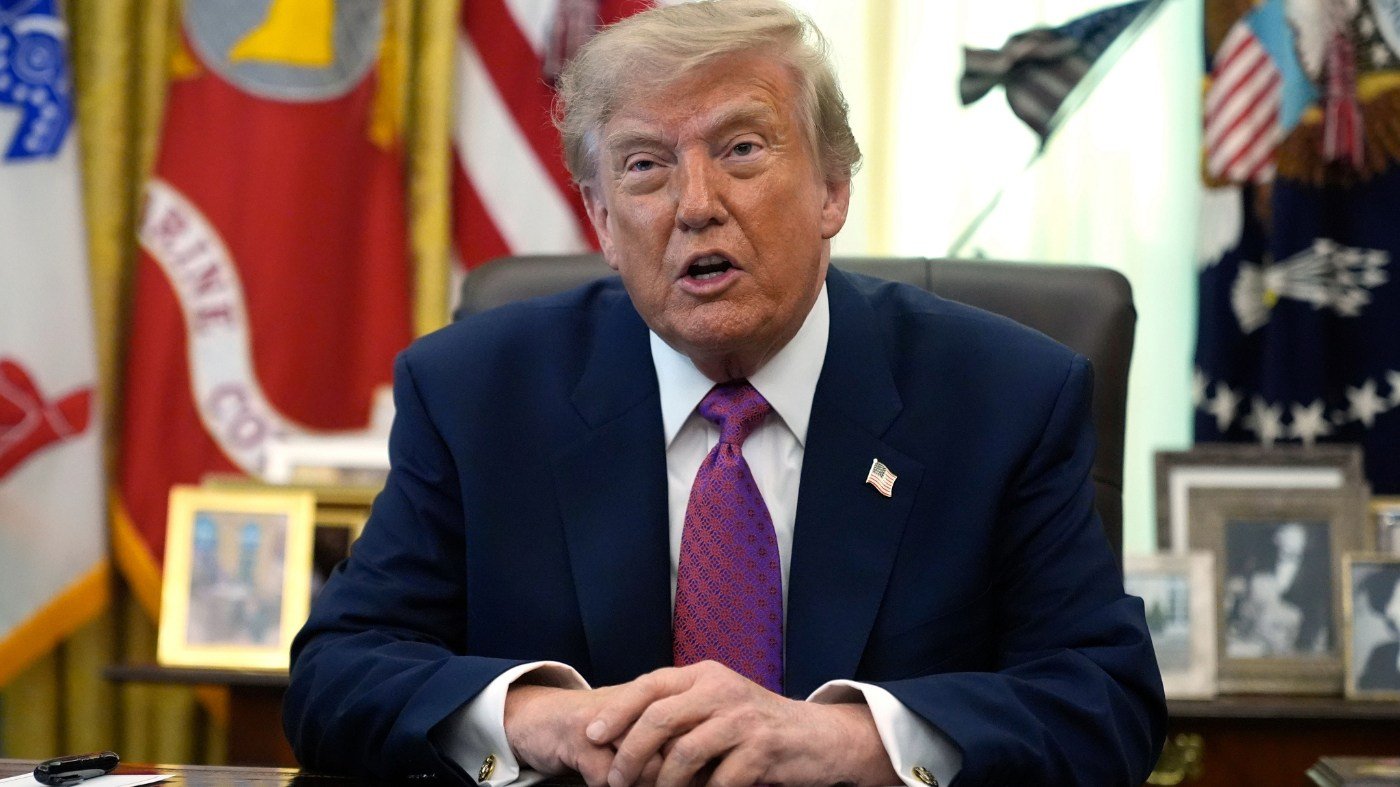
President Trump on Thursday deflected questions about whether global powers are taking his administration's "Economic D-Day" threats seriously, following reports that Russian President Vladimir Putin is set to meet with Iran's president. When pressed on whether he would punish Putin for continued engagement with Tehran, Trump responded, "it depends."
"I think Russia has behaved quite well having to do with the Strait of Hormuz," Trump said, suggesting that Moscow's conduct in the region has not warranted immediate retaliation. He also dismissed concerns about foreign espionage, stating, "For everything they do, we do also. Somebody said what about China spying. We spy on them too. That's the way it goes."
The president's remarks come amid a broader administration push to isolate Iran economically. Treasury Secretary Scott Bessent last week unveiled a strategy dubbed Operation Economic Outcast, warning Iran's global partners to sever financial ties or risk being cut off from the U.S. dollar system. Bessent declined to name specific countries, citing the need to avoid destabilizing the global economy.
When asked why he has not sanctioned Chinese banks that continue doing business with Iran, Trump shot back: "Well, who said I'm not? I mean, who said I'm not? You don't know if I'm doing it. Well, I don't have to announce everything, do I?" The comment suggests that the administration may be pursuing covert or unannounced measures against Chinese financial institutions, a move that could escalate tensions between Washington and Beijing.
Bessent has been actively lobbying international counterparts to join the pressure campaign. According to Fox News, he will press fellow finance ministers at the G20 Summit later this month to "sever the economic leakage" of their financial ties to Iran. The administration has also dispatched officials from the Defense, Treasury, and State departments to demand action from foreign governments.
Trump maintained that U.S. naval forces continue to control the Strait of Hormuz, and he expressed no urgency to resume nuclear negotiations with Iran. "We have control, and we have the blockade," he said. "Iran's not getting anything." He also asserted that Iran is struggling domestically, claiming the country is not currently paying its troops and is in "deep trouble."
The president's evasiveness on Russia and China underscores the delicate balancing act his administration faces. While seeking to project strength against Iran, Trump appears reluctant to alienate Moscow or Beijing, both of which have significant economic and strategic interests in the region. His comments on espionage and unannounced sanctions suggest a willingness to use covert tools rather than public ultimatums.
Analysts note that the administration's approach may be designed to maximize pressure on Iran without triggering a broader global economic shock. However, the lack of transparency on sanctions could complicate diplomatic efforts, as allies and adversaries alike seek clarity on U.S. intentions. The upcoming G20 meeting will be a key test of whether Bessent can rally international support for the campaign.
As the situation evolves, Trump's rhetoric on Russia and China will be closely watched. His comment that "for everything they do, we do also" reflects a transactional view of international relations, but it remains unclear whether that extends to economic penalties. The administration's next moves could reshape the geopolitical landscape in the Middle East and beyond.