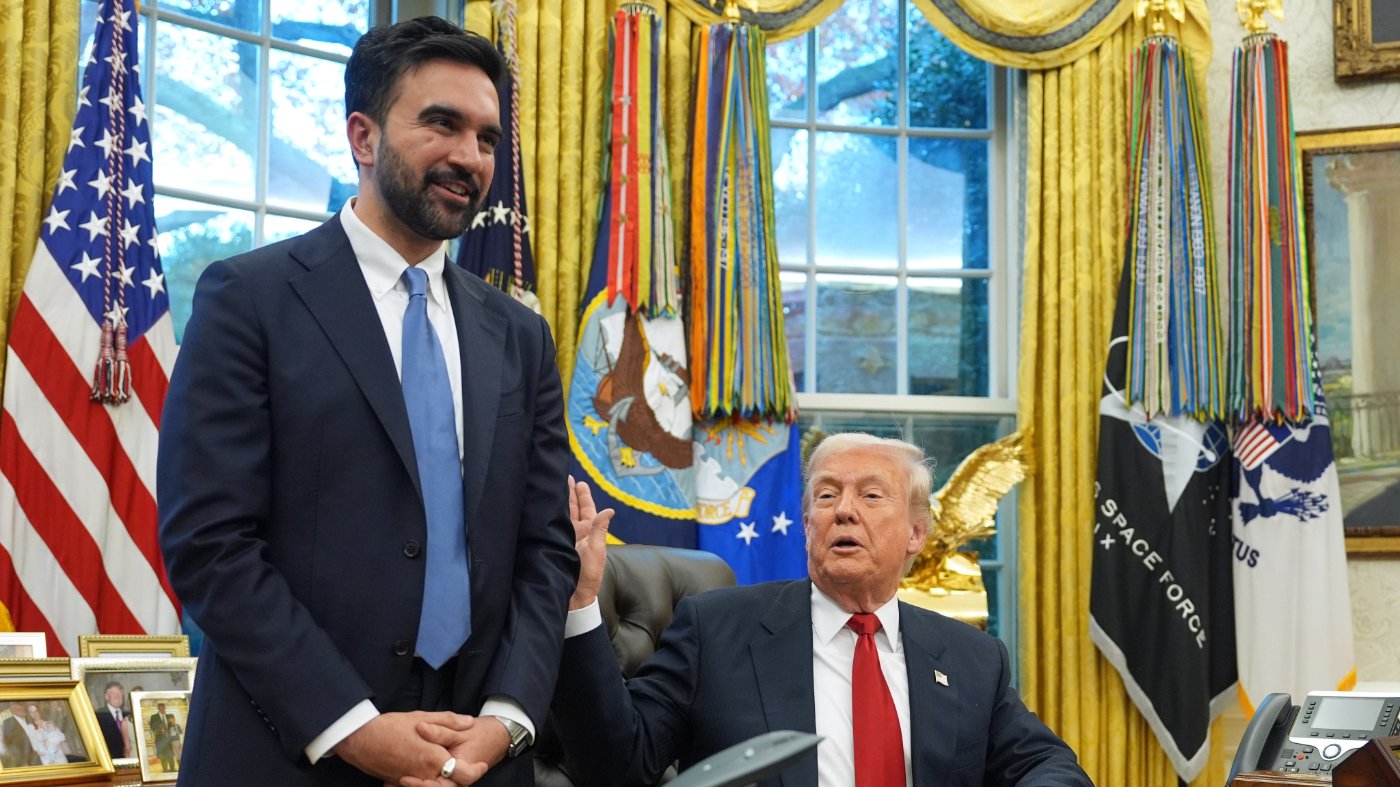
Former President Donald Trump launched a direct attack on New York City Mayor Zohran Mamdani on Thursday, condemning the Democratic mayor's proposed tax on high-value secondary residences as a destructive policy that will accelerate the city's decline. The criticism marks a significant escalation in rhetoric between the two figures, who have maintained a surprisingly cordial relationship through multiple White House meetings in recent months.
Social Media Condemnation
Trump voiced his objections in a post on his Truth Social platform, writing, "Sadly, Mayor Mamdani is DESTROYING New York! It has no chance! The United States of America should not contribute to its failure." He continued with characteristic emphasis, stating, "It will only get WORSE. The TAX, TAX, TAX Policies are SO WRONG. People are fleeing. They must change their ways, AND FAST. History has proven, THIS 'STUFF' JUST DOESN'T WORK." This public rebuke follows Trump's recent focus on tax policy, including his advocacy for tax-free tips during a Las Vegas roundtable.

The Proposed Policy
The tax proposal, announced jointly by Mayor Mamdani and New York Governor Kathy Hochul, would target secondary homes valued above $5 million within New York City. The Democratic leaders estimate the measure would generate approximately $500 million in annual revenue for the city. Governor Hochul defended the proposal, stating, "If you can afford a $5 million second home that sits empty most of the year, you can afford to contribute like every other New Yorker."
Mayor Mamdani framed the tax as a necessary response to the city's fiscal challenges during a Thursday press conference. "We're talking about the levels of wealth that are storing themselves here in New York City all at the time at which our city is facing a generational fiscal crisis," he told reporters. The mayor noted the revenue would help address a projected budget deficit of $5.4 billion in the upcoming fiscal year, calling the proposal "something worthy of celebration" in their collaborative work with the governor. More details on the specific structure of the proposed 'pied-à-terre' tax are available here.
A Complex Political Relationship
The exchange highlights the complex and often contradictory relationship between Trump and Mamdani. During his mayoral campaign, Mamdani labeled Trump a "despot," while the former president has frequently referred to the democratic socialist mayor as a "communist." Despite this adversarial framing, the two have found common ground on issues of urban affordability. Following their first Oval Office meeting last November, Trump expressed surprisingly positive remarks about the mayor. A second meeting at the White House in February was similarly described as productive by both sides.
Trump's latest criticism aligns with his broader political strategy of opposing tax increases and positioning himself against Democratic urban governance. This stance often contrasts with his legislative engagements, such as when the Senate sent him a measure overturning a Biden-era mining ban, showcasing the interplay between executive action and congressional priorities.
Broader Political Context
The dispute occurs amid ongoing political realignments and policy debates. Trump's condemnation of the New York tax proposal follows a pattern of him challenging policies from Democratic strongholds while promoting his own economic agenda. His focus on taxation and urban policy comes as he continues to engage on multiple fronts, including signaling a potential diplomatic visit to Pakistan regarding Iran.
The proposed tax also enters a charged national conversation about wealth, housing, and municipal finance. Proponents argue it is a fair mechanism to address inequality and fund essential services, while opponents, including Trump, frame it as punitive and economically harmful. The outcome of this policy debate in New York may influence similar discussions in other major cities facing budgetary pressures.
As the 2024 election cycle intensifies, clashes between Trump and prominent Democratic mayors like Mamdani are likely to become more frequent, reflecting deeper ideological divides over taxation, urban policy, and the role of government in addressing economic disparities.