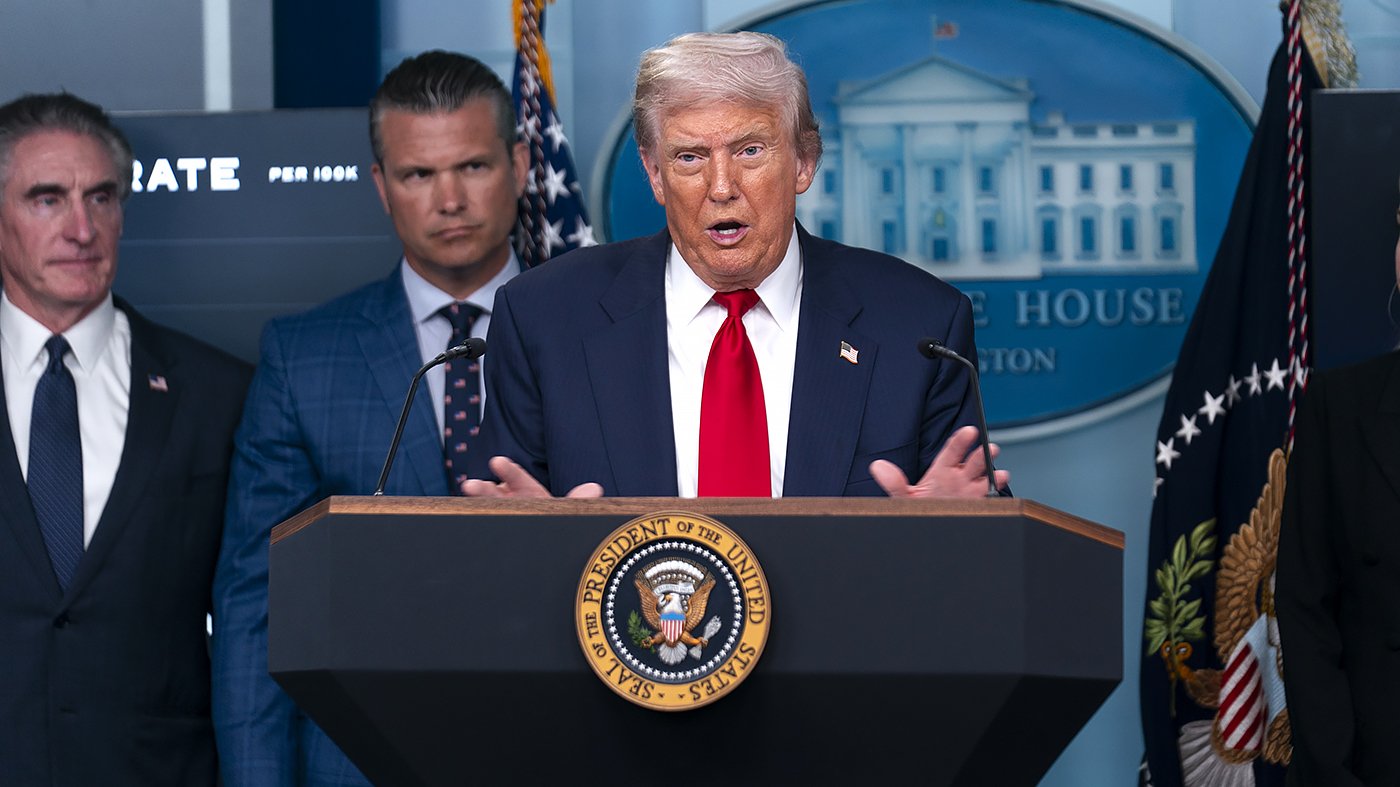
President Trump on Monday turned the tables on Iran's compensation demands, insisting that Tehran should pay the United States for American lives lost in past attacks, including the bombing of the USS Cole in 2000. His remarks came after Iran's Supreme National Security Council called for Washington to fully compensate the Islamic Republic for damages from the five-month military conflict.
In a post on Truth Social, Trump wrote that Iranian representatives are "asking for compensation for the damage done to them during the last five month Military Conflict (started because, THEY WILL NOT HAVE A NUCLEAR WEAPON), even though it was never mentioned in any of our negotiations or meetings!" He called the demand an "interesting idea" and said he would begin "demanding compensation from Iran, for all of the people that they have killed and gravely wounded with their roadside bombs and many conflicts."
The president specifically cited the October 2000 attack on the USS Cole, which killed 17 American sailors, as well as other conflicts where Iran has been implicated. He also argued that compensation should extend to families of protesters killed in Iran over the past five decades, and he referenced an unverified figure of 52,000 deaths in the last five months.
Trump said the compensation requirement would be added to future negotiations with Iran. This comes as his administration has adopted a hands-off approach to the conflict, which has now entered its sixth month.
Over the weekend, Iran's Supreme National Security Council issued a statement via its secretary, Mohammad Bagher Zolghadr, who also commands the Islamic Revolutionary Guard Corps. The statement demanded that the U.S. never threaten Iran again, permanently end the war, lift the naval blockade, and withdraw all military forces. It also insisted on "complete compensation" for war damages, lifting of sanctions, and the "unconditional" release of frozen Iranian assets.
Trump, however, dismissed Iran's leverage, telling Axios on Sunday that the U.S. is "only semi-negotiating" with Tehran. He noted Iran's "huge inflation" and lack of money, asserting that the country "is in very bad shape."
Meanwhile, a tentative agreement between Iran and Oman on managing traffic through the Strait of Hormuz has yielded little progress. The deal, negotiated last week, would grant Iran partial control over incoming traffic—a move seen as a concession to Tehran. However, Iran has continued to threaten closure of the strait unless the U.S. "corrects its behavior," according to CBS News.
The standoff has raised concerns about global oil supplies and regional stability. As the conflict drags on, weapons shortages are reportedly limiting Trump's military options, while Vice President Vance has said talks are progressing but the conflict is far from over.