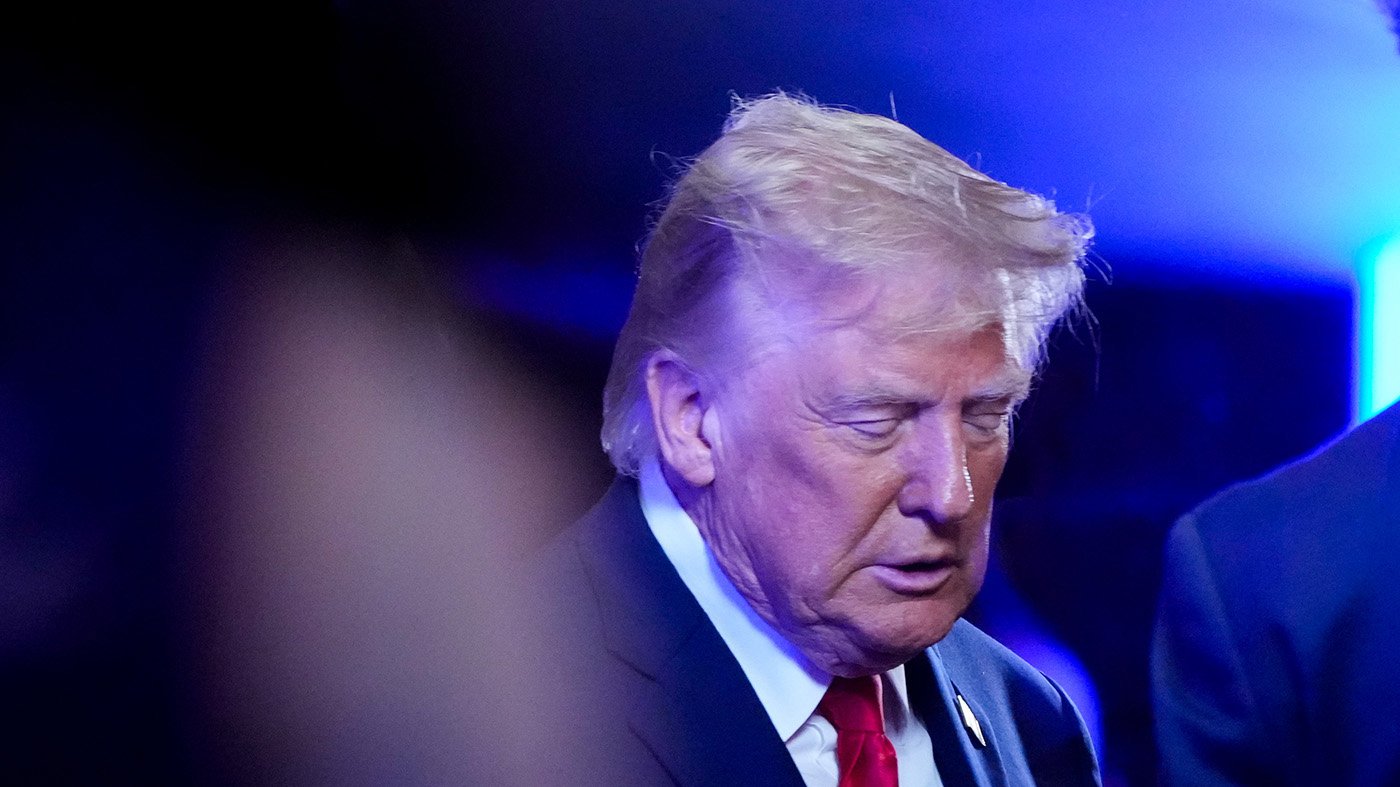
President Donald Trump on Thursday abruptly shifted from threatening to strike Iran to announcing what he called a “great settlement of the war with Iran,” a claim that immediately drew skepticism from Tehran and even some of his own allies.
Speaking to reporters in the Oval Office, Trump said the agreement—a memorandum of understanding, not a formal treaty—could be signed as early as Saturday or Monday, with Vice President JD Vance representing the United States at a ceremony likely held in Europe. The president had earlier posted on social media that the U.S. was about to hit Iran “VERY HARD” and was “taking” the strategic Kharg Island, a threat he then rescinded in a subsequent post announcing the purported deal.
But the details remain murky. The New York Times quoted Iranian state media reporting that a foreign ministry spokesperson called Trump’s claims “speculative,” while Al Jazeera cited Iranian officials saying no final decision had been made. Iranian foreign ministry spokesman Esmail Baghaei posted a complaint about “lawless conduct” by the U.S. and cryptic poetry referencing a shattered army.
Trump’s confidence boosted markets—the Dow Jones and S&P 500 each closed up nearly 2 percent, and the Nasdaq rose more than 2.5 percent—but the reaction from Capitol Hill was more measured. Sen. Lindsey Graham (R-S.C.), a hawk on Iran, said he hoped for a “fundamentally different” deal than the Obama-era nuclear agreement but stressed that any accord must be “presented to Congress for review and approval.”
The administration’s own allies raised red flags. Israeli Prime Minister Benjamin Netanyahu’s office released a statement noting that Israel is not “a party to the memorandum of understanding,” contradicting Trump’s claim that Israel was on board. The statement added that Trump had promised a more lasting deal would include “the removal of enriched material, the dismantling of enrichment infrastructure, limits on missile production, and the cessation of Iran’s support for its terrorist proxies.” In other words, those elements are not in the current MOU.
When asked directly whether he had secured an agreement on Iran’s nuclear material, Trump replied, “Yes, conceptually, on that.” The ambiguity has left even his supporters searching for clarity. This is not the first time Trump has declared an imminent breakthrough with Iran; CNN tallied at least 38 such claims since the war began on Feb. 28 with joint U.S. and Israeli strikes.
The president’s social media post listed the U.S., Israel, Saudi Arabia, UAE, Qatar, Turkey, Pakistan, Bahrain, Kuwait, Jordan, and Egypt as backing the deal. But the Iranian foreign ministry’s pushback and Netanyahu’s careful distancing suggest the agreement is far from final. As one senior GOP aide put it, “We’re all waiting to see the fine print.”
The episode echoes earlier moments when Trump’s base has watched him pivot from aggressive rhetoric to diplomacy, a pattern some conservatives have criticized. Meanwhile, the administration’s focus on a memorandum rather than a binding treaty leaves room for Tehran to exploit loopholes, particularly on enriched uranium stocks and future enrichment rights. For now, the world is left watching—and waiting—for what Trump himself called “a little conceptual” document to become something concrete.