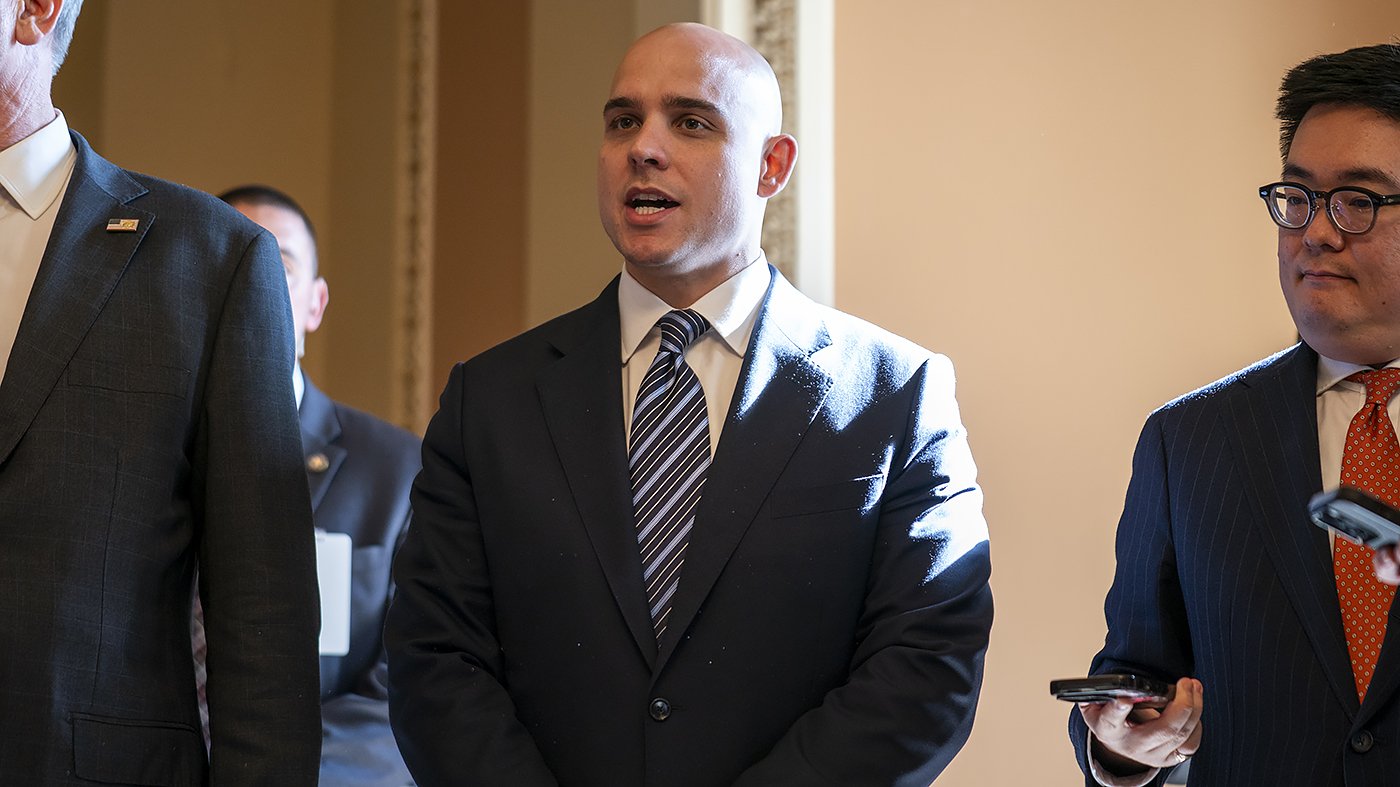
James Blair, the political director for former President Donald Trump's campaign, asserted on Wednesday that predictions of Republican defeat in the upcoming midterm elections are premature. In an interview with CNN, Blair acknowledged historical trends favoring the opposition party but insisted the GOP remains competitive by focusing voter attention on specific policy contrasts.
Framing the Election as a Choice
Blair outlined the Republican strategy, which seeks to shift the electoral narrative away from being a referendum on current economic conditions. "We're not ignorant of the history of the midterms obviously," Blair told Dana Bash. "But it's way too soon to declare defeat. Republicans are in the fight." He argued the party holds advantages on issues like crime, border security, and illegal immigration, which he labeled as primary voter concerns.
When pressed on a recent Associated Press-NORC poll showing economic approval for the administration at a low of 30 percent, Blair declined direct comment, stating he had not reviewed that specific survey. Instead, he pivoted to criticizing the Biden administration's record. "We have a record to run on, unlike the Biden administration," he said.
Addressing Redistricting Setbacks
The interview also covered Democratic successes in redistricting battles, including a recent ballot measure victory in Virginia that could net the party several House seats. Blair dismissed these efforts, calling measures in Virginia and California "illegal under their own state laws." He defended aggressive Republican redistricting maneuvers in states like Texas, North Carolina, Missouri, and Ohio as necessary to correct imbalances and ensure fair representation.
"This is about bringing fairness to what has been done to Republicans and Republicans being represented around the country," Blair stated. When questioned about reported plans in Florida—his home state—to draw new maps favoring GOP candidates, Blair claimed no direct knowledge but expressed confidence in Governor Ron DeSantis's adherence to state law.
Historical Context and Tactical Debate
Bash challenged the tactical premise, noting past administrations have similarly tried to frame midterms as a choice between parties rather than a judgment on presidential performance. Blair rejected the dichotomy. "It's not about making it a referendum on the president or not," he countered. "It comes down to the policies that President Trump and the Republicans have put in place."
The political director's comments arrive amid a complex landscape for the GOP, which is contending with internal divisions and external scrutiny. The campaign's focus on cultural and security issues appears designed to mobilize the base despite broader economic discontent, a strategy that has drawn criticism from some quarters of the party.
Blair's role places him at the center of the Trump campaign's electoral machinery, which continues to exert significant influence over Republican strategy and candidate selection. His defense of the midterm outlook suggests the former president's team is preparing for a contentious election cycle framed around stark partisan contrasts, even as legal and political challenges mount elsewhere, including a recently dismissed defamation suit involving a senior FBI official.
The coming weeks will test whether this issue-focused strategy can overcome the gravitational pull of economic indicators and historical precedent. With control of Congress hanging in the balance, Blair's message is one of disciplined mobilization, betting that core Republican voters will prioritize specific policy grievances over broader national sentiment.