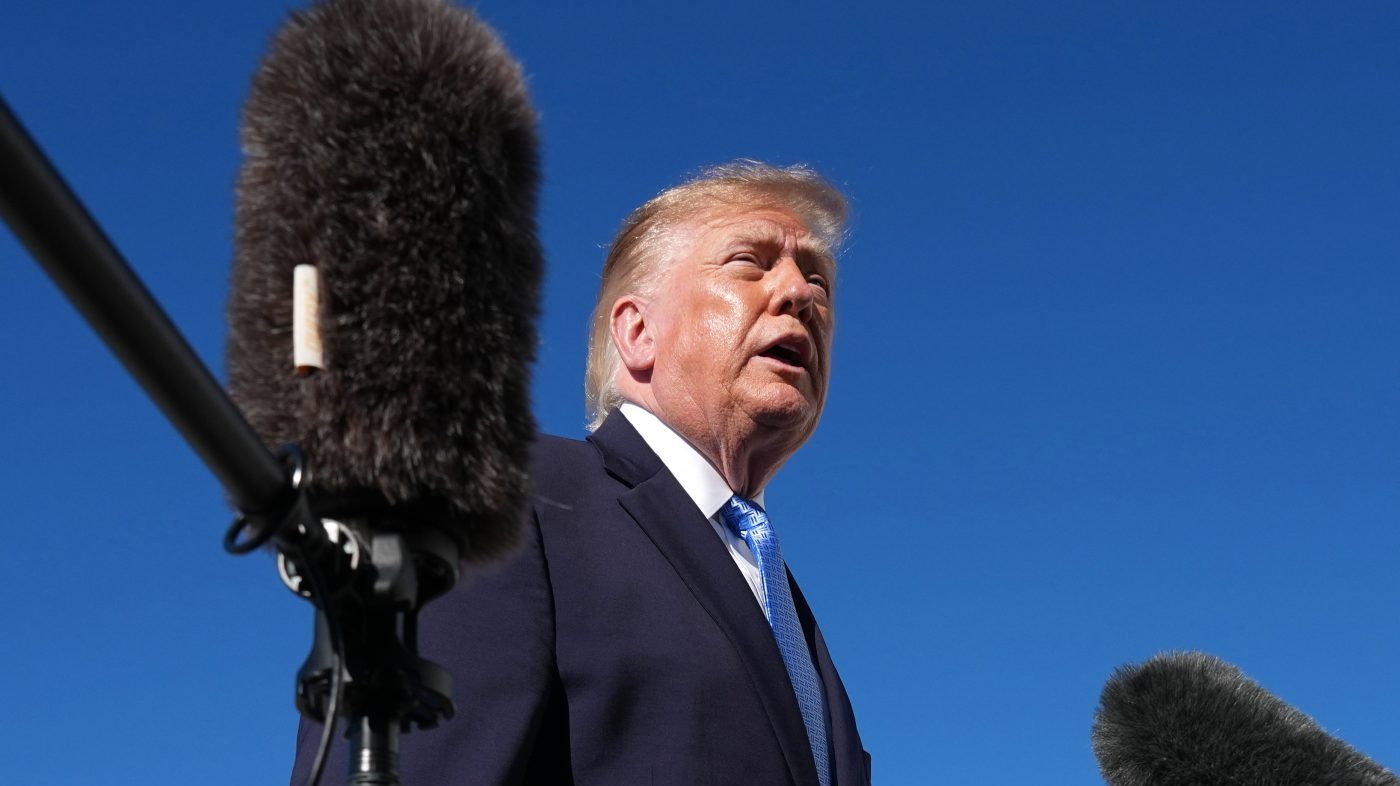
President Trump on Monday dismissed Brazil's presidential election as “rigged,” casting doubt on the integrity of the vote that returned leftist leader Luiz Inácio Lula da Silva to power. Speaking to reporters, Trump said the contest “looked terrible” and suggested the outcome was not credible.
“I didn’t take sides, but it looked like another rigged election, frankly,” Trump said. “It was a terrible look for the world. Elections have to be indisputable, and it looked very bad to me.”
The remarks come after Lula defeated Flávio Bolsonaro, the son of former far-right President Jair Bolsonaro, in Sunday’s runoff. The elder Bolsonaro is currently serving a 27-year prison sentence for his role in an attempted coup following his 2022 loss to Lula. Trump had endorsed Jair Bolsonaro in that race but did not formally back his son this time.
Trump’s allegations of fraud echo his repeated claims about U.S. elections, which have been widely debunked. Brazilian electoral authorities and international observers have reported no evidence of widespread irregularities, and Lula’s victory has been recognized by most world leaders.
The dispute adds another layer to a fraught relationship between Trump and Lula. The Brazilian leader has been a vocal critic of Trump, and his return to power is seen as a boost for the left in a region that has recently swung rightward.
Last year, Trump imposed a 50% tariff on Brazilian goods, citing the prosecution of Jair Bolsonaro. Lula fired back in an op-ed for The New York Times in September, calling the tariffs “illogical” and economically misguided.
Despite the tension, the two presidents met at the White House in May, and Flávio Bolsonaro also held talks with Trump later that month. Those interactions have done little to ease the friction, and Trump’s latest comments are likely to further strain relations between Washington and Brasília.
Lula’s victory has drawn praise from progressive leaders worldwide, while Trump’s silence on the outcome—until now—had been notable. His unsubstantiated claims are expected to resonate with his political base, but they risk deepening divisions with a key ally in South America.
As the Biden administration prepares to navigate a new political landscape in Brazil, Trump’s rhetoric underscores the ongoing polarization that continues to shape U.S. foreign policy debates.