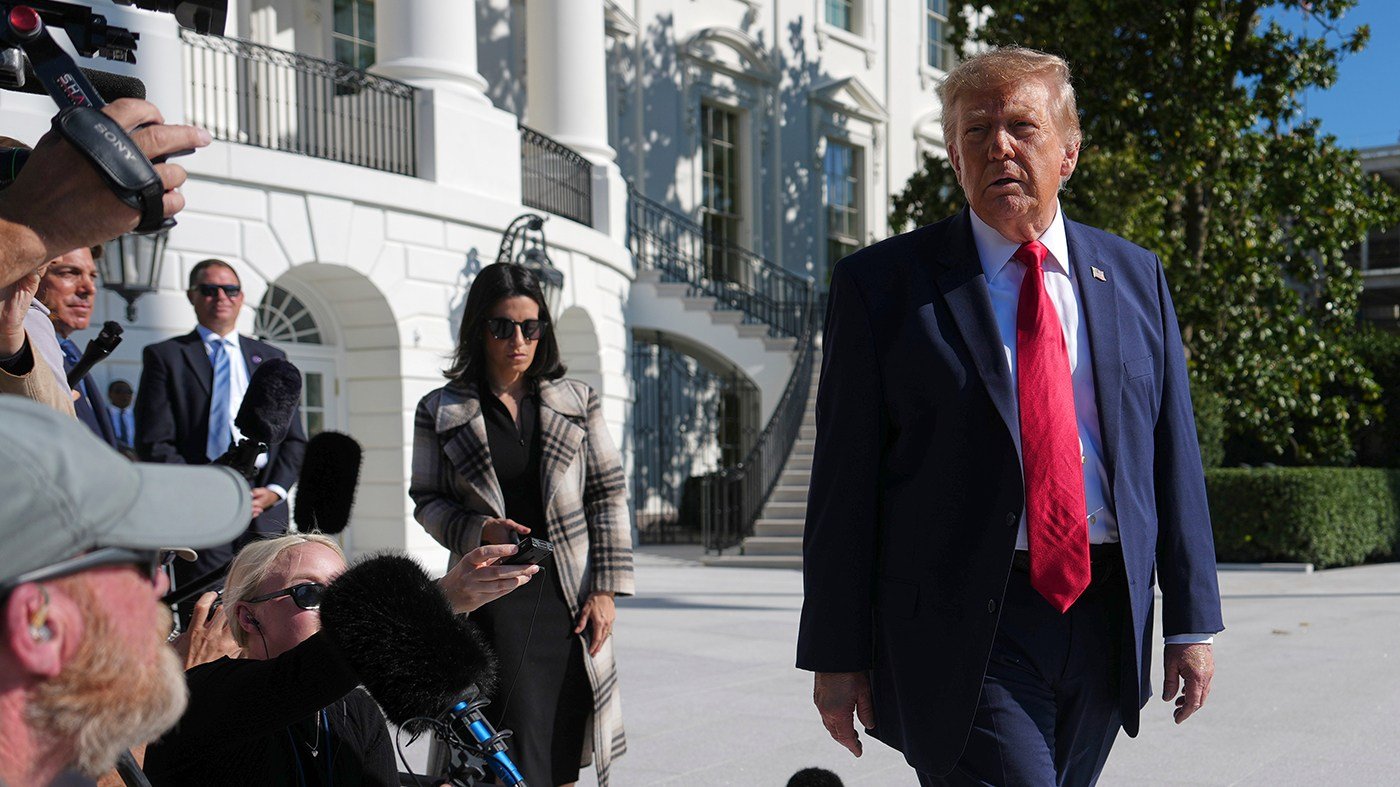
Six private citizens have filed a federal lawsuit against President Trump and two senior aides, challenging the administration's recent moves to bar certain news organizations from White House events. The complaint, submitted on Monday, names Trump, White House communications director Steven Cheung, and chief of staff Susie Wiles as defendants, and argues that the new press-access rules are a form of viewpoint discrimination that violates the First Amendment.
The 26-page filing contends that the administration's policy "deprives the public of the reporting of those organizations, and it inevitably deprives them of the independent reporting of other news organizations as well." The plaintiffs, who are not journalists themselves, say they rely on a free and independent press to stay informed about the presidency, and that the bans have a chilling effect on all White House coverage.
According to the lawsuit, "Every journalist who reports from the White House must now account for the possibility that a critical or ill-advised word about the president may result in their access being summarily restricted or revoked." The plaintiffs argue that the "threat of being targeted in the future is likely to distort the reporting of news organizations today," and they ask the court to grant "broader equitable relief" to protect the public's right to receive independent reporting.
The suit specifically asks the courts to declare the White House's policy "unconstitutional because it imposes restrictions on a limited public forum that are viewpoint-based and unreasonable." It also references earlier incidents, including the administration's decision to bar Politico, CNN, and MSNBC from White House events earlier this year, a move that a federal judge temporarily blocked on due-process grounds.
A White House official defended the policy, telling The Hill, "No person may demand access to the Oval Office." The official added, "Media that pedal misinformation and defamation are completely capable of reporting their manufactured stories from directly outside."
Legal experts and press advocates have rallied behind the plaintiffs. Katie Fallow, deputy litigation director at the Knight First Amendment Institute, said in a statement, "The White House cannot decide what information Americans receive by punishing critical reporting." She added, "When the White House expels reporters because of their coverage and threatens others with expulsion, it isn't just the press that suffers—the public loses access to independent reporting and gets something closer to government propaganda."
The lawsuit also highlights the case of Andrew Feinberg of The Independent, who says he was removed from his print press pool duties after a confrontation with the president in the Oval Office. Feinberg and some CNN reporters have also said they were still unable to join the press pool on Air Force One, further illustrating the administration's willingness to restrict access based on coverage.
This legal challenge comes amid growing concerns about press freedom under the current administration, a topic that has drawn attention from lawmakers and advocacy groups. Related disputes over government transparency and immigration policy have also reached the courts, as seen in lawsuits over green card freezes and other executive actions.
The plaintiffs are seeking a declaratory judgment that the White House's press-access policy is unconstitutional, as well as an injunction preventing the administration from excluding reporters based on the content of their reporting. The outcome could set a significant precedent for how presidents manage the press corps, and whether the White House can effectively pick and choose which outlets get to cover the president up close.
As the case moves forward, it is likely to reignite debates over the proper balance between executive privilege and the public's right to know—a balance that has been tested repeatedly in recent months, including in controversial appointments and other policy decisions. For now, the court will have to decide whether the White House's actions cross the line from managing access to censoring the press.