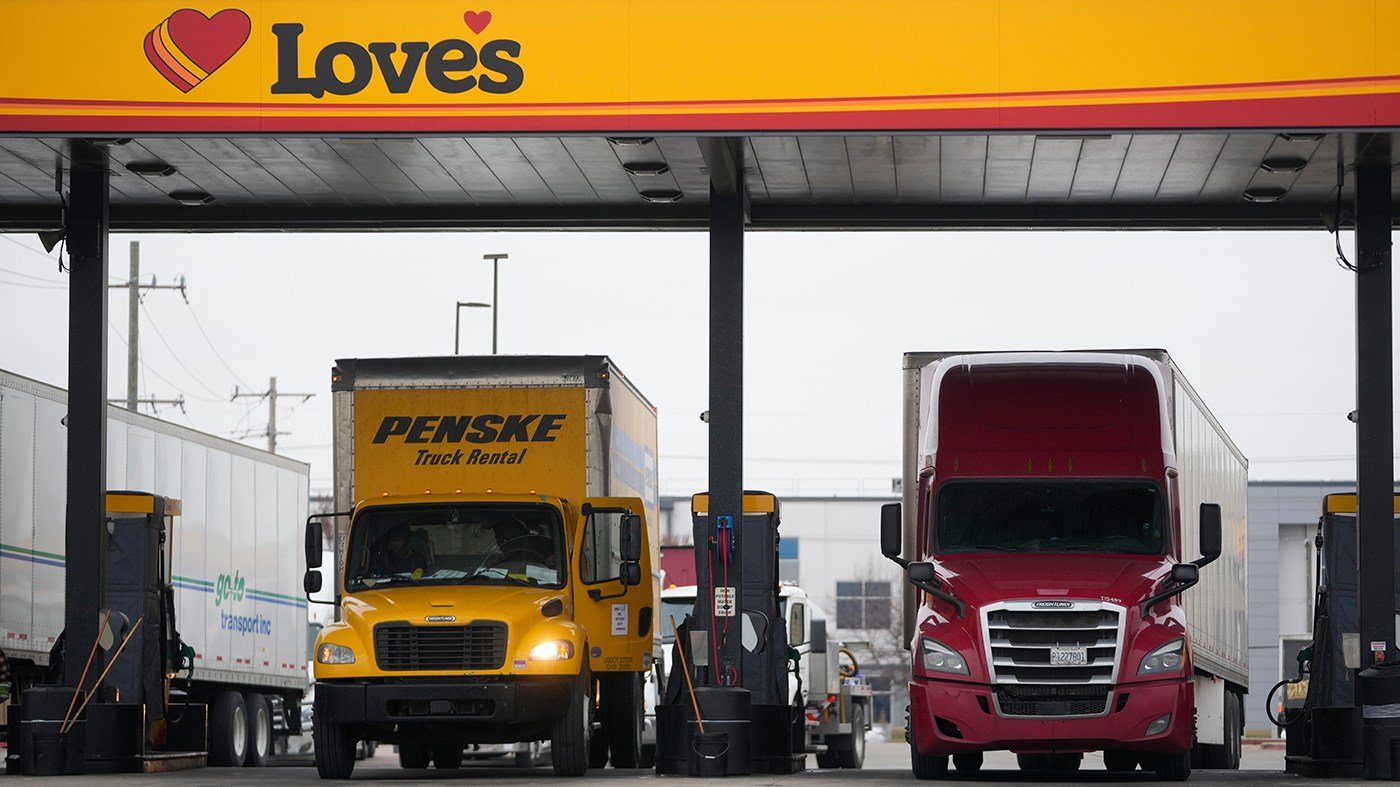
The Trump administration on Friday took a significant step toward loosening fuel efficiency requirements for medium- and heavy-duty commercial trucks, targeting a key piece of the Obama administration's climate agenda. The Transportation Department argued that the previous rules overstepped the government's legal authority, particularly the requirement that engine manufacturers meet specific efficiency targets.
The Obama-era standards, finalized in 2016, imposed separate mandates for both the entire vehicle and its powertrain. The Trump administration now asserts that the federal government does not have the statutory power to regulate engine efficiency independently. In a new interpretation published Friday, the department laid out its legal reasoning, signaling a major shift in how it will enforce the rules.

While the new interpretation does not formally repeal the existing engine standards, the department made clear in a press release that it would not enforce them while it works to finalize a rule that would codify the change. That effectively freezes the engine requirements in place, giving manufacturers immediate relief from compliance obligations.
Jonathan Morrison, who leads the National Highway Traffic Safety Administration (NHTSA), framed the move as a win for innovation over bureaucracy. “American innovators — not Big Government — know how best to design vehicle engines. The Trump Administration is getting out of the way so manufacturers can decide how they want to meet fuel efficiency requirements,” Morrison said.
The action is the latest in a broader pattern of the Trump administration rolling back vehicle-related regulations, including those tied to fuel economy, greenhouse gas emissions, and air pollution. Earlier this year, the administration finalized a rule that significantly weakened passenger car fuel efficiency standards, and it has moved to revoke California's authority to set its own stricter emissions rules.
Environmental groups were quick to condemn the trucking decision, arguing that less efficient vehicles will lead to higher operating costs for businesses and ultimately higher prices for consumers. Katherine García, director of the Sierra Club's Clean Transportation for All campaign, said in a statement: “Weakening fuel efficiency standards for heavy-duty trucks means locking truckers and businesses into greater dependence on diesel and greater exposure to volatile fuel prices, costs that will ultimately get passed down to consumers.”
The move also comes amid a broader administration push to reduce regulatory burdens on industries, including recent efforts to ease meatpacking rules and allow farmers to process their own meat, part of an ongoing push to loosen federal oversight in the agricultural sector. That parallel approach — deregulation across multiple industries — has drawn praise from business groups and criticism from consumer advocates.
Industry trade associations, which had lobbied for the change, welcomed the announcement. They argued that the Obama-era engine standards were technologically unworkable and added significant costs without commensurate environmental benefits. The Trump administration's reinterpretation, they say, will allow manufacturers to focus on the most cost-effective ways to improve efficiency.
Legal experts note that the administration's new interpretation could face court challenges. Environmental groups and some states have already signaled they will sue to block the rollback, arguing that the government has clear authority under the Energy Policy and Conservation Act and the Clean Air Act. The outcome of those lawsuits could determine whether the new interpretation stands or is struck down.
For now, the practical effect is that truck and engine makers will not have to meet the Obama-era engine standards while the rulemaking process unfolds. That process could take months or even years, and the final rule will likely be subject to further litigation, leaving the future of truck fuel efficiency standards uncertain well beyond the current administration.