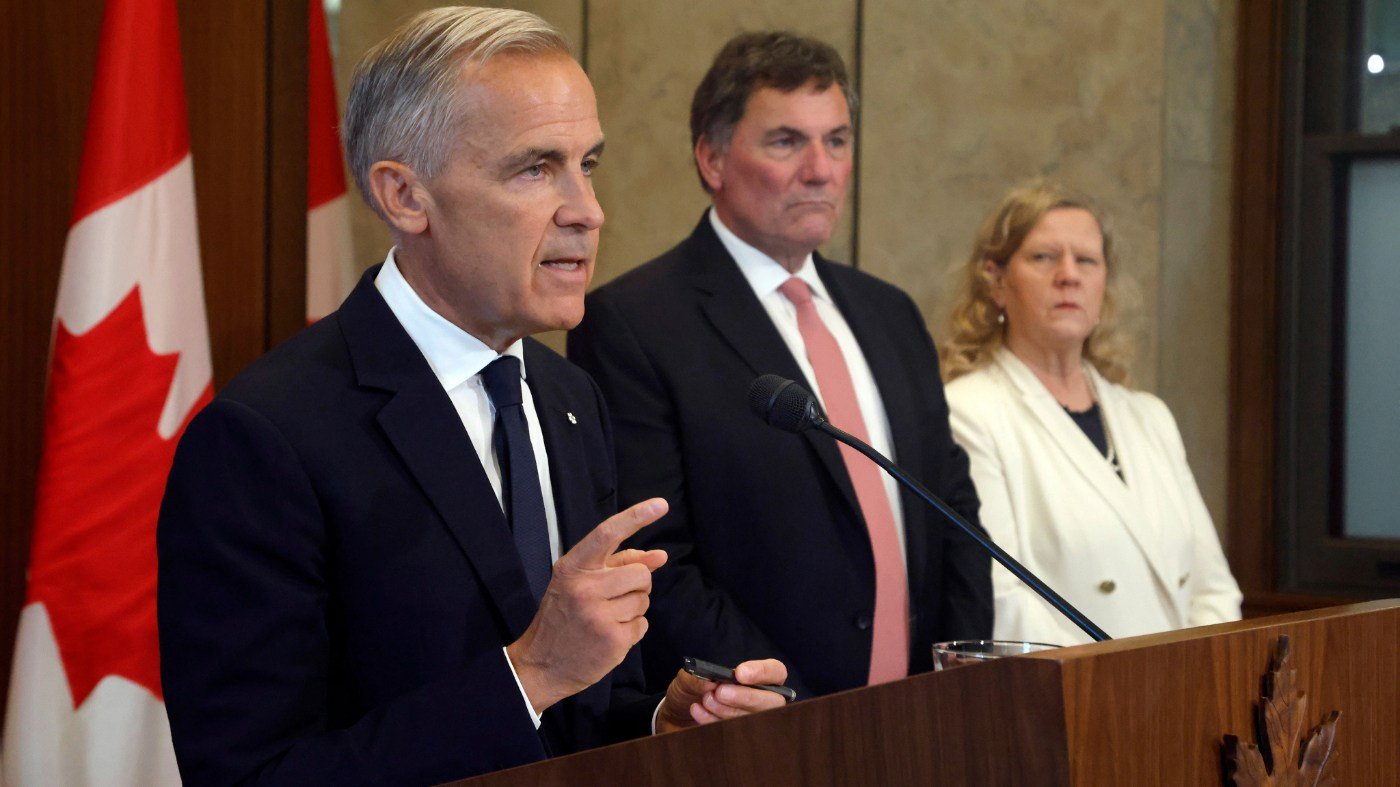
The breakdown of US-Canada trade negotiations last week has exposed a deeper problem for Washington: its leverage on trade does not translate into influence over Canadian defense decisions. The administration sought more than just dairy and alcohol concessions—it wanted Ottawa to finalize its F-35 purchase, join the Golden Dome missile defense initiative, and grant American firms privileged access to Canadian critical minerals. By Saturday morning, those talks were dead, with 50% tariffs hitting roughly $20 billion in Canadian goods and Prime Minister Mark Carney vowing retaliation "dollar for dollar" starting September 8.
The immediate economic impact is clear, but the strategic cost may be far larger. Tariffs are enforceable at the border, but defense cooperation requires sustained political will in Ottawa. No Canadian government can be forced to sign multi-year contracts or allocate budget votes under duress. Squeezing Canada on trade does not make those commitments more likely—it makes them harder to defend domestically.

Canada has finally started increasing its defense spending, with Carney pledging half a trillion dollars over the next decade. Historically, about 70% of Canada's defense procurement went to US suppliers. Carney's new industrial strategy explicitly aims to redirect that share to Canadian firms. The trade fight did not start this pivot, but it has provided powerful ammunition for those arguing that reliance on the US is a liability.
The F-35 program is a prime example. Canada contracted for 88 aircraft, but Carney ordered a review of the purchase after Trump's first tariff offensive last year. Washington hoped to secure a commitment to complete the buy during these talks—it left empty-handed. The suspension of the Pentagon's long-standing military consultation board with Canada in May, citing slow progress on defense spending and the stalled F-35 decision, only deepened the rift.
Similarly, the dispute over critical minerals underscores the limits of coercive diplomacy. The Pentagon has legitimate reasons to want secure North American supplies to reduce dependence on China. But demanding privileged access while simultaneously punishing Canadian industries with tariffs was never a viable path to a deal. Carney has already rejected exclusive access, calling deeper minerals cooperation one of the casualties of the failed talks.
For over seven decades, the US-Canada Defense Production Sharing Agreement tied the two countries' defense industries together, with more than 110 Canadian companies participating in the F-35 supply chain. This arrangement benefited Washington because Canadian procurement usually reinforced an American-centered continental defense economy. That quiet assumption—that cooperation did not need to be re-earned every budget cycle—is now in question.
Golden Dome exposes the same problem from another angle. Canada is already investing in NORAD modernization, including new radar and surveillance for northern approaches that any continental missile defense would require. But Canadian participation requires Canadian consent and funding. Tariff pressure does not make that participation more likely; it makes routine cooperation look like something Ottawa must constantly defend politically.
No serious Canadian government will withdraw from NORAD—geography and shared interests make that unthinkable. The real damage will appear in the next round of procurement decisions: aircraft, sensors, industrial partnerships. As Canada decides where its much larger defense budget goes, the question is how much of that money will still flow south after a year of tactics that turned dependence on the United States into a political liability in Ottawa.
President Trump wanted Canada to shoulder more of its own defense burden. He may get exactly that. What his administration has not fully reckoned with is the possibility that Canada will do so while buying less from American firms, reshaping a relationship that has been a cornerstone of continental security since 1956.