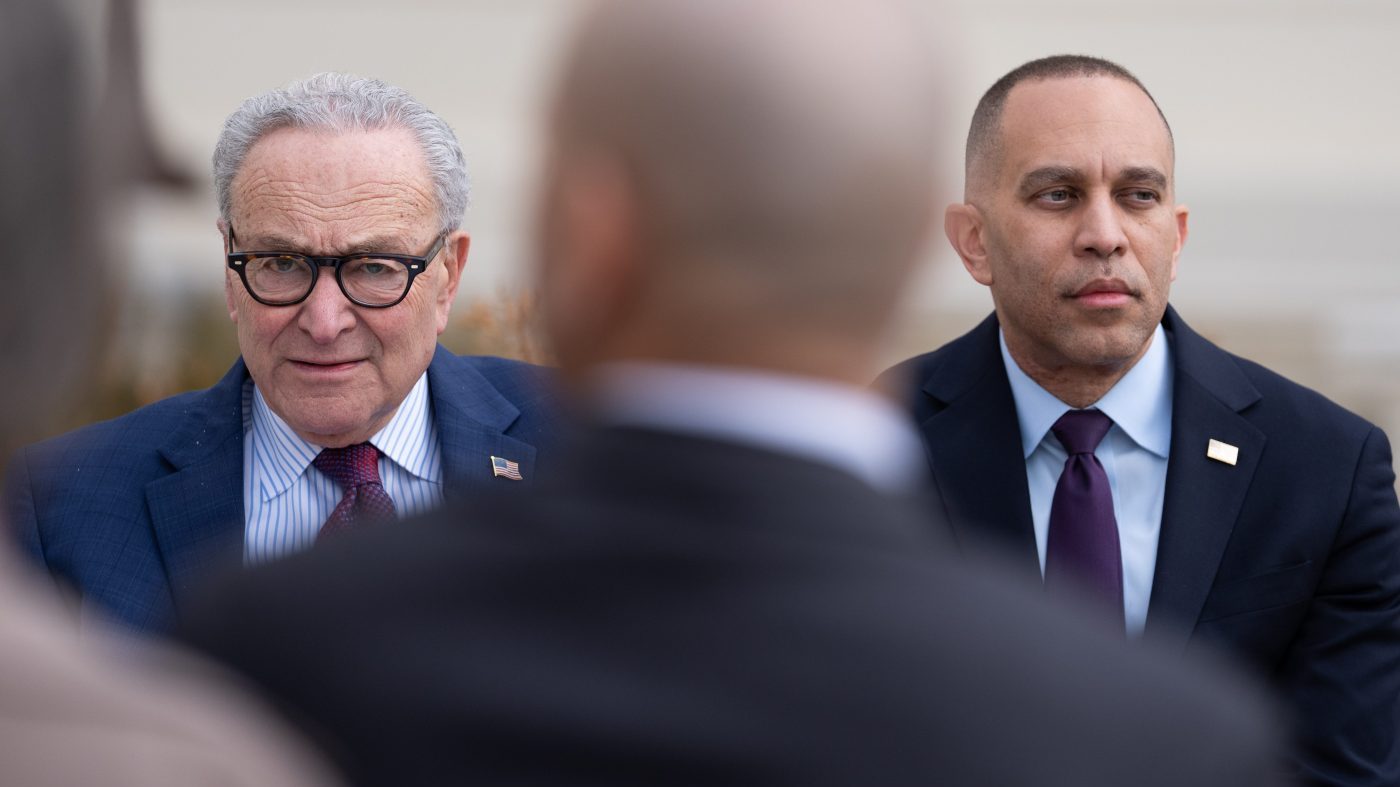
Former Meet the Press host Chuck Todd delivered a stark warning Thursday: the two top Democrats in Congress, Senate Majority Leader Chuck Schumer and House Minority Leader Hakeem Jeffries, would not survive a primary in New York City right now. Todd made the comment on NewsNation as democratic socialist candidates backed by Mayor Zohran Mamdani won key congressional primaries in the state, signaling a leftward shift within the party.
“The two leaders of the Democratic Party in Congress, Chuck Schumer in the Senate and Hakeem Jeffries in the House, neither one of them could win a primary in New York City right now,” Todd said. “Not even close.” The remark came after two Mamdani-aligned democratic socialists defeated more moderate opponents in New York primaries, further elevating the progressive movement’s profile.
These victories, along with other recent wins by Democratic Socialists of America (DSA) candidates across the country, have intensified debate over the party’s direction. Todd cautioned, however, that the New York districts won by DSA candidates are deep-blue urban seats, not swing districts, so the results shouldn’t be overinterpreted ahead of the general election.
“We’ve had cycles of this in cities,” Todd said. “But the point is that socialism usually gets stopped in the suburbs, right. That’s where it usually stays in the cities.” He suggested the real test for the left will be whether socialist ideas can win outside of strongholds like New York, Los Angeles, and Washington, D.C.
Todd pointed to the Michigan Senate primary as a critical bellwether. Progressive candidate Abdul El-Sayed, backed by Sen. Chris Van Hollen, is challenging Rep. Haley Stevens and state Sen. Mallory McMorrow for the Democratic nomination to succeed retiring Sen. Gary Peters. “The establishment is absolutely petrified that Abdul El-Sayed could not hold that Senate seat, and it would cost them a shot at the Senate,” Todd said.
He outlined two scenarios that could reshape the party. If El-Sayed wins both the primary and general election, it would likely push Democrats further left. But if he wins the primary and loses in November, Todd argued that could send progressives “back into hibernation.” He also noted that a victory by progressive oyster farmer Graham Platner in Maine’s Senate race could create an opening for Rep. Alexandria Ocasio-Cortez or someone of her ideological stripe to run for president in 2028.
“If those two people do not get into the United States Senate, then I think you’re more likely to see a Josh Shapiro and Andy Beshear,” Todd said, referring to the moderate Democratic governors of Pennsylvania and Kentucky. The outcome, he suggested, could determine whether the party’s future is shaped by progressives or centrists.
House Minority Leader Jeffries has downplayed concerns about internal divisions, but Todd’s analysis underscores the stakes. The leftward drift, particularly in New York, has already reshaped the political landscape, with DSA-backed candidates winning primaries and the party’s leadership facing questions about its viability in deep-blue districts. As the progressive primary sweep in New York deepens the Democratic rift over strategy, the party’s future direction hangs in the balance.
Todd’s comments also highlight the broader challenge for Democratic leaders: balancing the energy of the progressive base with the need to win in suburban and swing districts. The upcoming Michigan and Maine primaries will be key tests, as the DSA sets its sights on 2028 and the party grapples with its identity.