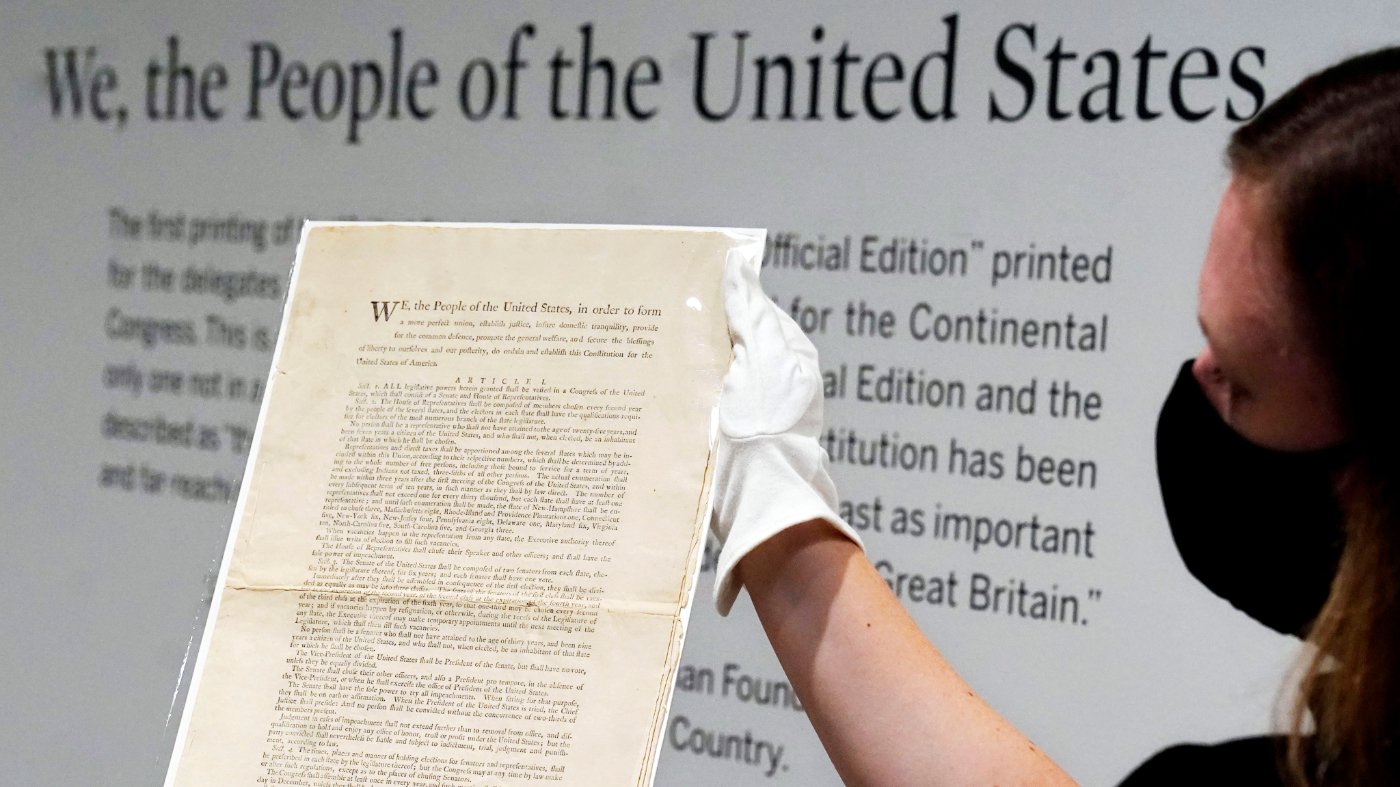
In a bold essay for America magazine, College of the Holy Cross president Vincent Rougeau declared the U.S. Constitution “past its sell-by date.” Political commentator John Kenneth White agrees, and he’s taking the argument a step further: it’s time to write a whole new governing document for the 21st century.
White, a professor emeritus at The Catholic University of America and coauthor of Democracy on the Edge, points to the Constitution’s near-impossible amendment process as the core problem. Only 27 amendments have ever been added, and the last one was ratified 34 years ago. That gridlock, he argues, makes it impossible to overturn controversial Supreme Court rulings through the normal constitutional process.

Recent decisions have fueled the urgency. An amendment could reverse the Court’s evisceration of the 1965 Voting Rights Act, ensuring minority representation in Congress. It could also overturn Citizens United, which unleashed unlimited money into politics; restore abortion rights after Dobbs; or undo the Trump v. U.S. ruling that shields presidents from prosecution for official acts. But under the current system, none of those changes are feasible.
Other proposed amendments—age limits for presidents, congressional term limits, or tighter bans on presidents profiting from office—face the same dead end. As Rougeau noted, the Framers built one of the world’s most rigid amendment mechanisms.
Structural flaws compound the problem. The Electoral College has produced two popular-vote losers in the White House this century—George W. Bush in 2000 and Donald Trump in 2016. White argues that if the popular vote determined the winner, the January 6 insurrection likely never would have happened. The Senate is another defect: with two senators per state, states representing a small fraction of the population can block majority will. Alexander Hamilton warned of this in Federalist No. 22, writing that a time might come when “the majority of States is a small minority of the people of America.” White says that time is now.
Congress could patch some problems without a new constitution. It could expand the House beyond its arbitrary 435 seats to reflect a nation of nearly 350 million, enlarge the Supreme Court and set term limits for justices, or ban partisan gerrymandering. But in a polarized era, even those fixes are unlikely.
Some argue the Constitution isn’t the problem—it’s the people running the institutions. Donald Trump, White notes, has built what Jack Landon Goldsmith calls a “Caesarian Presidency,” perverting the Framers’ intent. Senator Angus King (I-Maine) blames his Republican colleagues for abdicating Congress’s Article One powers. But the filibuster, which the minority party loves and the majority hates, blocks reform.
White invokes Thomas Jefferson, who believed every generation should write its own constitution. “Doing otherwise,” Jefferson wrote, “would be an act of force and not of right.” As the nation approaches the 250th anniversary of the Declaration of Independence, White argues it’s time to heed that call and draft a new constitution for the 21st century.
For more on the ongoing debate over voting rights and the Supreme Court, see House Democrats Sound Alarm on Voting Rights Ahead of 2026 Midterms and Poll: 69% Want Supreme Court to Uphold Birthright Citizenship.