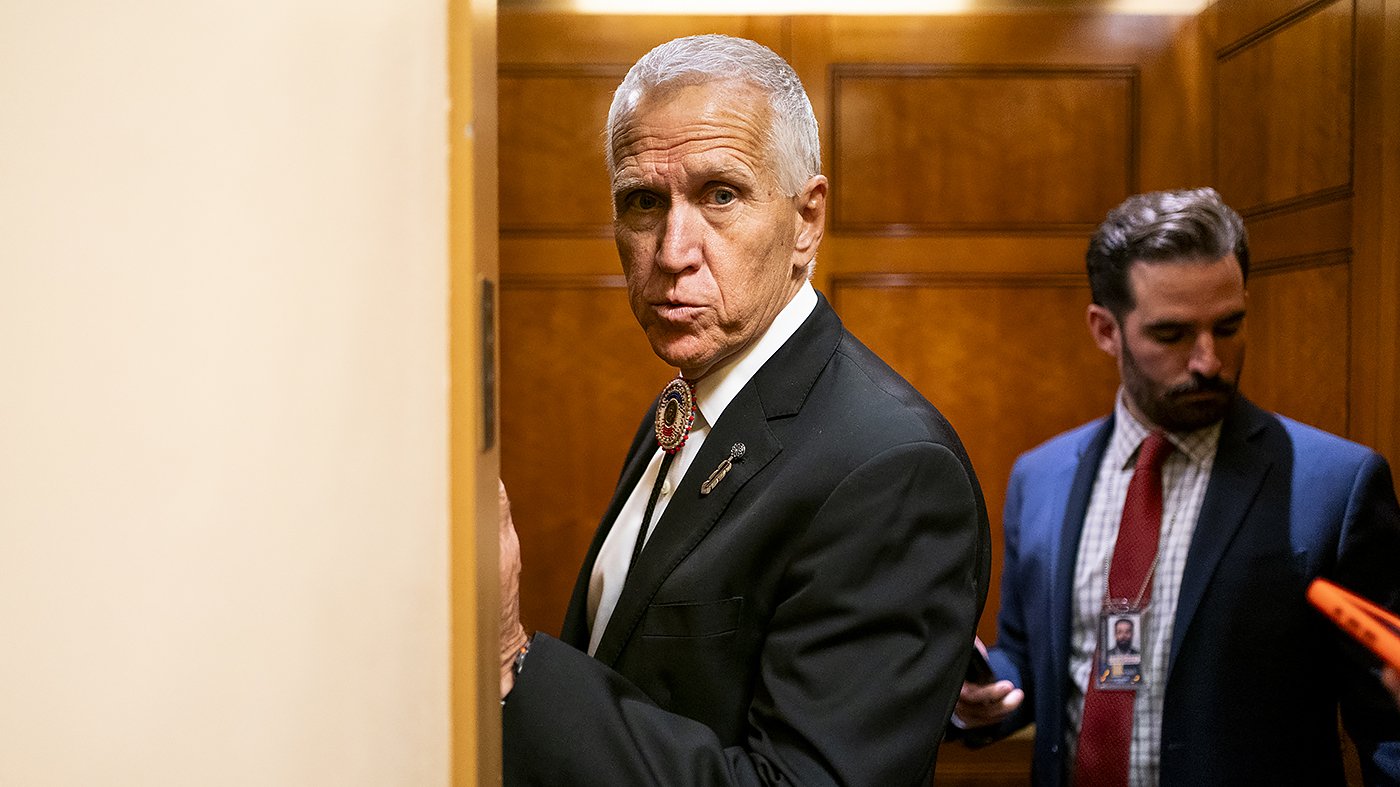
Republican Senator Thom Tillis of North Carolina, who is retiring at the end of this Congress, launched a blistering critique of Defense Secretary Pete Hegseth on Sunday, arguing that Hegseth's performance has been so poor it makes former Homeland Security Secretary Kristi Noem look like a top-tier hire. Noem was fired by President Trump earlier this year.
In an interview on CNN's “State of the Union,” Tillis pointed to Hegseth's handling of the conflict with Iran, particularly the emerging terms of a tentative deal between the Trump administration and Tehran. According to reports, the agreement would allow Iran to retain its nuclear material, a stark reversal from earlier promises.
“When you see these mistakes made by Hegseth … with all of these mistakes in total, it’s beginning to make Kristi Noem look like a five-star recruit,” Tillis told host Jake Tapper.
Tillis highlighted a glaring contradiction: Hegseth had previously claimed that the U.S. had “obliterated” Iran’s defenses and was “in position to, pretty much, dictate terms.” Yet the reported deal would allow nuclear material to stay in Iran, a scenario the senator called nonsensical.
“We were told about 11 weeks ago by Hegseth and the Department of Defense that they had obliterated Iran’s defenses and it was just a matter of time before we had the nuclear material. Now we are talking about a posture where we may accept the nuclear material remaining in Iran? How does that make sense at all?” Tillis said.
The senator also criticized Hegseth for the Pentagon’s initial decision to cancel the deployment of thousands of troops to Poland, only to reverse course, as well as for pulling back support for Ukraine. These missteps, Tillis argued, have eroded confidence in the Defense Department’s leadership.
The emerging deal with Iran has broader implications for global energy markets. Iran’s military restrictions on shipping through the Strait of Hormuz, which carries about 20 percent of the world’s oil supplies, have already driven up U.S. gasoline prices from under $3 per gallon to over $4.50, according to AAA. The Fars news agency reported that the agreement would allow Iran to manage the strait, a concession that could further roil energy markets.
Tillis’s criticism of Hegseth marks a notable shift for the senator, who voted to confirm both Hegseth and Noem last year. Hegseth’s confirmation required Vice President Vance to break a 50-50 tie, after senators raised concerns over allegations of sexual misconduct, excessive drinking, and financial mismanagement—all of which Hegseth denied. Tillis had previously been a sharp critic of Noem, faulting her department’s delayed disaster relief funding for North Carolina and the fatal shooting of two U.S. citizens by immigration officers in Minneapolis.
The retiring senator has had his own tensions with Trump, who attacked Tillis for opposing the GOP’s tax and spending legislation last summer. Tillis has also been vocal on other defense matters, rejecting an Iran war powers resolution as a “messaging exercise,” and has blasted Trump over a $1.8 billion fund as “beyond the pale.”
As the Trump administration negotiates with Tehran, Tillis’s remarks underscore growing unease among some Republicans about the direction of U.S. defense policy. The deal’s potential to leave nuclear material in Iran, combined with Hegseth’s earlier bellicose statements, has created a credibility gap that Tillis and other critics are eager to exploit.