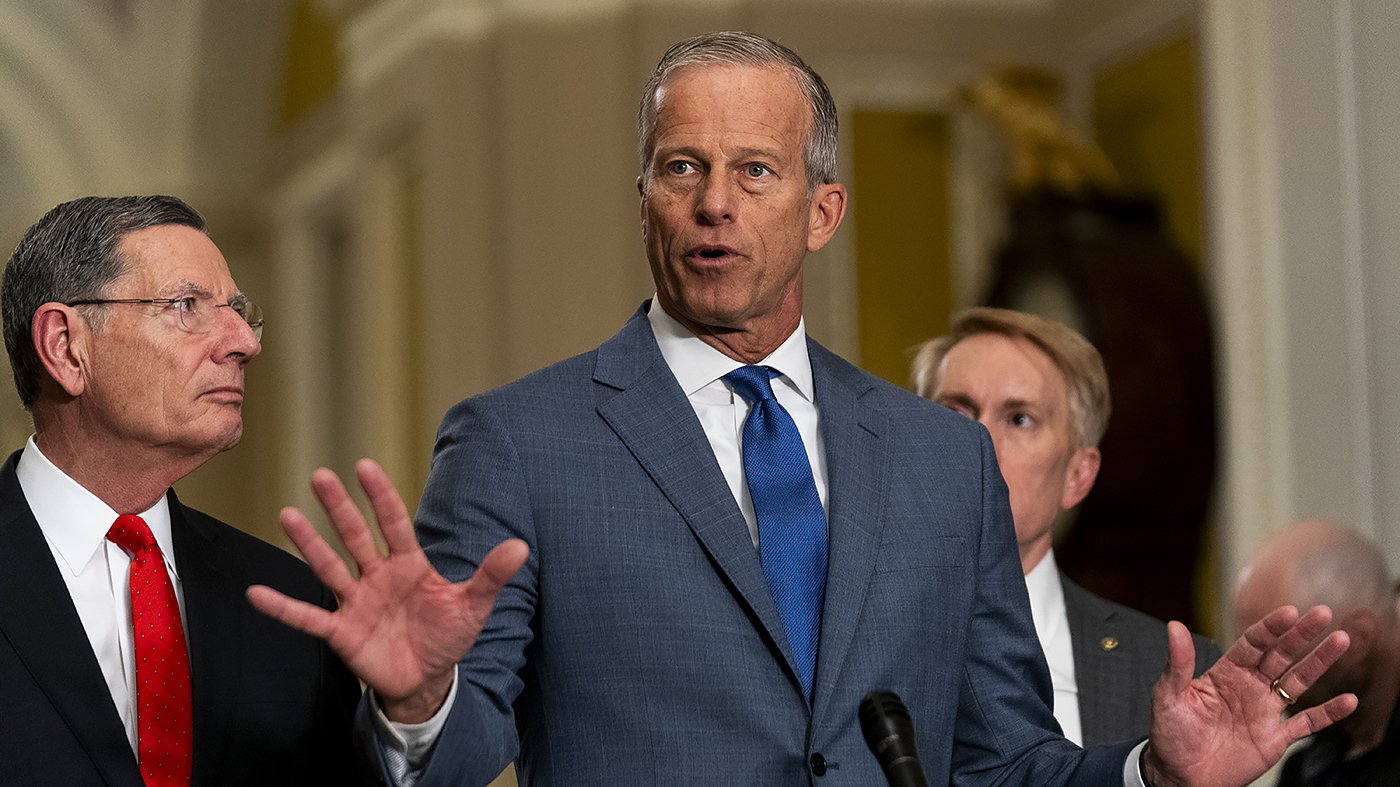
Senate Majority Leader John Thune (R-S.D.) moved Thursday to place a House-passed Ukraine aid and Russia sanctions package on the Senate calendar, setting the stage for a potential vote later in July. The legislation, which cleared the House last month on a 226-195 vote, would provide $1.3 billion in security assistance to Kyiv and expand punitive measures against Moscow.
The bill attracted 18 House Republicans who broke with party leadership to support it, despite an aggressive push by Speaker Mike Johnson (R-La.) to kill it. Johnson dismissed the measure as “poorly drafted” during a private GOP conference meeting and urged colleagues to vote no.
By requesting a second reading of H.R. 2913, Thune effectively teed up the legislation for floor consideration. The move signals that Senate leadership is willing to take up the contentious package even as internal Republican divisions persist over the scope and strategy of U.S. support for Ukraine.
Graham-Led Sanctions Effort Gains Traction
Separately, a bipartisan group of senators this week unveiled a tougher sanctions bill negotiated by the late Sen. Lindsey Graham (R-S.C.) before his sudden death. That legislation would impose punitive tariffs of up to 100 percent on countries that purchase Russian energy exports, targeting the largest importers of Russian crude oil. However, it carves out exemptions for key U.S. allies like France and Japan that continue to buy Russian natural gas.
The Graham-backed sanctions bill has drawn criticism from some Republicans, including Sen. Rand Paul (R-Ky.), who objects to slapping massive tariffs on major consumers of Russian oil such as China and India. Those two nations exported more than $400 billion worth of goods to the United States in 2025, making any retaliatory trade disruptions a significant economic concern.
Sen. Richard Blumenthal (D-Conn.), Graham’s partner on the sanctions push, praised the House-passed bill last month, calling it a “sledgehammer combination of military support and economic sanctions.” Blumenthal argued the measure would help Ukraine “finish the job” while pressuring Russian President Vladimir Putin to seek peace and deterring further aggression.
Broader Ukraine Policy Landscape
The legislative maneuvering comes amid a rapidly shifting Ukraine policy environment. The Trump administration recently granted a license for Patriot missile production, and Ukraine’s deep strikes have rattled Moscow’s elite. Meanwhile, the death of Graham—a key architect of bipartisan Ukraine policy—has reshaped the debate, with some urging Trump to act on Iran and Taiwan as well. Putin’s growing desperation has led some analysts to warn that the Baltics could become his next gambit if the Ukraine war continues to sour.
The Senate is expected to weigh both the House-passed aid package and the Graham sanctions bill in the coming weeks, though the path forward remains uncertain given internal GOP divisions and the crowded July legislative calendar.