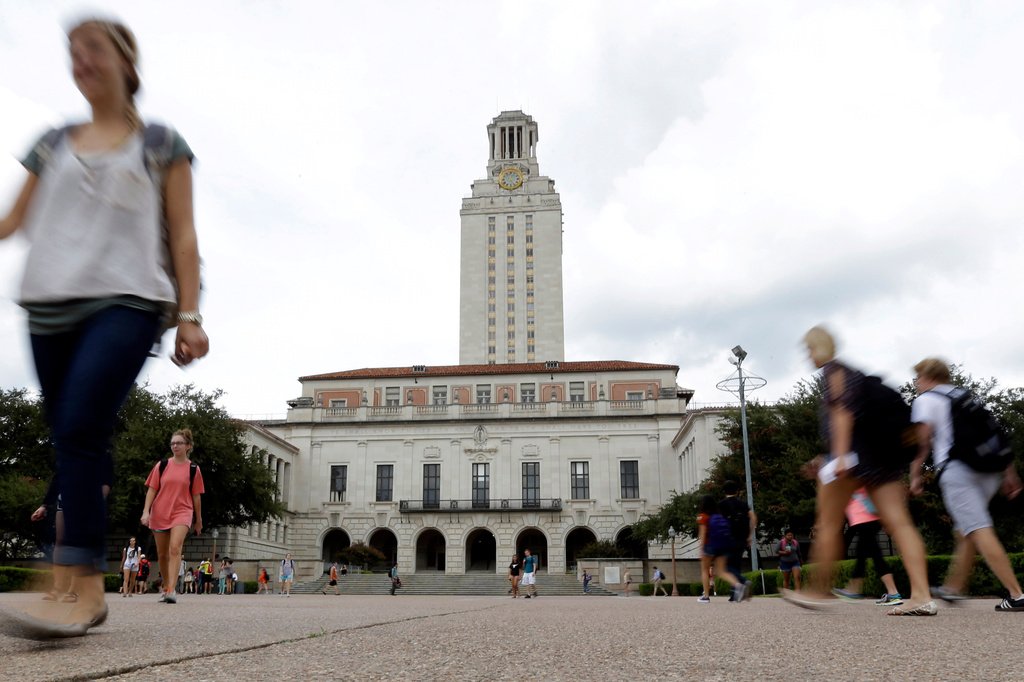
Students at Texas Tech University and the University of Texas at Austin are resurrecting a decades-old protest tactic—mock funerals—to decry what they see as the death of academic freedom on their campuses. The demonstrations, held this month in Lubbock and planned for Wednesday in Austin, draw direct inspiration from a 1944 student uprising that followed the firing of UT president Homer Rainey for defending faculty speech.
At Texas Tech, black-clad mourners marched alongside a horse-drawn carriage carrying an urn with the symbolic ashes of academic freedom. The protest targets the university's decision to shutter academic programs focused on gender identity and restrict student research on the topic. The organizers wrote that "the university and its spirit of academic freedom is survived by those who still insist on asking difficult questions."

The UT Austin protest will take aim at the board of regents' policy limiting classroom discussions of "controversial topics." Critics argue that such restrictions undermine the core mission of higher education, where professors must be free to explore ideas without fear of retribution.
The protests echo a pivotal moment in Texas higher education history. In 1944, UT regents fired Rainey after he refused to dismiss four economics professors who supported Franklin D. Roosevelt's New Deal—a stance that rankled conservative board members. "We don't like what they're teaching," one regent said bluntly. Rainey argued that academic freedom was essential to the university's purpose, and that tenure protected the professors from political interference.
The regents retaliated by firing three untenured economists and then attacking tenure itself, claiming the state constitution gave them sole hiring and firing authority. They also proposed a loyalty oath for faculty, asking questions like "Do you believe in Communism?" Rainey blocked that move, but after he publicly condemned "undue political interference" in a speech, the board fired him.
In response, 6,000 UT students marched silently to the state capitol, bearing a black-draped coffin labeled "ACADEMIC FREEDOM IS DEAD." They boycotted classes and demanded Rainey's reinstatement. At a football game against SMU, 13,000 spectators observed a moment of silence in his honor, with returning WWII veterans comparing the regents' actions to fascist repression. The student newspaper, the Daily Texan, warned that soldiers fighting abroad would be bewildered to find "the same enemy has invaded and taken over their beloved university."
The regents never reinstated Rainey, but they did rehire the fired economists and adopted a statement supporting academic freedom. Faculty gained a role in selecting the next president. The episode became a landmark for faculty governance and free inquiry in Texas.
Today, those principles face new threats. At Texas A&M, a philosophy professor resigned after being told he couldn't teach Plato's Symposium because of a passage about three genders. At Texas State, a historian was fired over comments about socialism made at a conference. And the broader political climate, including Attorney General Ken Paxton's investigations into groups like the SPLC, has chilled academic discourse.
Jonathan Zimmerman, a University of Pennsylvania historian who wrote about the protests, said the student activism is vital. "The only way to tamp down on these threats is to speak up," he said. The Texas Tech organizers echoed that sentiment, urging their peers to keep asking hard questions. If they do, academic freedom may survive another day.