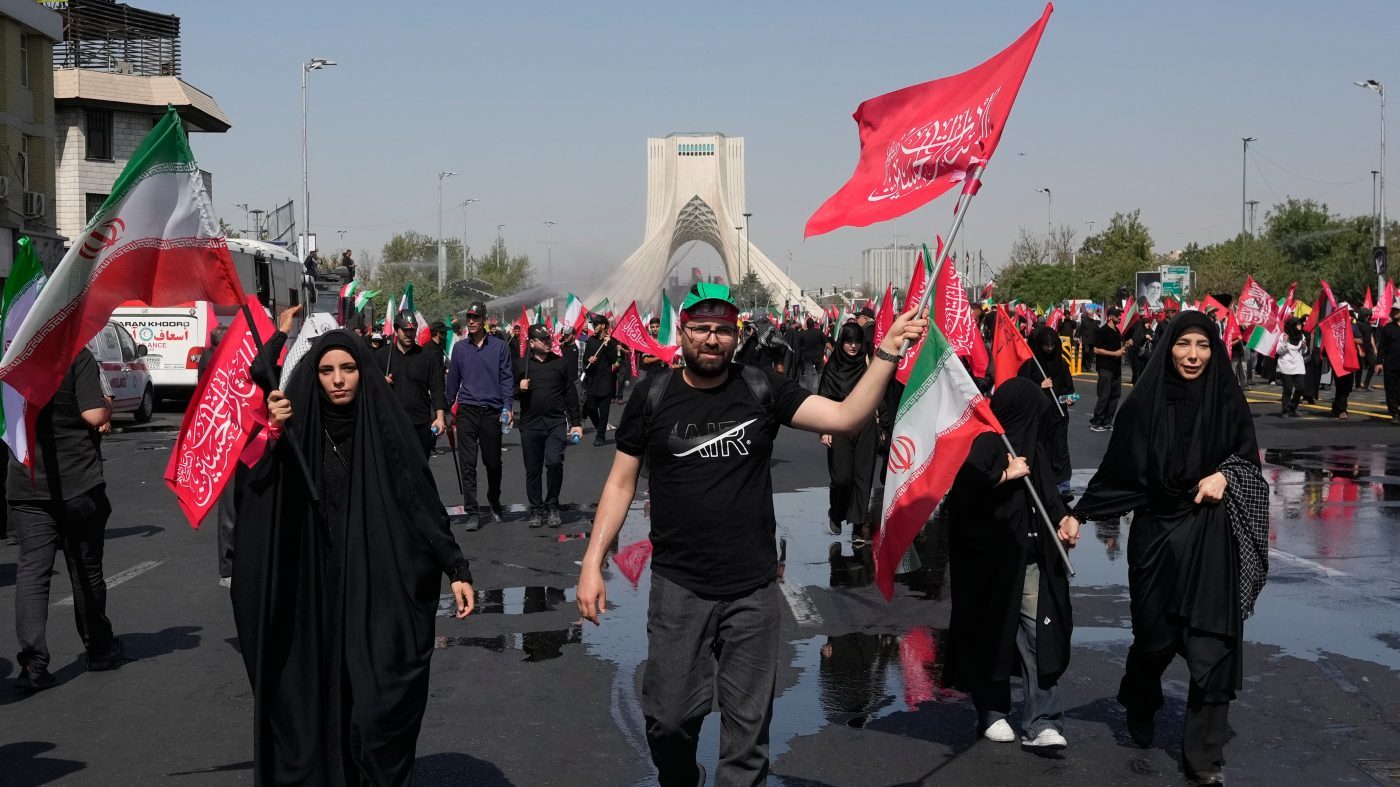
Tehran saw one of its largest public gatherings in years on Monday as tens of thousands of mourners packed the capital's central boulevards for the funeral procession of former Supreme Leader Ayatollah Ali Khamenei. Khamenei was killed in a U.S.-Israeli airstrike on Feb. 28 that also claimed the lives of several family members, triggering a brief but intense conflict that has since been paused by a fragile 60-day truce.
Khamenei's flag-draped casket was carried on a truck alongside four others bearing the bodies of relatives who died in the same strike. Mourners threw scarves and personal items toward the coffins, seeking blessings, while volunteers sprayed water to cool the crowd under the summer heat. The procession began at Mehrabad International Airport and was scheduled to continue to the Shiite holy city of Qom later Monday, with burial set for Thursday at the Imam Reza shrine in Mashhad, Khamenei's birthplace.
Notably absent from the funeral was Khamenei's son and designated successor, Mojtaba Khamenei, who has not been seen publicly since the airstrike. Reports indicate he was injured in the attack that killed his father, fueling speculation about his condition and the stability of the succession. The absence of the new supreme leader from his father's funeral has deepened secrecy and health concerns around Iran's leadership.
Iranian President Masoud Pezeshkian joined the mourners, participating in prayers behind Khamenei's coffin at the Imam Khomeini Grand Mosalla. In a post on X, he praised the late leader's legacy, writing, "The leadership of the martyr taught everyone that Iran's greatest asset is its people and their unity." He vowed to continue Khamenei's path of "honor, progress, and glory."
The funeral comes amid a tense pause in the war that erupted after Khamenei's death. The U.S. and Iran signed a memorandum of understanding last month, granting both sides 60 days to negotiate a lasting peace deal. But tensions remain high. Millions are expected for the burial, with some factions calling for revenge against the U.S. and Israel.
Khatam al-Anbiya Central Headquarters commander Ali Abdollahi warned Washington and Tel Aviv on Thursday against any attack during the funeral period, urging them to "avoid any miscalculation and to think about the harsh retaliation our armed forces would make to any threat and aggression against our country."
Khamenei had been Iran's supreme leader since 1989, succeeding Ayatollah Ruhollah Khomeini. A longtime critic of the United States, he shaped Iran's post-revolutionary identity and its network of Shiite proxies across the Middle East. Prominent members of those proxy groups are expected to attend ceremonies in Najaf and Kerbala, Iraq, on Wednesday, according to Reuters.
The war that followed Khamenei's death has largely been put on hold, but the underlying tensions remain unresolved. Khamenei had admitted doubts about the Iran-US pact before his death, a detail that now casts uncertainty on the negotiations. As Iran's leadership navigates a transition marked by secrecy and military posturing, the world watches for signs of whether the truce will hold.