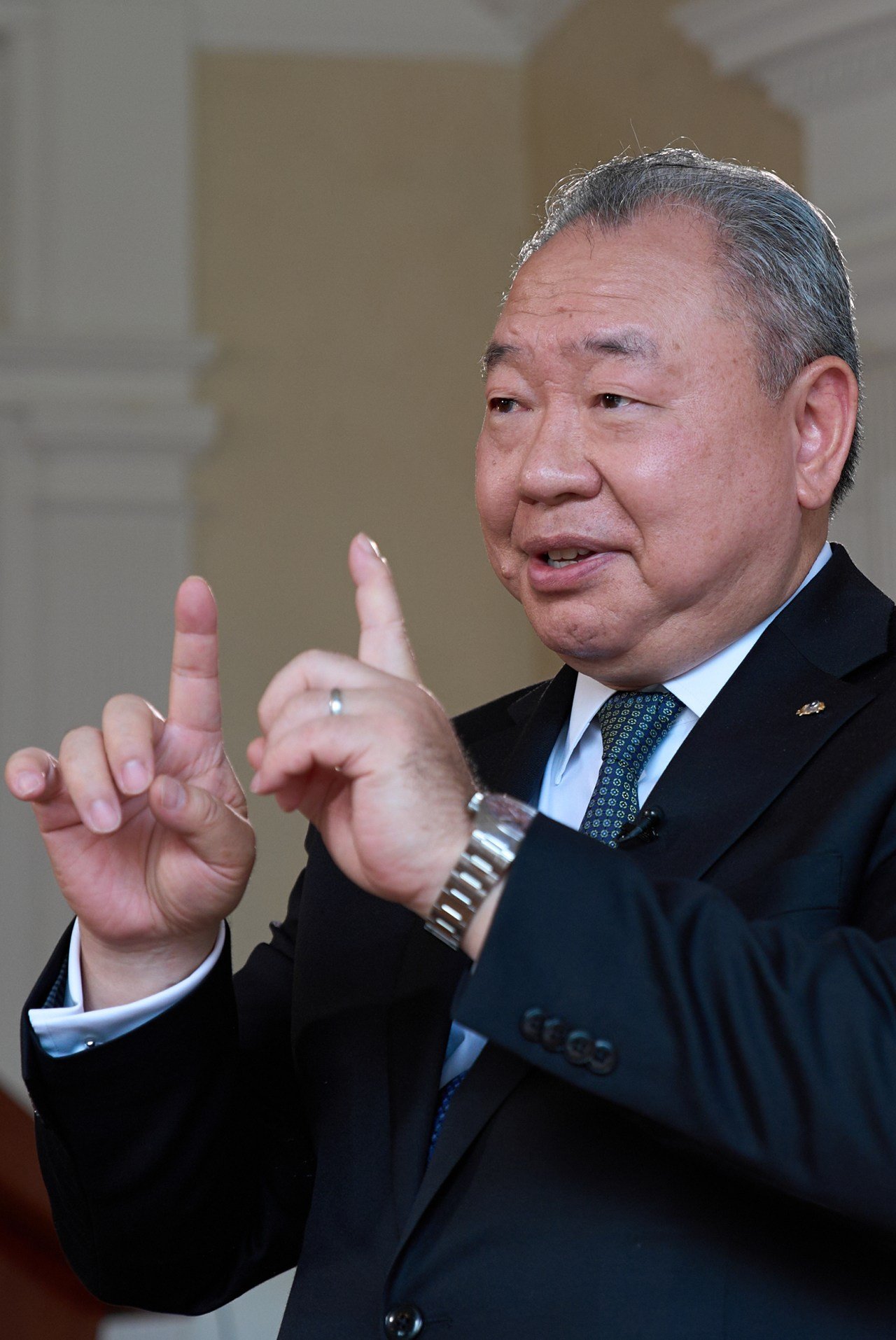
WASHINGTON — Taiwan's senior representative in the United States, Alexander Yui Tah-ray, insisted Wednesday that the island urgently needs American weaponry to defend itself against an increasingly aggressive Beijing, as a $14 billion arms sale remains in limbo under the Trump administration.
In an interview with the Associated Press, Yui, who heads the Taipei Economic and Cultural Representative Office in Washington, said Taiwan is committed to boosting its own defense capabilities and will not wait for a U.S. military rescue. “This is our responsibility, so we will not wait and depend for the U.S. cavalry to come and save us,” he said. “That’s why we’re willing to acquire, to buy U.S. equipment and arms to make ourselves stronger.”
The proposed weapons package, which has broad backing in Congress, stalled after President Donald Trump returned from a May meeting with Chinese leader Xi Jinping and described the sale as a “very good negotiating chip” with Beijing. The delay has heightened anxiety in Taipei and among U.S. lawmakers, who raised the issue with Secretary of State Marco Rubio at a recent hearing. Rubio affirmed that Washington does not consult Beijing on such deals, stating, “They are not negotiated, and they are not consulted.” He said the proposal is under review, with factors including U.S. stockpile availability after drawdowns during the Iran conflict.
Yui emphasized that Taiwan, which China claims as its own territory, faces a “pretty high” threat level from Beijing, which sends warships and military aircraft near the island almost daily and has conducted major exercises around it. “First and foremost, we’re not the aggressors. It is the People’s Republic of China who is sending all the planes and ships,” he said. “They’re the ones huffing and puffing. They are the ones who’s trying to annihilate our freedom and democracy in Taiwan.”
The United States, bound by domestic law to provide Taiwan with defensive hardware, does not officially recognize the island as a country but remains its strongest informal backer and arms supplier. Beijing has consistently opposed U.S. arms sales to Taiwan, with Foreign Ministry spokesperson Lin Jian calling it “a dead end” for Taipei to seek independence through military means. China vows to seize the island, by force if necessary, to achieve unification.
Yui, who arrived in Washington in late 2023 during the Biden administration, is now navigating the unpredictable second Trump presidency, which has struck a more conciliatory tone with Beijing amid a trade war. Trump has broken with decades of precedent by discussing arms sales with Xi and suggesting he might call Taiwan’s President Lai Ching-te directly. Yui ascribed these mixed signals to Trump’s unconventional style but expressed confidence in bilateral ties. “It’s important to look at the actions,” he said, noting that the administration approved an $11 billion arms package in December, including HIMARS rocket systems and howitzers.
Taiwan’s President Lai told reporters Thursday that his administration maintains close contact with the U.S. and hopes the arms purchase receives approval soon. The Pentagon’s January national defense strategy emphasized deterring China “through strength, not confrontation,” vowing to build a “strong denial defense” along a strategic island chain that includes Taiwan.
Yui stressed that Washington’s policy toward Taiwan has not changed and that his government respects the administration’s “tempo” on announcements. The arms sale, he argued, must be “commensurate” with the threat level. As Beijing ramps up pressure, the island is racing to bolster its defenses, aware that it cannot rely solely on external support. The outcome of the stalled $14 billion package will test whether the U.S. commitment to arming Taiwan can withstand Trump’s transactional approach to China policy.