The Trump administration on Friday petitioned the Supreme Court to lift a lower court's injunction that has halted construction of the White House ballroom, a project the president says is essential for protecting the executive. In an emergency filing, Solicitor General D. John Sauer criticized the judicial intervention, asserting that decisions about the White House should be left to the president and the political process, not to what he called “construction-by-injunction.”
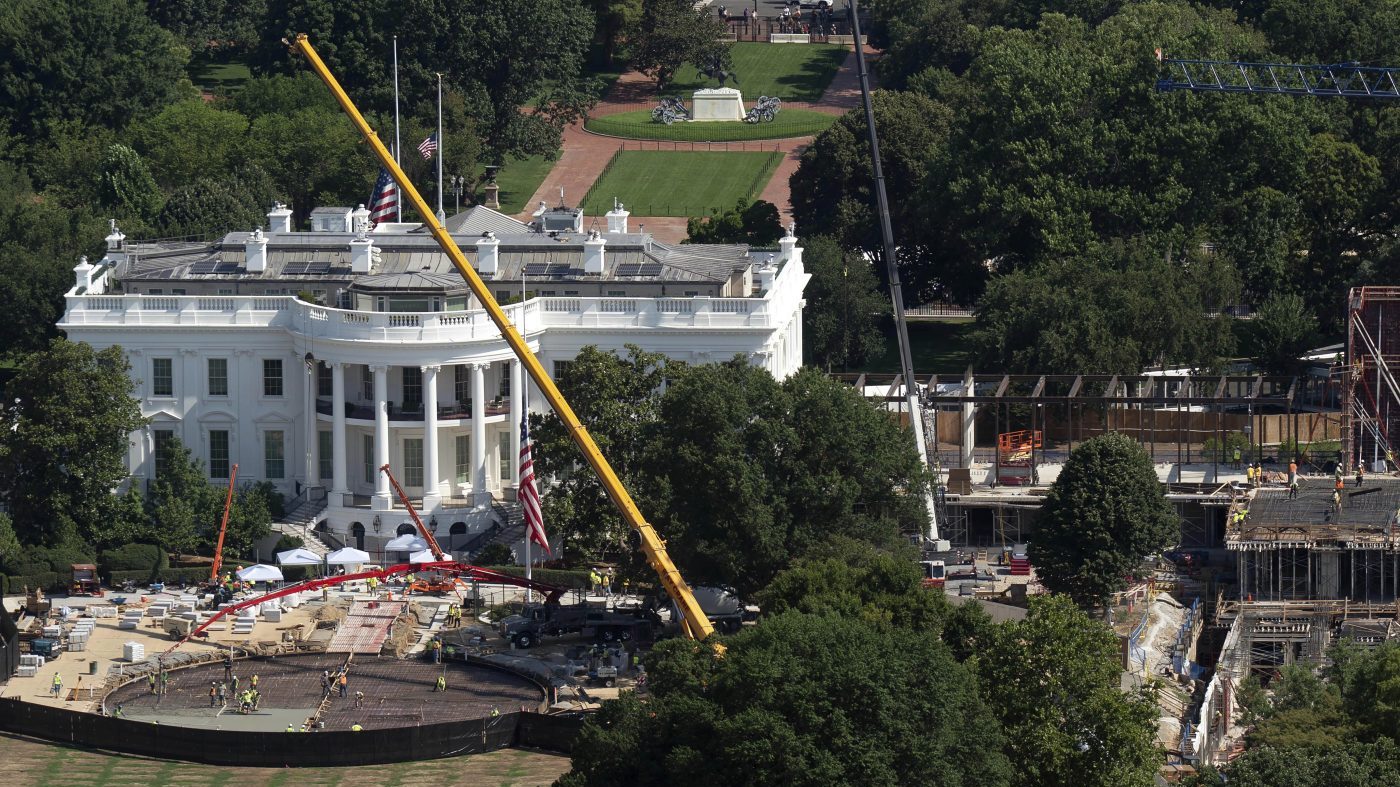
The legal battle, which has simmered for months, reached the high court for the first time after Trump ordered the demolition of the East Wing last fall to make way for the planned 90,000-square-foot ballroom. The administration argues that recent security incidents near the president underscore the need for the facility, which would include enhanced protective features.
In the filing, Sauer warned that “leaving the Executive at the mercy of one district judge’s views of how to guard against threats to the President inflicts inherent irreparable harm.” The administration maintains that the project is privately funded by corporate donations and requires no additional congressional approval.
The emergency appeal comes on the heels of a 2-1 ruling by the U.S. Court of Appeals for the District of Columbia Circuit, which found that Congress had not authorized the ballroom. That decision blocks above-ground construction, though underground work can proceed to complete security upgrades. Unless the Supreme Court intervenes, the appellate ruling will take effect in a week.
This case is part of a broader pattern of legal challenges to Trump’s ambitious redevelopment plans for Washington, D.C., including a proposed golf course, an arch, renovations to the Kennedy Center, and changes to the Reflecting Pool. Critics argue that these projects, pursued during his second term, reflect an overreach of executive authority.
The administration’s filing also takes aim at the National Trust for Historic Preservation, the group behind the lawsuit, arguing that it lacks standing to challenge a project at the White House. The Justice Department has framed the administration’s numerous emergency appeals as a response to lower courts overstepping their bounds, while opponents see them as evidence of a president acting unlawfully.
Since taking office, the Trump administration has filed three dozen emergency appeals with the Supreme Court. The latest request lands during the court’s summer recess, adding to an already busy emergency docket that includes a separate effort to revive an executive order on mail voting ahead of the midterms. This case, like others, may be influenced by the ongoing debate over executive power, as seen in recent court rulings on immigration enforcement.
The appeal will initially be directed to Chief Justice John Roberts, who handles emergency matters from the D.C. circuit. Roberts could decide the matter alone or refer it to the full court, a common practice for requests from the sitting administration. The outcome could set a precedent for how courts handle challenges to presidential property projects, a topic that has also sparked questions about security measures in other contexts.
As the legal wrangling continues, the White House has remained resolute, insisting that the ballroom is a necessary component of modernizing the executive residence. The Supreme Court’s decision, expected in the coming days, will determine whether the administration can proceed with its vision or must pause and seek legislative approval.