A federal appeals court on Thursday sidestepped a major legal question over whether President Trump lawfully invoked the Alien Enemies Act to fast-track deportations, ruling that a key challenge is now moot. The decision by the full 5th U.S. Circuit Court of Appeals effectively ends the case without addressing the scope of presidential power under the 1798 law.
The case had bounced back from the Supreme Court, which had intervened in April 2025 to block a deportation flight while the legal fight unfolded. The high court had ordered the 5th Circuit to consider whether Trump's use of the Alien Enemies Act exceeded his authority. But by the time the case returned to the lower court, the three named plaintiffs had already been removed from the United States—not under the Alien Enemies Act, but under the Immigration and Nationality Act.

“The Supreme Court remanded this case to us when the three named petitioners were still in the country. But we have since learned that the government has removed them. Given this change, we conclude that the appeal is moot,” the judges wrote in the unsigned opinion.
The ruling leaves unresolved the broader question of whether a president can lawfully invoke the Alien Enemies Act to summarily deport migrants during peacetime. The law, enacted in 1798, allows for the removal of foreign nationals from an “invasion” or “predatory incursion” by a foreign government. It has been used only in times of declared war—most notably during World War II, when it served as the basis for Japanese American internment.
Trump's invocation of the law in March 2025 marked a dramatic expansion, as he designated the Venezuelan gang Tren de Aragua (TdA) as a foreign enemy. That move drew immediate legal challenges, with multiple district judges ruling that the gang did not constitute a military threat to the United States.
In the fall, a three-judge panel of the 5th Circuit ruled that Trump's use of the law was unlawful. But Thursday's decision by the full court overturned that outcome, albeit on procedural grounds. Two Trump-appointed judges, Andrew Oldham and James Ho, went further, arguing that the president's invocation was lawful. Ho wrote that the government was asking the court to “terminate the litigation now, by ruling on the merits as a matter of law.”
The case centered on a group of Venezuelan men who were slated for deportation under the Alien Enemies Act in April 2025. The American Civil Liberties Union filed an emergency lawsuit on their behalf, leading to a Supreme Court intervention that temporarily blocked the removals. The justices ruled that the migrants were entitled to some due process, but the case was sent back before the full appeals court could weigh in on the merits.
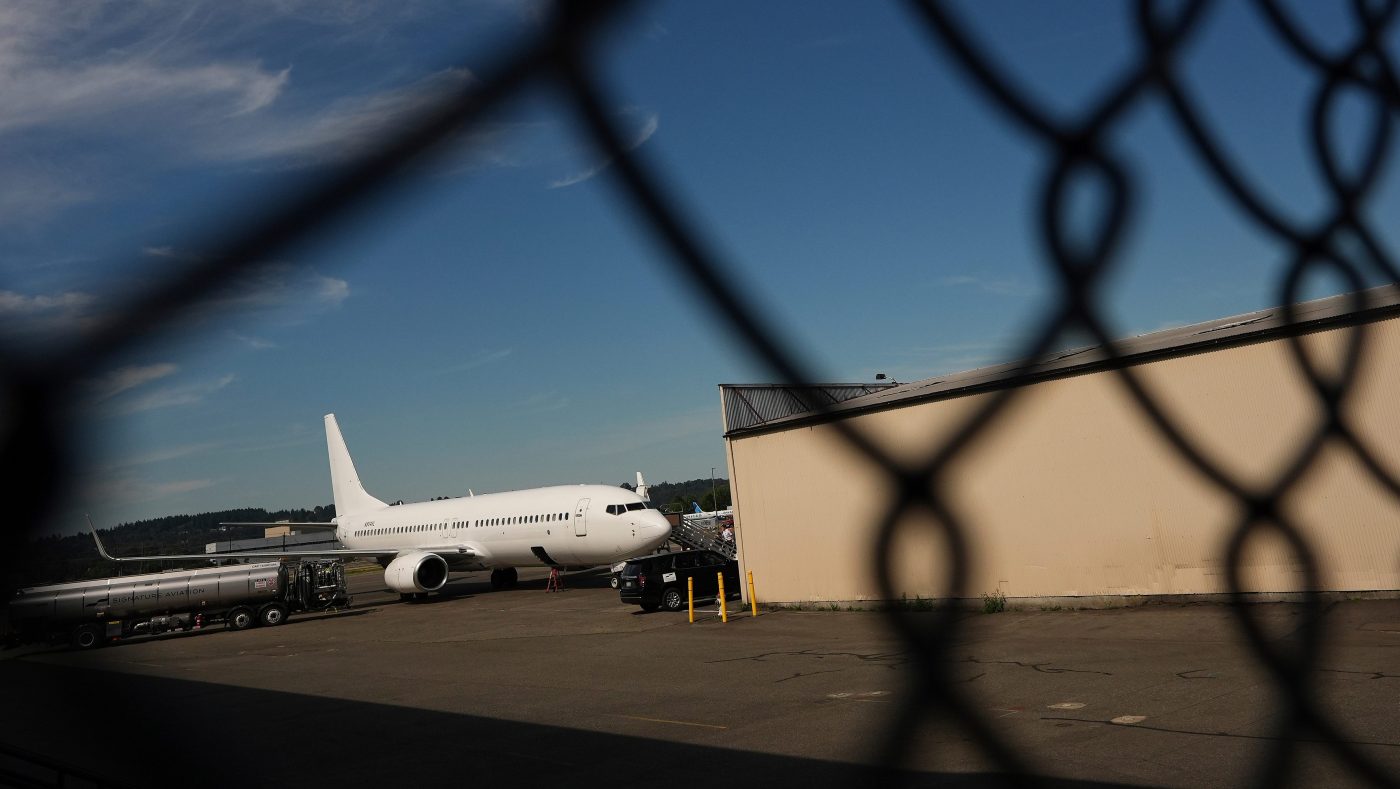
While the named plaintiffs were ultimately deported under the Immigration and Nationality Act, other Venezuelan men were not so fortunate. In the hours after Trump signed the order, more than 100 men were flown to a notorious megaprison in El Salvador, known as CECOT. They spent months in detention there, with reports of severe abuse. Human Rights Watch documented “constant beatings and other forms of ill-treatment, including some cases of sexual violence,” which the group said “constitute torture under international human rights law.”
The men were eventually released and returned to Venezuela as part of a negotiated prisoner swap. But the legal questions surrounding the Alien Enemies Act remain unresolved, leaving the door open for future challenges if the administration attempts to use the law again.