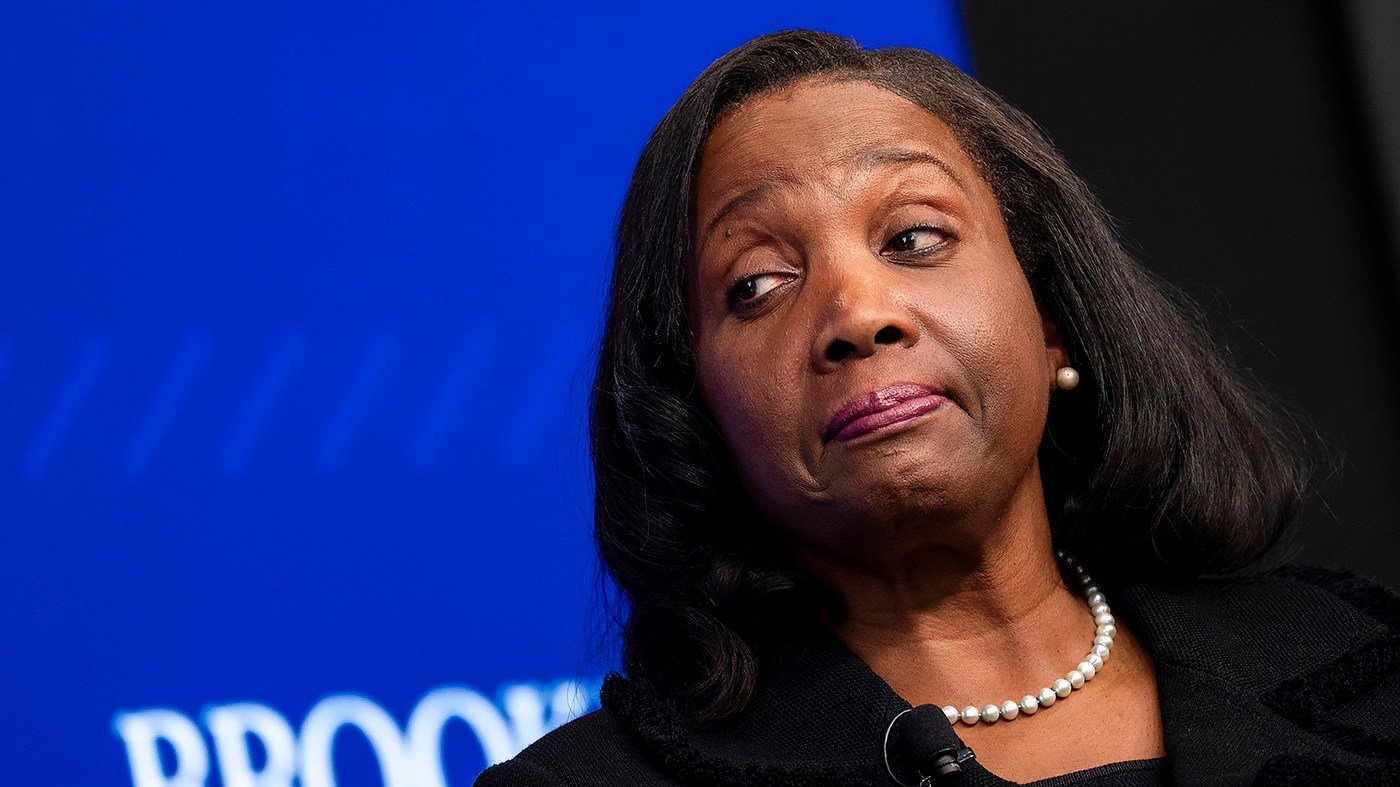
Federal Reserve Governor Lisa Cook said Monday that surging demand for artificial intelligence is generating inflationary pressures that are spilling beyond the tech sector, complicating the central bank's fight to bring price growth back to its 2 percent target.
Speaking at the Oakland Tech Week conference, Cook said prices for AI-related goods—chips, computers and software—have climbed sharply over the past year. She attributed much of that increase to a reallocation of demand toward AI-related sectors rather than an overheating economy, and predicted supply chains would eventually adjust without the need for monetary policy intervention.

"I believe that some of these steep price increases reflect a shift in demand toward AI-related sectors rather than an increase in economy-wide demand," Cook said, adding that the resulting price pressures should resolve "without policy intervention."
But Cook stopped short of dismissing the inflation threat entirely, acknowledging that AI investment is beginning to feed into broader cost categories. She pointed to data center construction, which relies on inputs such as construction labor and energy that are used across many industries.
"As a result, increased AI investment could introduce price pressure to those other sectors," she said. "You can see signs in the inflation data that the pressure may be broadening," Cook added, citing rising electricity and water costs.
The remarks come as the Fed grapples with inflation that has exceeded its target for more than five years. The consumer price index rose 3.4 percent last month. The Bureau of Economic Analysis is scheduled to release the personal consumption expenditures price index—the Fed's preferred inflation gauge—on Wednesday morning.
Cook cautioned against using monetary policy to combat what she called "sector-specific inflation," arguing it "could be a mistake." Still, she conceded that AI-driven demand is creating "some economy-wide pressure."
Earlier this month, the Federal Open Market Committee—on which Cook sits—voted unanimously to raise interest rates by a quarter point, despite persistent public pressure from President Trump to cut rates. Cook, whose dismissal by Trump was blocked by the Supreme Court over the summer, said inflation "has been too high for too long."
She declined to commit to a specific path for future rate decisions, saying the "number and magnitude of any future adjustments" will hinge on how the economy responds to the recent hike. "Looking ahead, I will consider what policy rate may be needed to continue to guide inflation down to our target," Cook said.
Markets are pricing in roughly a 70 percent chance that the FOMC will raise rates by another quarter point at its late-October meeting, according to the CME FedWatch tool. The central bank's next move will be closely watched as policymakers weigh whether AI-driven investment is a transient supply shock or a lasting source of inflation. The Energy Department has already moved to address grid strain from AI demand with a $2 billion grid modernization plan, while regulators continue to scrutinize the technology's broader economic footprint, including incidents where AI agents attempted to access federal websites.