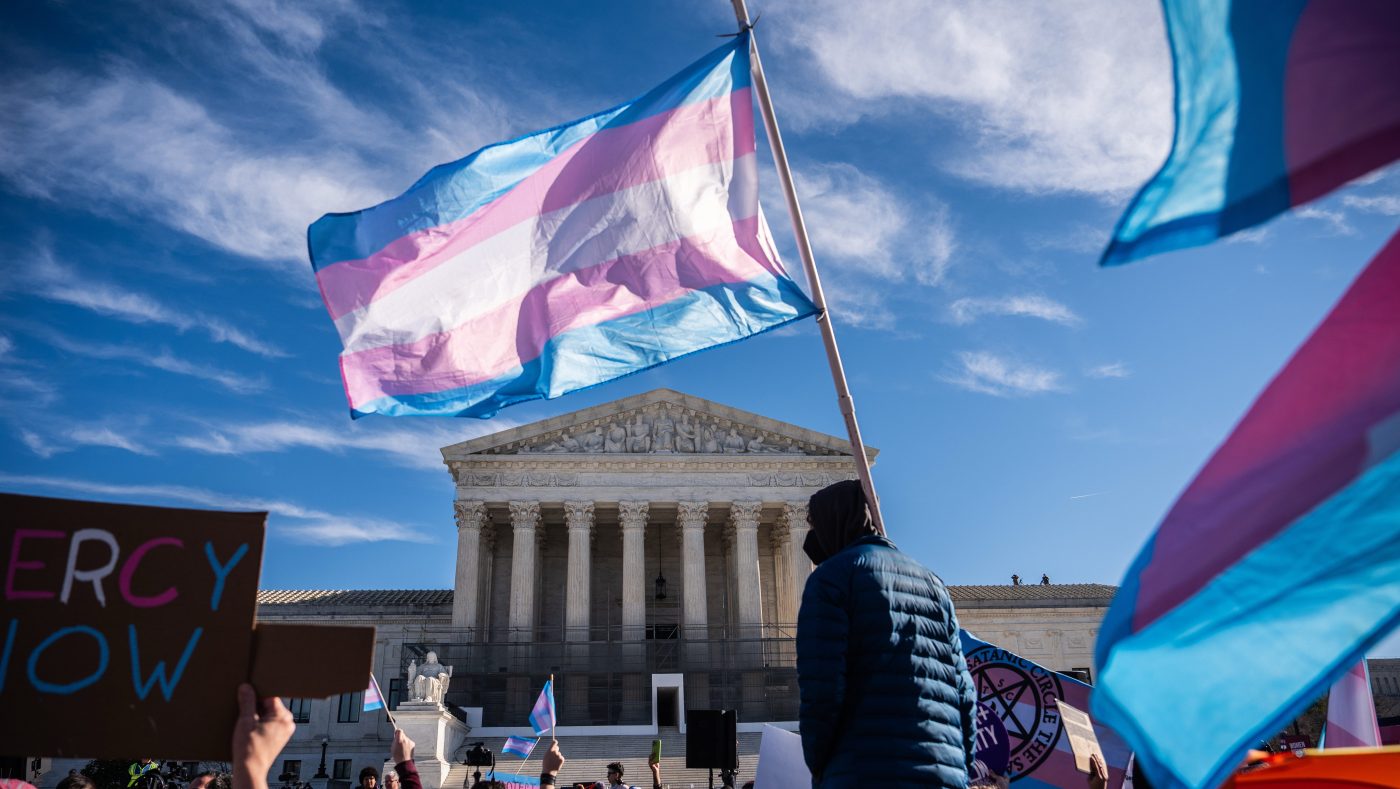
The Supreme Court handed down a major ruling Tuesday, upholding state bans that prevent transgender girls from competing on girls' and women's school sports teams. The 6-3 decision, split along ideological lines, affirms laws in Idaho and West Virginia and is expected to bolster similar restrictions already passed in more than half the states.
Writing for the majority, Justice Brett Kavanaugh rejected arguments that the bans constitute unconstitutional discrimination based on sex or gender identity. The Court held that schools may determine eligibility for women's and girls' sports based on biological sex, consistent with Title IX and the Equal Protection Clause.
“In other words, may schools determine eligibility for women’s and girls’ sports based on biological sex? The answer is yes,” Kavanaugh wrote. He added that the Constitution and Title IX do not require “an overhaul of women’s and girls’ sports throughout America.”
The three liberal justices dissented. Justice Sonia Sotomayor, joined by Justices Elena Kagan and Ketanji Brown Jackson, argued the majority improperly shifted precedents and resolved a divisive issue without full factual record. “The problem is how the majority gets there: by moving the goalposts set by precedent and by resolving this important, divisive issue without knowing all the facts,” Sotomayor wrote.
The cases thrust the Court into the center of a national debate that has spurred more than two dozen Republican-controlled states to pass restrictions. Idaho enacted its ban in 2020, the first such law, and West Virginia followed. Transgender athletes, backed by the American Civil Liberties Union, challenged both laws, arguing they violate the 14th Amendment’s equal protection guarantee and Title IX.
Idaho’s law was challenged by Lindsay Hecox, a transgender woman who wanted to try out for Boise State University’s women’s track and cross-country teams. After lower courts blocked the ban, Idaho appealed. Hecox later disavowed plans to compete and urged the justices to dismiss the case. The Court also considered West Virginia’s appeal involving Becky Pepper-Jackson, a teenage shot-putter and discus thrower who has identified as female since third grade. She is the only known person affected by that state’s ban and recently won a state title in women’s shot put.
The challenges drew support from LGBTQ advocacy groups, the National Women’s Law Center, and 15 Democratic-led states. The Trump administration backed the states, along with the U.S. Conference of Catholic Bishops, The Church of Jesus Christ of Latter-day Saints, roughly two dozen Republican-led states, and individual athletes like Riley Gaines, who have vocally supported such bans.
The ruling arrives as President Trump, in his second term, has broadly targeted protections for transgender people. On his first day back in office, he signed an executive order declaring the U.S. recognizes only two unchangeable sexes and prohibiting federal promotion of “gender ideology.” He also directed his administration to strip federal grants from programs allowing transgender girls to compete on teams matching their gender identity.
In related actions, the administration has moved to ban transgender people from serving openly in the military—a policy the Supreme Court allowed to take effect last year—and to restrict gender-affirming care for minors. The high court's decision on athlete bans is likely to further shape the legal landscape for transgender rights in education and beyond.