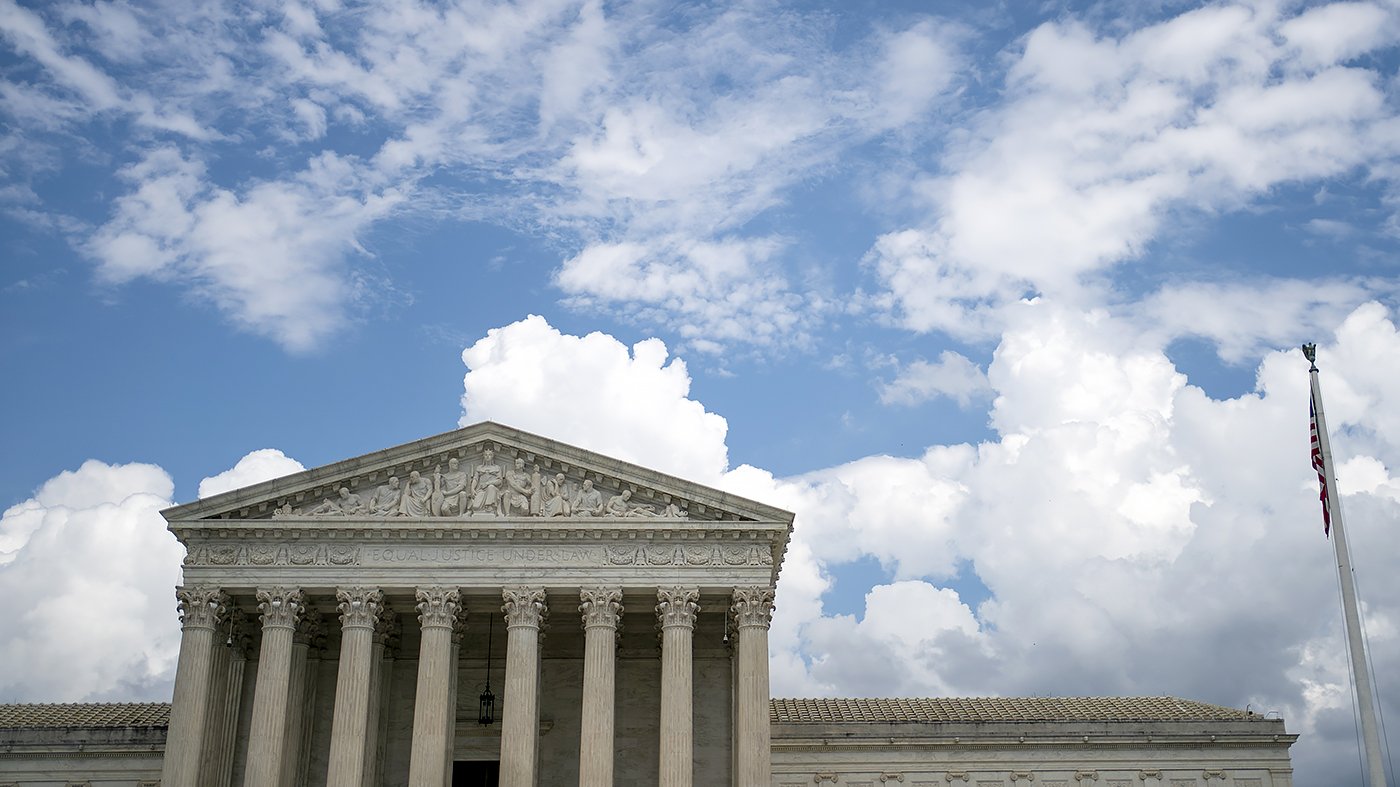
The Supreme Court announced Monday it will take up a case testing the limits of civil asset forfeiture, this time in the context of an Alaskan pilot facing the loss of his 1969 Cessna airplane because a passenger tried to fly a six-pack of Budweiser into a dry village.
Ken Jouppi, the pilot, maintains he had no knowledge of the alcohol and argues that seizing his plane—valued at roughly $95,000—amounts to an excessive fine prohibited by the Eighth Amendment. His case, which has drawn attention from civil liberties groups, will be heard in the Supreme Court's next term starting in October, with a decision expected by next summer.
The incident dates to April 3, 2012, when Jouppi was scheduled to fly a passenger from Fairbanks to Beaver, a remote community about 100 miles north that enforces a ban on alcohol. Alaska law makes it a state crime to "knowingly send, transport, or bring an alcoholic beverage" into such villages, and vehicles involved are subject to forfeiture. As Jouppi loaded the plane, state troopers arrived and discovered the beer in the passenger's luggage.
Jouppi, who says he does not search passenger bags, was sentenced to three days in jail and a $1,500 fine. But the state is now pursuing forfeiture of his aircraft under the same statute, a move his lawyers call disproportionate. "No matter that the offense is a misdemeanor. As here. No matter that the pilot is a first-time offender. As here. No matter that the alcohol is a six-pack of Budweiser. As here. No matter that it belonged to a customer. As here," Jouppi's petition states. "The result: an airplane forfeited for a six-pack."
The case has become a flashpoint in the broader debate over civil asset forfeiture, a practice that allows law enforcement to seize property allegedly involved in a crime, even if the owner is not charged. The Institute for Justice, a libertarian public interest law firm representing Jouppi, has long challenged such seizures as government overreach. The group has previously petitioned the Supreme Court on similar issues, including cases involving plea bargain appeals waivers that critics say sidestep systemic flaws in the justice system.
Alaska, in urging the justices to reject Jouppi's appeal, emphasized the "unique difficulties" it faces in combating alcohol abuse in remote villages. Many such communities are accessible only by air, the state argued, and limited law enforcement resources make it hard to address alcohol-fueled problems like domestic violence. "They also lack the public health resources to address other problems associated with alcohol abuse," Alaska wrote in court filings, likening the seizure of planes to the government's long history of seizing ships in criminal prosecutions.
Jouppi's attorneys counter that the forfeiture violates the Eighth Amendment's protection against excessive fines, which the Supreme Court has held applies to the states. They argue that the penalty is wildly out of proportion to the offense—a misdemeanor involving a small amount of alcohol—and that the pilot himself was not the one who broke the law. "The Eighth Amendment was built for cases like this," Jouppi's legal team wrote.
The case also highlights tensions between state sovereignty and federal constitutional protections, a recurring theme in the Supreme Court's docket. In recent terms, the justices have grappled with issues ranging from voting policy disputes to immigration rulings that have economic and humanitarian consequences.
For now, all eyes are on whether the justices will use this case to set a new precedent on civil forfeiture. A ruling against Alaska could force states to reconsider aggressive seizure practices, while a win for the state could embolden similar actions elsewhere. The outcome will be closely watched by civil libertarians, law enforcement, and property rights advocates alike.