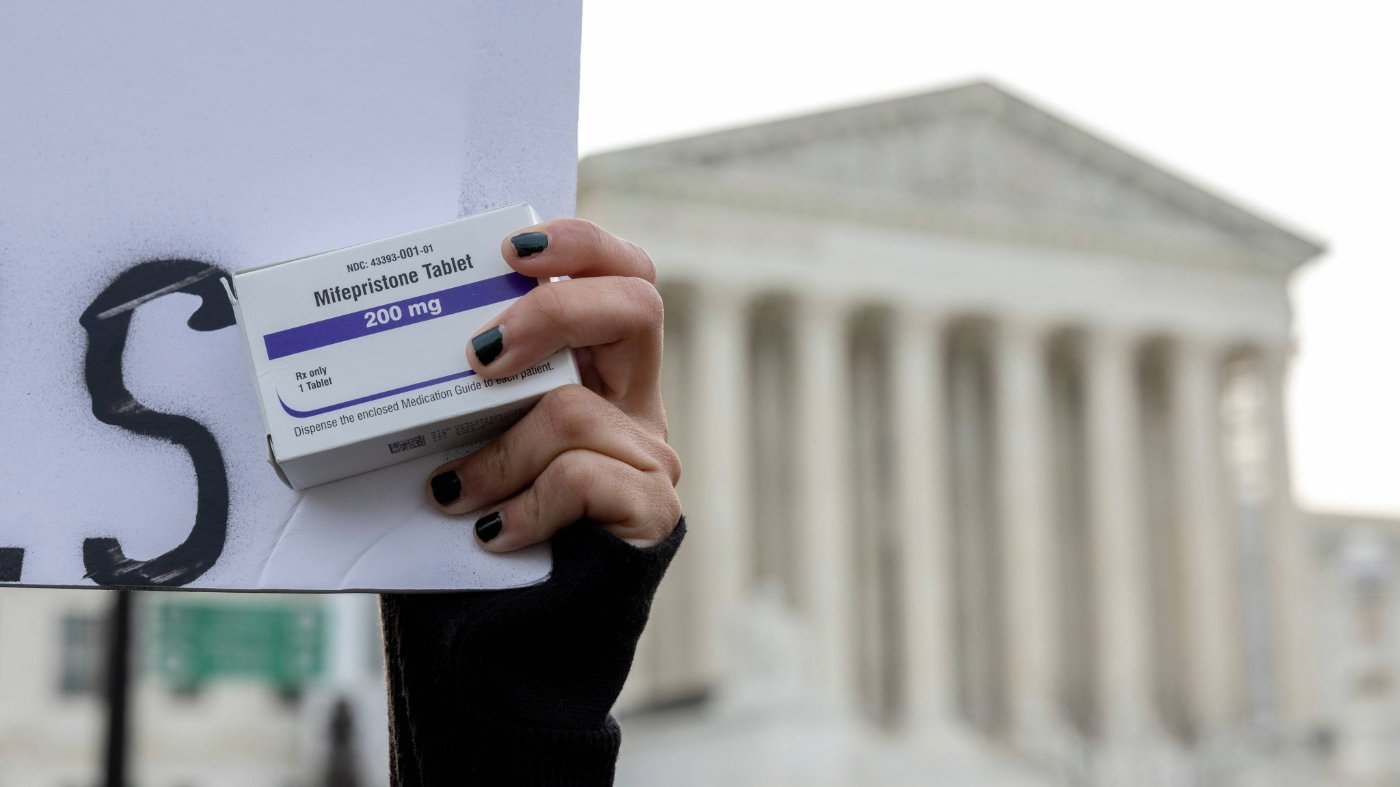
The Supreme Court has once again sidestepped a direct ruling on abortion, this time declining to settle a dispute over federal rules that allow the abortion pill mifepristone to be prescribed via telehealth and delivered by mail. The May 14 decision leaves the current regulations in place for now, but the case is far from over, and the underlying tensions between state abortion bans and federal drug authority remain explosive.
Since the landmark Dobbs decision, which returned abortion regulation to the states, the high court has repeatedly avoided engaging with the substantive legal questions in abortion cases. This pattern continued with the challenge to the Food and Drug Administration’s (FDA) rules on mifepristone, a drug used in nearly two-thirds of all U.S. abortions. Justice Kavanaugh’s concurrence in Dobbs claimed the ruling was “scrupulously neutral,” but as dissenters and legal scholars predicted, the decision ignited a new wave of litigation and political conflict.
The latest battle began when Louisiana argued that the FDA’s telehealth and mail-order regulations harmed its sovereignty by enabling out-of-state providers to send abortion pills to its residents, effectively bypassing the state’s near-total abortion ban. A district court and the Fifth Circuit Court of Appeals both sided with Louisiana, with the Fifth Circuit going so far as to suspend the FDA’s rule. But the Supreme Court stepped in to keep the regulation in effect while the case proceeds, a temporary reprieve for access to medication abortion via telemedicine.
This case has major implications for abortion access nationwide. Since late 2024, roughly a quarter of all abortions have been provided through telehealth-prescribed pills. If the FDA’s authority to allow remote prescribing is ultimately struck down, it would not only affect states with abortion restrictions but also those that protect access, limiting the ability of providers anywhere in the country to use telehealth for mifepristone prescriptions. As one amicus brief put it, Louisiana’s argument is an attempt to “weaponize the federal courts and impose Louisiana’s will on the country writ large.”
The case also raises the specter of the Comstock Act, an 1873 law that criminalizes mailing “obscene” materials or anything “advertised or described in a manner” that can “produce abortion.” Louisiana raised the issue, and Justice Clarence Thomas noted it in his opinion, describing the manufacturers as engaged in a “criminal enterprise.” If the Comstock Act were applied broadly, it could prohibit mailing not only mifepristone but also misoprostol, the other drug used in medication abortion, and potentially any instrument used for abortion procedures. The law could have a chilling effect on telehealth abortion services and even on access to abortion overall.
Another layer of federalism is the growing conflict over shield laws. Some states where abortion remains legal have enacted laws to protect providers who mail abortion pills to residents of states with bans. Louisiana has sought to prosecute or sue those providers, and its lawsuit reflects frustration with the ability of out-of-state doctors to operate with impunity. The Supreme Court has not yet weighed in on the validity of these shield laws, but they are likely to become a flashpoint in future litigation.
The politics of the case are also hard to ignore. Louisiana filed its challenge less than a month after Health and Human Services Secretary Robert F. Kennedy expressed uncertainty about the telehealth regulations, giving the Fifth Circuit a political opening. Notably, the federal government has not filed any briefs with the Supreme Court in this case, a silence that some observers attribute to the sensitive politics of abortion ahead of the midterm elections. The court’s own avoidance of the substance of the lawsuit may also reflect a desire to stay out of the political crossfire.
Ultimately, the Supreme Court’s punt does not resolve the fundamental question: can a state’s abortion ban override federal drug safety regulations? As long as the FDA retains authority over drug approval and distribution, there is no way to tailor rules that satisfy both abortion-ban states and those that protect access. The abortion wars, as the Dobbs dissenters warned, are not going away. They are simply moving to new battlegrounds—telehealth, the mail, and the courts.