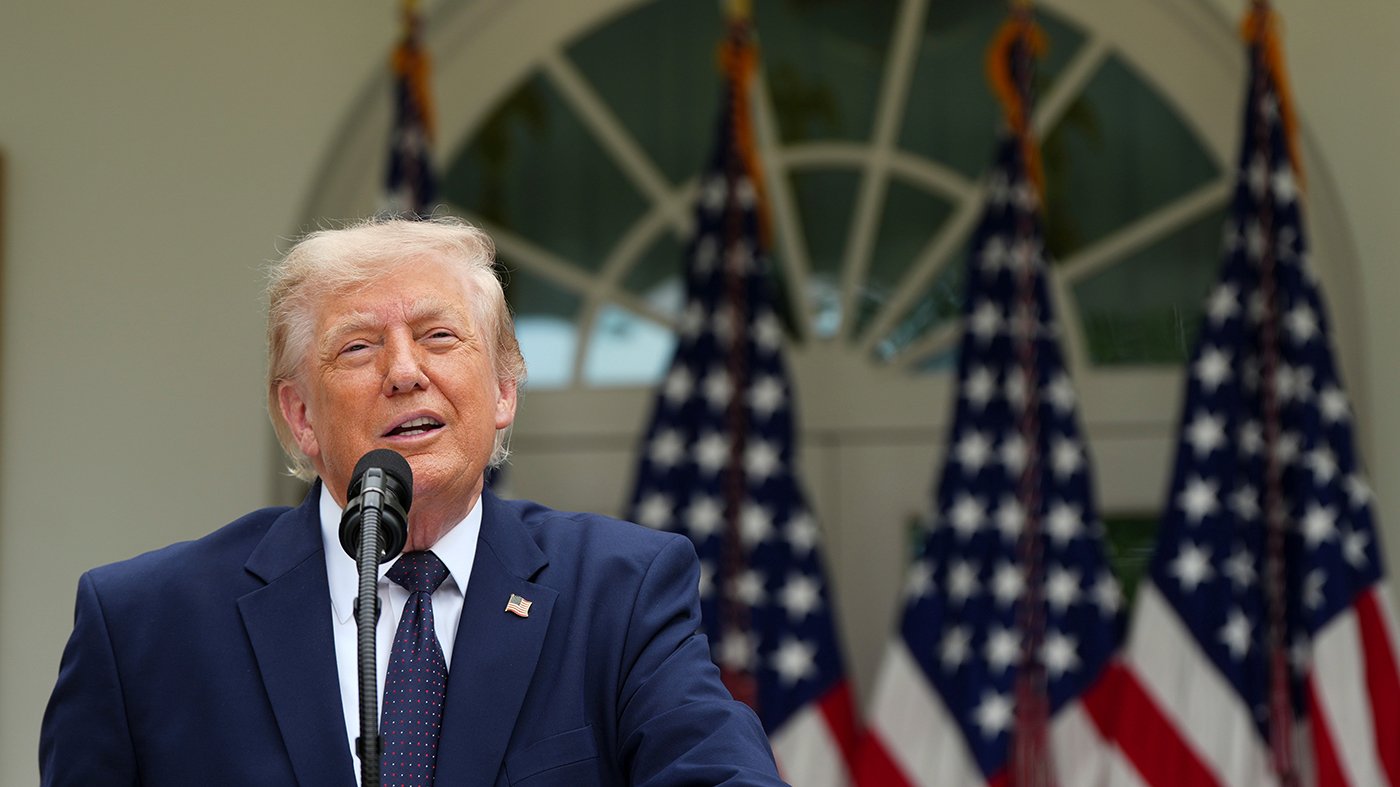
The Supreme Court has handed President Donald Trump a major victory, ruling that he has broad authority to fire the heads of independent federal commissions. The decision, which stemmed from the firing of Federal Trade Commission member Rebecca Slaughter, is reshaping the regulatory landscape and raising alarms among Democrats and consumer advocates.
Impact on Regulatory Independence
The ruling effectively dismantles longstanding protections for independent agencies, allowing the president to remove commissioners without cause. This shift affects entities like the Consumer Product Safety Commission, the Federal Communications Commission, and the Equal Employment Opportunity Commission, all of which oversee critical aspects of American life.
Representative Jamie Raskin, the top Democrat on the House Judiciary Committee, described the decision as a "massive assault" on bipartisan regulatory frameworks. "We have regulatory agencies and commissions that have been established on a bipartisan or nonpartisan principle, and the Supreme Court just smashed it," Raskin said. "All in service of Donald Trump's unitary executive theory."
Chief Justice John Roberts, writing for the majority, argued that the Constitution vests executive power in a single person, rejecting the model of independent agencies. The ruling overturns a 1935 precedent, Humphrey's Executor, which required specific cause—such as inefficiency or neglect of duty—for firing commissioners.
Immediate Consequences
The decision has already had tangible effects. Jocelyn Samuels, a former EEOC commissioner initially appointed by Trump, dropped her legal challenge to her firing shortly after the ruling. Jennifer Abruzzo, fired from her role as general counsel of the National Labor Relations Board, warned that the decision undermines the purpose of independent oversight. "The president can fire these decisionmakers at his whim, upending the whole purpose of the statute," Abruzzo said. "For working families, it means a president can put his thumb on the scale."
Rachel Weintraub, executive director of the Coalition for Sensible Safeguards, expressed concern that agencies will become vulnerable to corporate capture. "There are so many agencies created to make the financial marketplace fair or to make products safe," she said. "Now they are more susceptible to being captured by the corporations President Trump seeks to enrich."
Conservative Celebrations and Broader Implications
Conservative groups hailed the ruling. Carrie Severino of the Judicial Crisis Network quipped, "Humphrey's Executor has been executed! Or should I say Slaughtered?" The Competitive Enterprise Institute called it a step toward "dismantling an unchecked regulatory state."
Justice Sonia Sotomayor, in her dissent, warned that the ruling gives the president "a power unknown even to the English Crown against which the Founders revolted." Critics argue this decision, alongside other recent rulings, has bolstered Trump's executive power and could reshape how future presidents operate. For ongoing analysis of the Supreme Court's partisan term, see our related coverage.
The ruling also has implications for upcoming political contests. For instance, some observers link this decision to shifts in Senate races, as discussed in our report on North Carolina's Senate race. Meanwhile, former EEOC Commissioner Samuels' decision to drop her suit underscores the ruling's immediate impact.
As the Trump administration continues to assert control over federal agencies, the long-term consequences for consumers and workers remain uncertain. The decision marks a pivotal moment in the ongoing debate over executive power and regulatory independence.