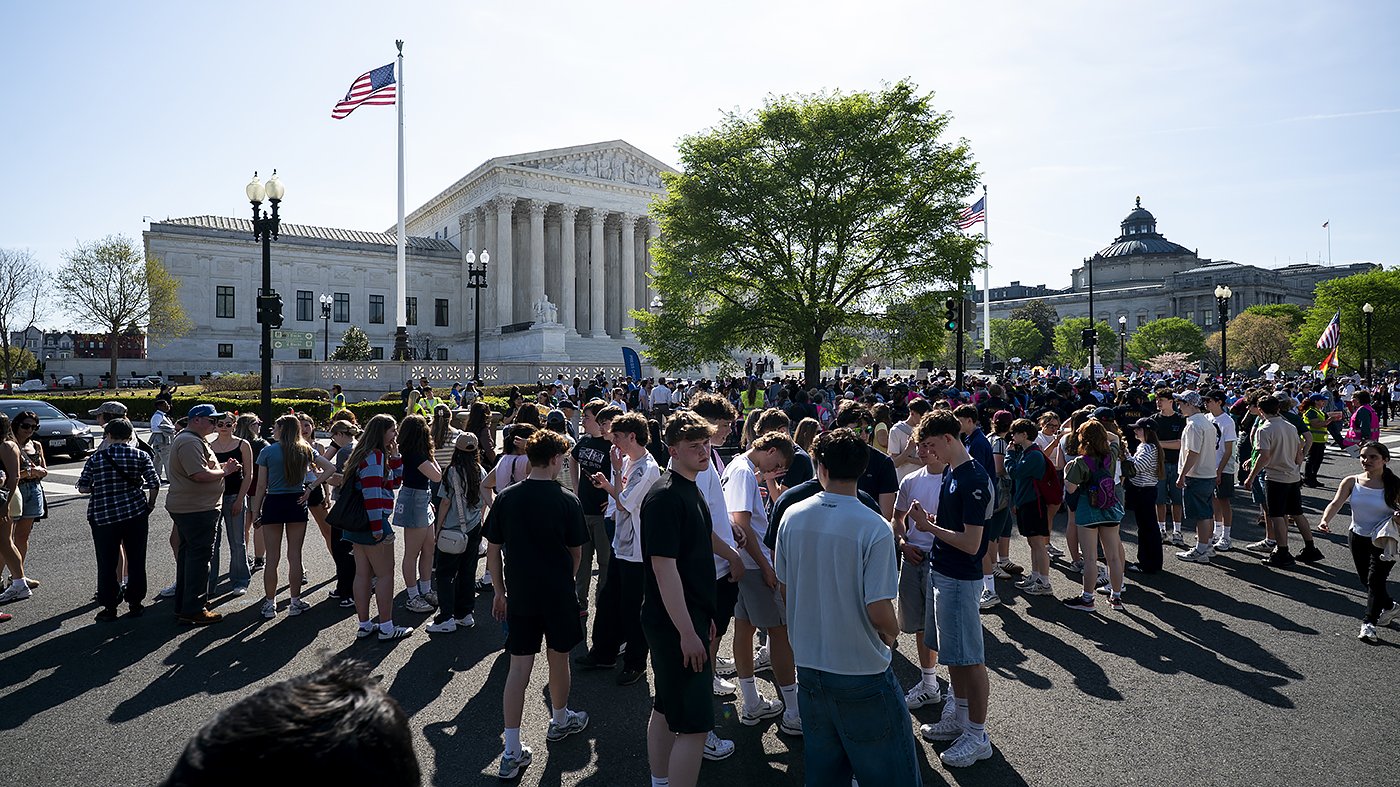
The Supreme Court is barreling toward its end-of-June deadline, with 20 cases still undecided and President Trump’s policy agenda hanging in the balance. The justices are on track to match last term’s pace, but the stakes are higher: rulings on birthright citizenship, presidential firing power, transgender athlete bans, and mail ballots could reshape American law for decades.
Among the most consequential is the challenge to Trump’s executive order restricting birthright citizenship for children born on U.S. soil to undocumented parents. Every lower court to review the order has found it violates the 14th Amendment’s guarantee. Trump has publicly fretted about the outcome, writing on Truth Social that the justices’ refusal to block tariff refunds “is probably why our Country will lose the Birthright Citizenship Case.” The case has energized conservative legal debates, but oral arguments suggested the president may not have the five votes he needs.
Another immigration flashpoint involves temporary protected status (TPS). The Trump administration has terminated TPS for 13 of 17 countries designated under Biden, arguing the program was abused. The Supreme Court is reviewing changes to Haiti’s and Syria’s designations, and the administration contends its decisions are unreviewable. If the justices agree, it could end a wave of litigation nationwide.
The court is also poised to overturn a 91-year-old precedent on presidential firing power. In Humphrey’s Executor v. United States (1935), the court ruled that Congress could shield certain executive branch officials from at-will removal. Conservative justices have signaled they want to scrap that precedent, and Trump has teed up a direct challenge by firing Federal Trade Commissioner Rebecca Slaughter without cause. The case could fundamentally alter the independence of agencies that oversee plane safety, product recalls, and worker rights.
However, the Federal Reserve may be treated differently. The Supreme Court has noted its “uniquely structured, quasi-private” nature, and Trump himself has cited cause—mortgage fraud allegations—in firing Fed board member Lisa Cook. Cook denies wrongdoing, and the justices could rule she deserves a hearing, offering a temporary win for independent agency protections.
On transgender athlete bans, Republican attorneys general from Idaho and West Virginia are confident of a broad victory. West Virginia AG JB McCuskey predicted an “8-1 or 7-2” decision. The laws, challenged by the ACLU, are accused of violating the 14th Amendment and Title IX. The court’s ruling could affect bans in roughly two dozen states.
Finally, mail ballot rules from 14 states are under review, with implications for voting access ahead of the 2026 midterms. The court’s decisions, expected Thursday and throughout June, will define the limits of executive power and civil rights for years to come.