With the midterm elections heating up, a growing number of Hollywood’s biggest names are publicly vowing to stay out of the political fray—a striking reversal from the celebrity-driven campaign of 2024. Stars including Dwayne “The Rock” Johnson, Jennifer Lawrence, and Paris Hilton have all said in recent months that they plan to keep their political views private, a move that political strategists say reflects a calculated response to intense backlash.
“I think celebrities are seeing backlash and making a calculated decision that this is just not worth it for them,” said Susan Del Percio, a longtime GOP strategist.
Johnson, who endorsed Joe Biden in 2020 and has long flirted with a potential run for office himself, told Esquire in June that he’s done discussing politics. “I’ve learned I’m going to keep my politics to myself,” the 54-year-old actor said. “Politics is omnipresent, and it’s forever. I don’t like it. I hate it at times. I hate the slinging. I hate all the bulls— that comes with it.”
Hilton, who has lobbied Congress on online exploitation issues, echoed that sentiment in a June interview with The Hill. Asked about potential 2028 candidates, she replied, “I feel that politics is something I feel like celebrities should not be discussing.” She added, “I don’t want to ever weigh anyone’s decision based on that, so I don’t really get into that.”
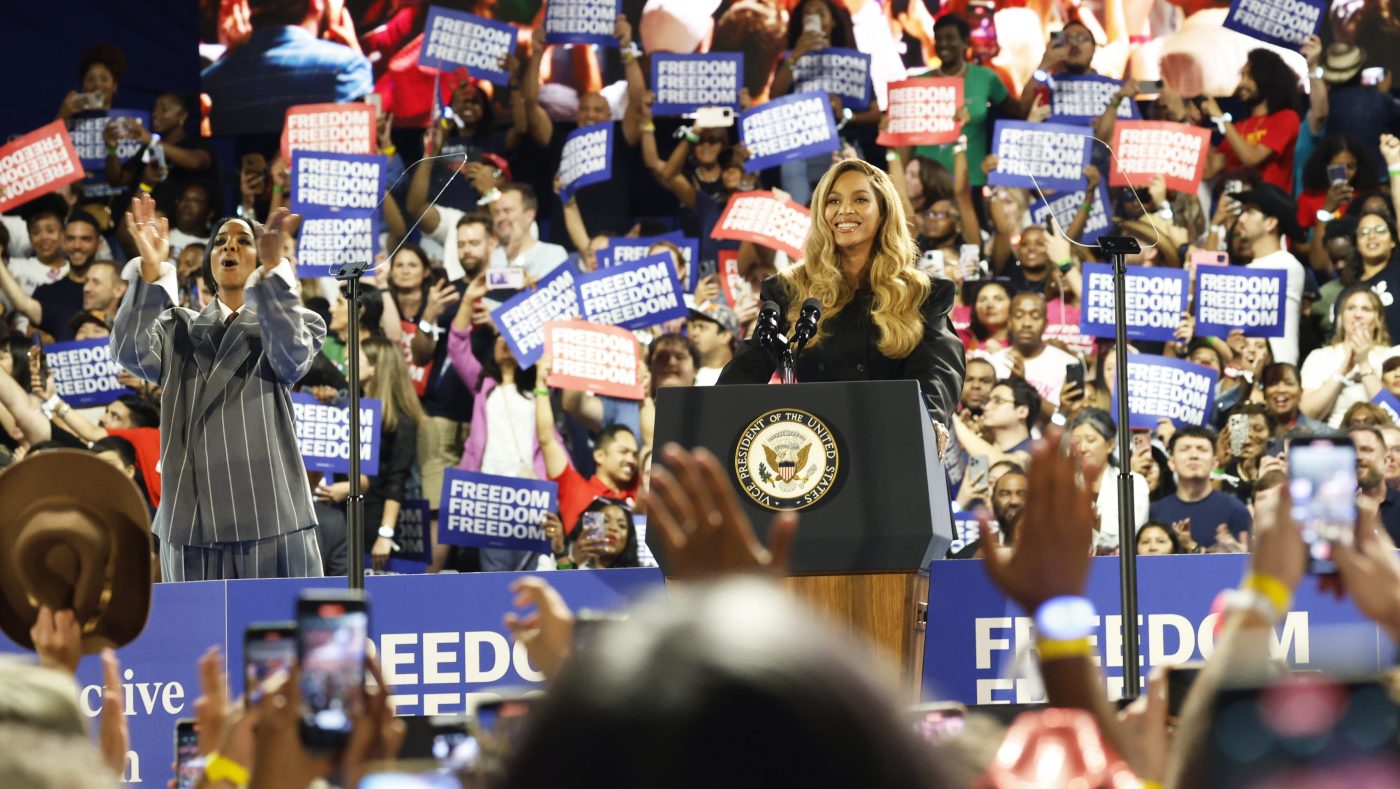
The 2024 presidential race marked a “turning point in celebrity political engagement,” according to Melvin Williams, an associate professor of communication and media studies at Pace University. That cycle saw a parade of A-listers—from Beyoncé and Bruce Springsteen to Taylor Swift and George Clooney—rally behind then-Vice President Kamala Harris. Swift’s post-debate endorsement, Beyoncé’s and Springsteen’s rally appearances, and Clooney’s op-ed urging President Biden to step aside all dominated headlines. But the strategy backfired, Williams argues. “Harris was overshadowed by her celebrity endorsers, and she was deeply criticized by the public for her excessive use of celebrities,” he said.
Williams sees that overexposure as “a precursor to the current trend of celebrity disengagement from politics.” He also notes that voters have grown weary of stars telling them how to think. “People are tired of celebrities telling them how to think politically and how to vote, especially when private citizens view celebrities as being detached from their daily challenges and their socio-economic realities,” he said.
Lawrence, a vocal Trump critic, signaled a similar rethink in the aftermath of Harris’s defeat. On The New York Times’ “The Interview” podcast, she told Lulu Garcia-Navarro, “I don’t really know if I should” keep speaking out. Reflecting on the first Trump administration, she said, “I felt like I was running around like a chicken with my head cut off. But as we’ve learned, election after election, celebrities do not make a difference whatsoever on who people vote for. So then what am I doing?” She added, “I’m just sharing my opinion on something that’s going to add fuel to a fire that’s ripping the country apart. We are so divided.”
Academics point to mixed evidence on the power of celebrity endorsements. Jessica Feezell, a University of New Mexico political science professor, said research shows that “celebrity endorsements, specifically ones from musicians, can move public opinion and can increase support for certain policies.” But she cautioned that the effect is “small” and that “politics and public opinion is rooted in much more enduring values. Socioeconomic status, party identification—those things are very strong.” Feezell added that entertainers are most persuasive among “people who are new to politics or have low levels of political interest because their views are not crystallized.”
Democratic strategist Jordan C. Brown, based in Los Angeles, was blunt: “If these celebrities could affect the way people vote, Hillary Clinton would be a two-term president. Kamala Harris would have been the president.” Harris failed to win a single battleground state, Brown noted, and the reputational and career costs for stars have escalated. “Basically, the cost has gone up,” he said.
That cost is now driving many entertainers to the sidelines. Feezell explained, “In polarized times like this, if a musician or a celebrity says something political, it is automatically going to upset some people. Entertainers seek to maintain support and audience and marketability, and so that’s a controversial decision during highly polarized times.” The result, she said, is that many are choosing to stay quiet.
The trend comes as political dynamics shift ahead of the midterms, with Trump floating emergency voting powers and key races like Maine’s Senate contest testing local versus national politics. Meanwhile, the White House and Trump campaign have quietly dropped Taylor Swift’s music from their playlists—a small sign of the shifting cultural winds.