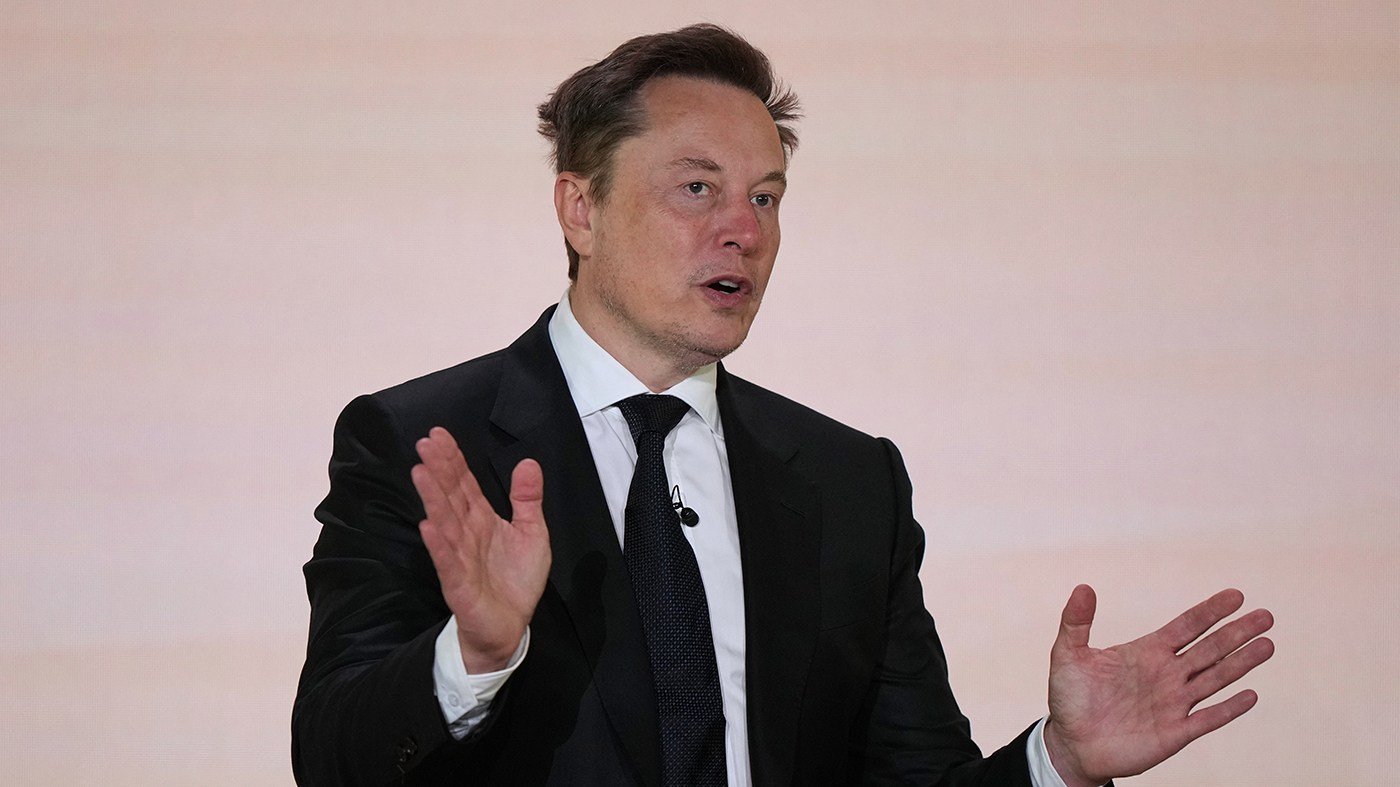
The recent dispute over Ukraine's access to Starlink and its military-grade counterpart, Starshield, has thrust Elon Musk's business empire into the center of a geopolitical firestorm. After nearly ten days of mixed signals and public blame-shifting, Musk conceded that his company, SpaceX, was responsible for throttling commercial Starlink services in Ukraine. The move, which sparked sharp reactions from Kyiv and Washington, has reignited questions about the unchecked influence of a single tech billionaire over international security.
While the precise reasoning behind the Starshield slowdown remains contested, the episode underscores the vast reach of the world's richest man in global and military affairs. Michael Horowitz, director of the Defense and National Security program at the Council on Foreign Relations, told The Hill, "A lot of people are uncomfortable with the idea that an individual like a corporate leader, essentially making foreign policy decisions about access, though it's not clear what the alternative is in this case." He added that the incident illustrates "the absolutely vital role that Starlink and Starshield play in providing pretty unique capabilities that no other company or country can replicate."
Ukraine has relied on Starlink's commercial internet service since the early days of the Russian invasion, later integrating Starshield through a Pentagon contract. The satellite constellation's distributed architecture makes it more resilient than traditional military communications, noted Andrew Grotto, director of Stanford University's program on geopolitics, technology and governance. Yet that same architecture places enormous power in the hands of its owner.
Musk defended the restrictions on Saturday, posting on X that "Ukraine military violated Starlink terms of service and used it for offensive drone strikes to kill people. That loophole was closed last week." Ukrainian officials angrily disputed this, arguing that existing restrictions on the civilian system made such offensive use impossible. Musk, however, stopped short of taking responsibility for the Starshield outage, insisting that control of the military version rests with the U.S. military and ultimately the president.
The Trump administration sought to distance itself from the controversy, with Secretary of State Marco Rubio suggesting that decisions on Starlink access were Musk's alone. That stance has fueled concerns among lawmakers and experts about the concentration of power in SpaceX and its CEO. Republican Sen. Kevin Cramer (N.D.) said he is troubled that U.S. national security is overly reliant on SpaceX and that Musk "has as much power as he does as one individual and one company over America's ability to protect the domain of space, which is a warfighting domain."
SpaceX, founded in 2002, has become the dominant player in satellite and space technology, making Musk's leadership even more consequential. "No unelected civilian titan of industry should have the ability to interfere with a war in the way that SpaceX did here," Grotto said. "It's never a good idea to concentrate a capability in a single point of failure. And I think this episode highlights a real vulnerability, not just for Ukraine, but for the U.S. military more broadly."
The United States, however, has few alternatives. SpaceX's main rival, Jeff Bezos's Blue Origin, has struggled to close the gap. Armand Musey, president of Summit Ridge Group, noted that competing with Starlink requires not just launch capacity but "batteries, processing, robotics, AI." Musey added that the script has completely flipped from the era when governments controlled the space sector: "Private sector folks, particularly SpaceX, really control the development of the sector and the government is sort of on the outside looking in."
Sarah Kreps, director of the Tech Policy Institute at Cornell University, said it is difficult to find a historical analogy for an individual controlling something with such military importance. She drew parallels to the Civil War, when the Union depended on privately owned railroads and telegraph networks, prompting President Lincoln to take possession of them. But Kreps noted a key difference: "The U.S. had jurisdiction over those railroads and the telegraph, and it doesn't have jurisdiction" over Musk's satellites. This incident, she said, highlights a growing vulnerability in an era when private power can rival that of states.