The administration of South Korean President Lee Jae-myung has formally announced its intent to pursue a declaration that would politically end the Korean War, a conflict technically paused by a 1953 armistice but never concluded by treaty. In a communication to the National Assembly's foreign affairs committee, the Unification Ministry stated the government would seek a "peace declaration" to initiate discussions on establishing a permanent peace regime, including a formal peace treaty. South Korea was not a signatory to the original armistice, which was agreed to by the United Nations Command, China, and North Korea.
A Pathway to Conflict, Not Peace
Paradoxically, analysts argue this diplomatic overture could dramatically increase the likelihood of renewed warfare. The core risk lies in the potential dissolution of the U.S.-Republic of Korea Mutual Defense Treaty, signed in October 1953. This pact is widely viewed as the primary deterrent against North Korean aggression. Bruce Bechtol, a professor at Angelo State University and author of multiple books on North Korea, told The World Signal that "the most important deterrent against North Korean aggression is the U.S. military." He added that while Pyongyang's leadership has historically shown little fear of Seoul, "taking on the most powerful military in the world? Not in the cards."

An end-of-war declaration, Bechtol warned, could create "a disastrous perfect storm." The political declaration could be used by factions within both the Lee administration and a potential future Trump administration to argue for the withdrawal of U.S. troops and the treaty's termination. "And soon thereafter," Bechtol said, "would be the perfect time for North Korea to resume combat against the South, America's sixth-largest trading partner."
An Unwilling Partner in Pyongyang
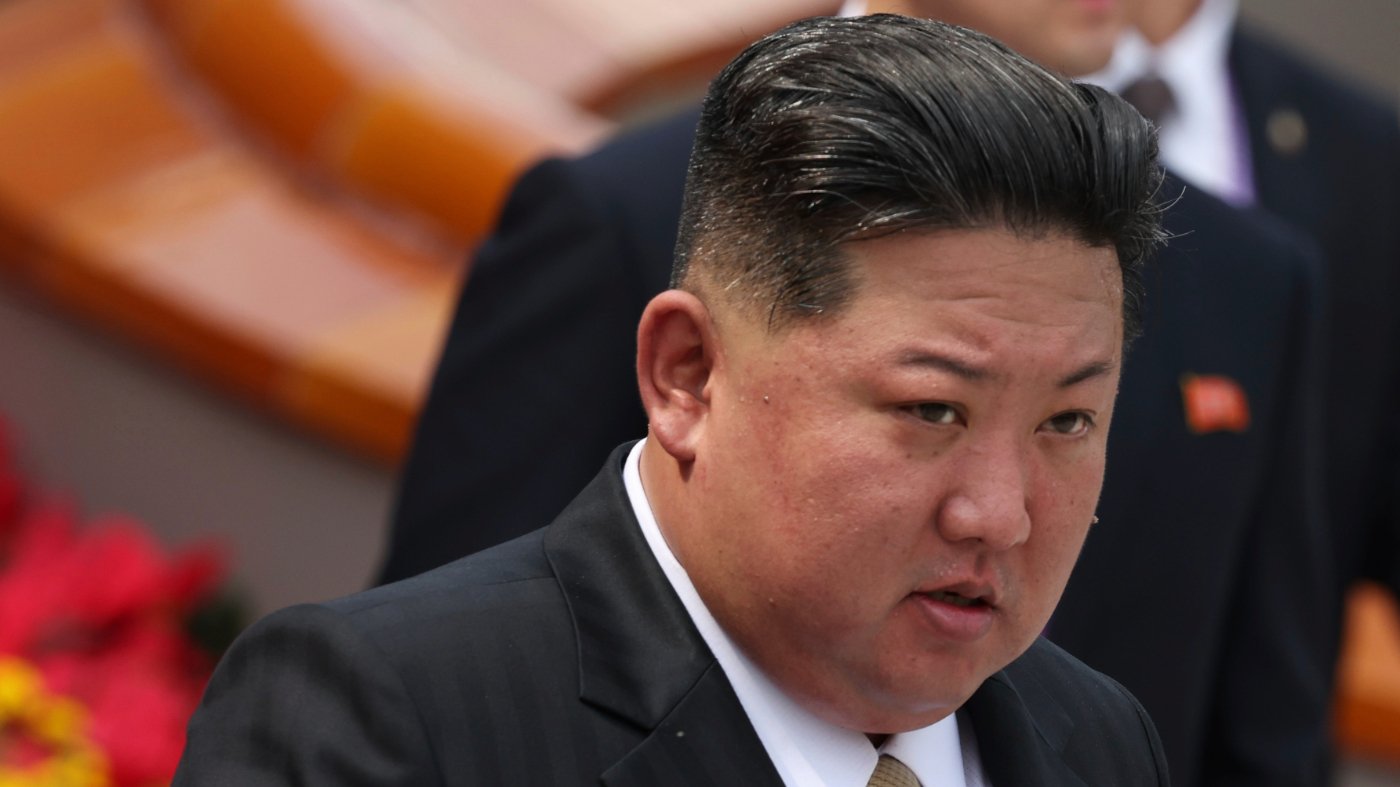
The South's "Korean Peninsula Peace Package" faces a fundamental obstacle: North Korea's explicit and repeated rejection of dialogue. At the ruling Workers' Party's Ninth Congress last month, Pyongyang rejected all engagement with Seoul. Leader Kim Jong Un solidified this position earlier in 2024 by labeling South Korea the "primary foe and invariable principal enemy." This hostility is rooted in a regime ideology that requires a perpetual external adversary. The Kim dynasty, now in its third generation, relies on a state of conflict to justify its repressive control and militarized economy, masking the failures of the state.
The division of the peninsula traces back to the post-World War II settlement, where the U.S. and Soviet Union split Korea at the 38th parallel. Planned U.N.-supervised unification elections never occurred, leading to the establishment of two rival states, each claiming sole legitimacy. This contest culminated in North Korea's invasion of the South in June 1950, triggering a brutal three-year war that ended with the armistice, not a peace.
The Generational Divide and Lee's Ambitions
President Lee's push occurs amid a generational schism in South Korean politics. While younger citizens strongly support the U.S. alliance and identify firmly with South Korea, many in the older political class, including Lee, harbor a vision of a unified Korean peninsula. This faction often views the United States as an obstacle to that goal, a sentiment echoed in Lee's own past rhetoric. During the 2021 Democratic Party primary campaign, he controversially referred to U.S. forces in Korea as an "occupying force" and accused Washington of prolonging Japan's colonial rule.
Some observers dismiss these remarks as opportunistic populism. Regardless of intent, Lee's party has a documented history of distancing Seoul from Washington while cultivating ties with Beijing and Pyongyang. This alignment raises strategic questions similar to those seen in other global hotspots, where diplomatic frameworks are tested by adversarial posturing, much like the complex dynamics surrounding Iran's strategic leverage in the Middle East.
The Nuclear Shadow and Alliance Calculus
The strategic landscape today is vastly more dangerous than in 1953. North Korea possesses a growing arsenal of nuclear weapons and advanced conventional missiles. Experts agree that absent the U.S. security guarantee, the North could potentially overwhelm the South. The mutual defense treaty and the 28,500 U.S. troops stationed in South Korea are not relics of a bygone era but active, critical components of regional stability. Their potential removal would recalibrate the entire security architecture of Northeast Asia, creating a vacuum that Pyongyang would be tempted to exploit.
The debate in Seoul mirrors internal policy struggles elsewhere, where leadership must balance idealistic diplomatic goals with hard security realities. Just as domestic political challenges in the U.S. Senate can influence foreign policy, South Korea's internal divisions directly impact its most vital alliance. The ultimate danger, as analysts frame it, is that a well-intentioned declaration meant to close a seven-decade-old war could instead become the catalyst for opening a new and devastating chapter of conflict on the Korean peninsula.