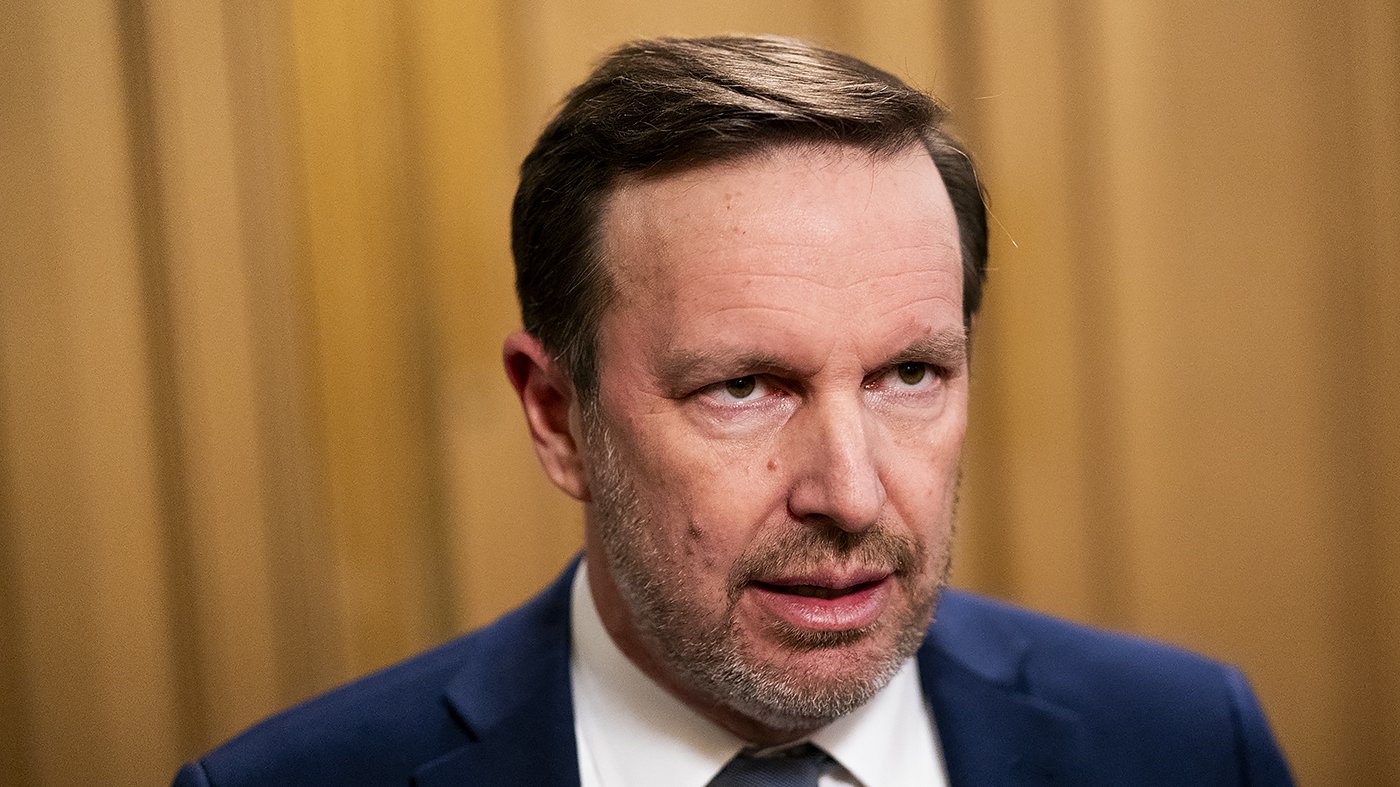
Democratic Senator Evades Direct Support for Schumer's Leadership
Senator Chris Murphy of Connecticut deliberately avoided expressing direct support for Senate Democratic Leader Chuck Schumer during a national television interview on Sunday, as internal party tensions over leadership approach a critical juncture. When pressed on whether he would seek to replace Schumer, Murphy repeatedly emphasized Democratic unity on policy goals rather than addressing the leadership question directly.
"I think we are united right now as a caucus," Murphy stated during his appearance on NBC's "Meet the Press." He added that Schumer and House Democratic Leader Hakeem Jeffries have "very hard jobs, especially at a historic moment like this." When host Kristen Welker noted his failure to explicitly endorse Schumer, Murphy pivoted again to policy unity, stating the caucus is "united in ending this war, united in reining in the lawlessness of ICE, and we're going to be united in winning the election this November."
Progressive "Fight Club" Plots Leadership Challenge
Murphy's non-committal response follows a Wall Street Journal report detailing an organized effort by progressive senators to replace Schumer after the November elections. According to the report, Murphy has been coordinating with Senators Elizabeth Warren of Massachusetts and Tina Smith of Minnesota to challenge Schumer's leadership. The group, reportedly dubbed "Fight Club" in private Signal chats, has expressed frustration with Schumer's support for centrist Democrats and his handling of last year's 43-day government shutdown.
The leadership discontent extends beyond sitting senators. Illinois Lieutenant Governor Juliana Stratton, the Democratic nominee to replace retiring Senator Dick Durbin, stated unequivocally in a YouTube interview that she would not support Schumer as caucus leader. "I've made it clear that I would not support Chuck Schumer as leader of the Democratic caucus because I think right now what I'm hearing from voters all across the state of Illinois is that they are fed up," Stratton said, adding that voters want leaders who will "meet this moment" and noting "we do not have a normal president."
Succession Battle Takes Shape
The Wall Street Journal report indicates progressive Democrats are considering Senator Chris Van Hollen of Maryland as a potential replacement for Schumer, while Schumer himself has reportedly backed Senator Brian Schatz of Hawaii as his preferred successor. This brewing conflict comes as Senate Democrats prepare for leadership elections that will occur through secret ballot after the November general election.
The leadership challenge emerges against a backdrop of broader political tensions, including ongoing international conflicts that have divided political leadership and internal Democratic debates over strategy. Some progressive critics have compared Schumer's leadership challenges to other high-profile political confrontations, such as when prominent Republicans have publicly condemned former President Trump's rhetoric.
Neither Warren nor Smith responded to requests for comment about the reported leadership challenge. The silence from key figures in the alleged plot has only heightened speculation about the seriousness of the effort to replace Schumer, who has led Senate Democrats since 2017.
The timing of this internal debate is particularly sensitive as Democrats face crucial elections that will determine control of the Senate. The leadership question intersects with other pressing political issues, including legal battles over election procedures and international security concerns that have prompted government warnings. Murphy's careful avoidance of the leadership question suggests Democrats are attempting to present a unified front publicly while significant disagreements simmer beneath the surface.
As the November elections approach, the Democratic caucus faces not only external political battles but an internal struggle over its future direction and leadership. The outcome of this quiet contest will shape the party's legislative strategy, committee assignments, and political messaging for the coming Congress, making Murphy's evasive answers more significant than typical political deflection.