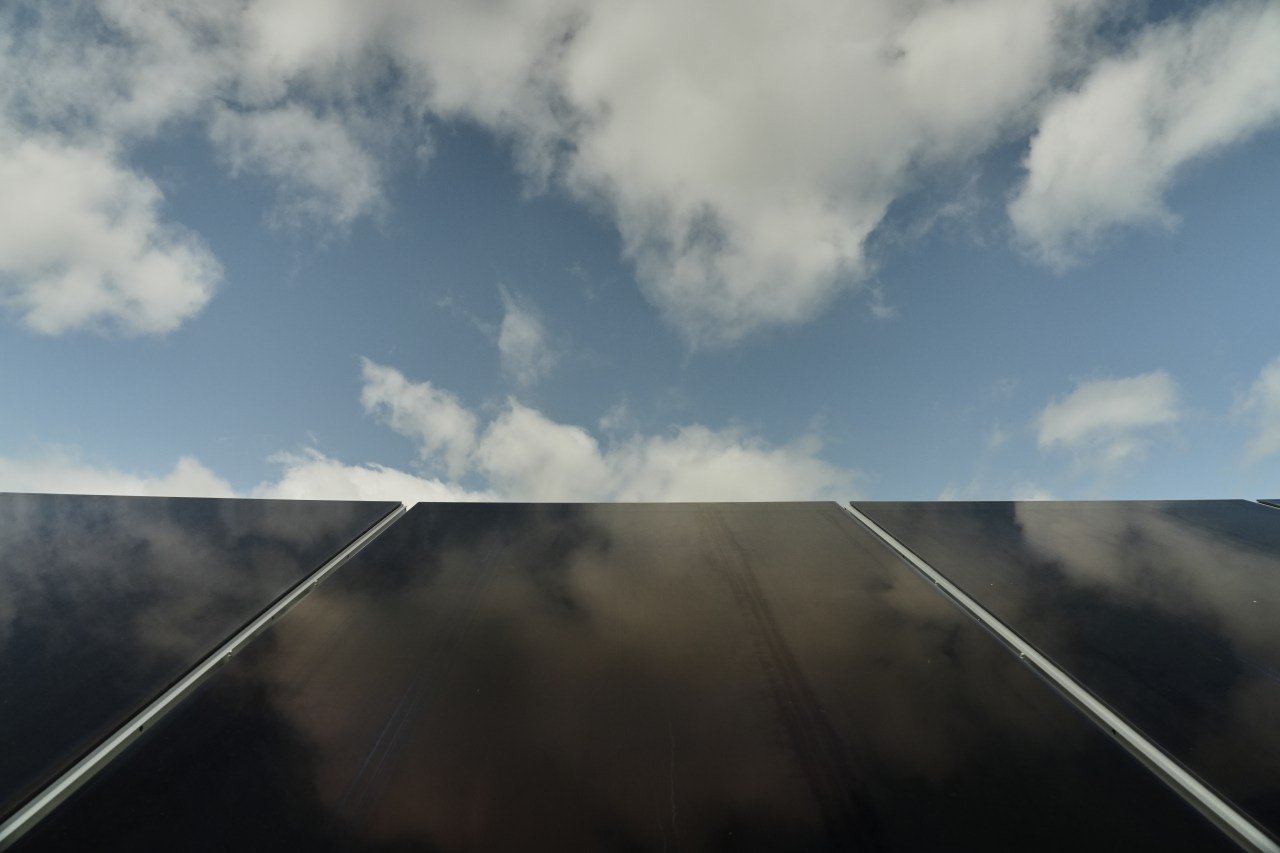
Even as President Donald Trump pushes policies to revive the struggling coal industry, solar power has achieved a historic milestone in the United States: for the first time, in May, solar generated a larger share of the nation's electricity than coal. According to data released Wednesday by the global energy think tank Ember, solar supplied 12.8% of U.S. electricity in May, while coal provided just 12.2%—its fourth-lowest monthly share on record.
The milestone underscores a long-term trend that has seen solar steadily climb the ranks of U.S. power sources, even as the Trump administration has worked to curtail renewable energy development. “For years solar power has risen in the U.S. electricity mix,” said Nicolas Fulghum, senior energy and data analyst at Ember. “At the same time, coal power has lost its status, first as the largest source in the U.S. mix, and then gradually over the years has fallen even further.” Solar also became the third-largest source of electricity in May, behind natural gas and nuclear, Fulghum noted.

The shift comes amid rising electricity demand driven by artificial intelligence, domestic manufacturing growth, and the electrification of transportation and heating—after roughly two decades of flat consumption. Fulghum predicted that solar will continue to outpace coal in more months before overtaking it on an annual basis within a few years. “These milestones signify that solar has staying power at a time when there’s less support for renewable energy at the federal level,” he added.
In contrast, Trump has championed coal as a key part of his energy agenda. Last week, he announced a nearly $700 million plan to bolster coal-fired power plants and exports, declaring at a White House event that “coal’s a great business” and that “in terms of power, there’s really nothing like it.” The administration has also canceled solar and wind projects, slowed permitting, and terminated $7 billion in funding for affordable solar initiatives. A White House spokeswoman defended the policies, saying they are “geared toward strengthening the country’s security,” and credited Trump with “saving the American coal industry” and preventing the retirement of over 17 gigawatts of power.
Despite these efforts, market forces have favored solar. Martin Pochtaruk, CEO of Canadian solar panel manufacturer Heliene, said investors will put their money where returns are best, and for power generation that is solar—making it the fastest-growing fuel. Data from the Solar Energy Industries Association (SEIA) and Wood Mackenzie shows that solar and battery storage accounted for 91% of all new generating capacity in the first quarter of 2026, continuing a five-year streak as the top source of new power.
The tension between federal policy and market reality has drawn sharp criticism from industry leaders. “As power demand skyrockets, political and regulatory attacks are slowing down the exact resources we rely on,” said Darren Van’t Hof, interim president and CEO of SEIA, in a statement. “Impeding the only sector that is actively building new power is a reckless gamble that will only drive electricity bills higher.” Meanwhile, several groups sued the Environmental Protection Agency over the cancellation of the Solar for All program, though a district court dismissed the case last week on jurisdictional grounds.
The political dynamics are further complicated by the fact that many of the top states for solar adoption voted for Trump in the 2024 election. According to SEIA, states won by Trump accounted for 74% of all solar capacity installed in the first quarter of 2026, with Texas, Florida, Ohio, and Indiana ranking among the top 10. The U.S. now has over 6 million solar installations nationwide, spanning large-scale arrays, commercial projects, and residential rooftop systems.
Johanna Neumann of the Environment America Research and Policy Center called the growth “good news for our health and our planet.” But she and other analysts warn that rising energy costs—blamed by Trump on renewables—are actually driven by growing demand, aging infrastructure, and extreme weather exacerbated by climate change. The ongoing conflict with Iran, which Trump has escalated, has also contributed to a spike in energy prices, pushing inflation to 4.2%—its highest in three years.
In a separate development, a federal judge struck down IRS guidance that restricted tax credits for wind and solar projects, a ruling that could further boost renewable investment. As the policy battles continue, the data makes clear that solar’s trajectory is reshaping the U.S. power grid, regardless of the political headwinds from Washington.