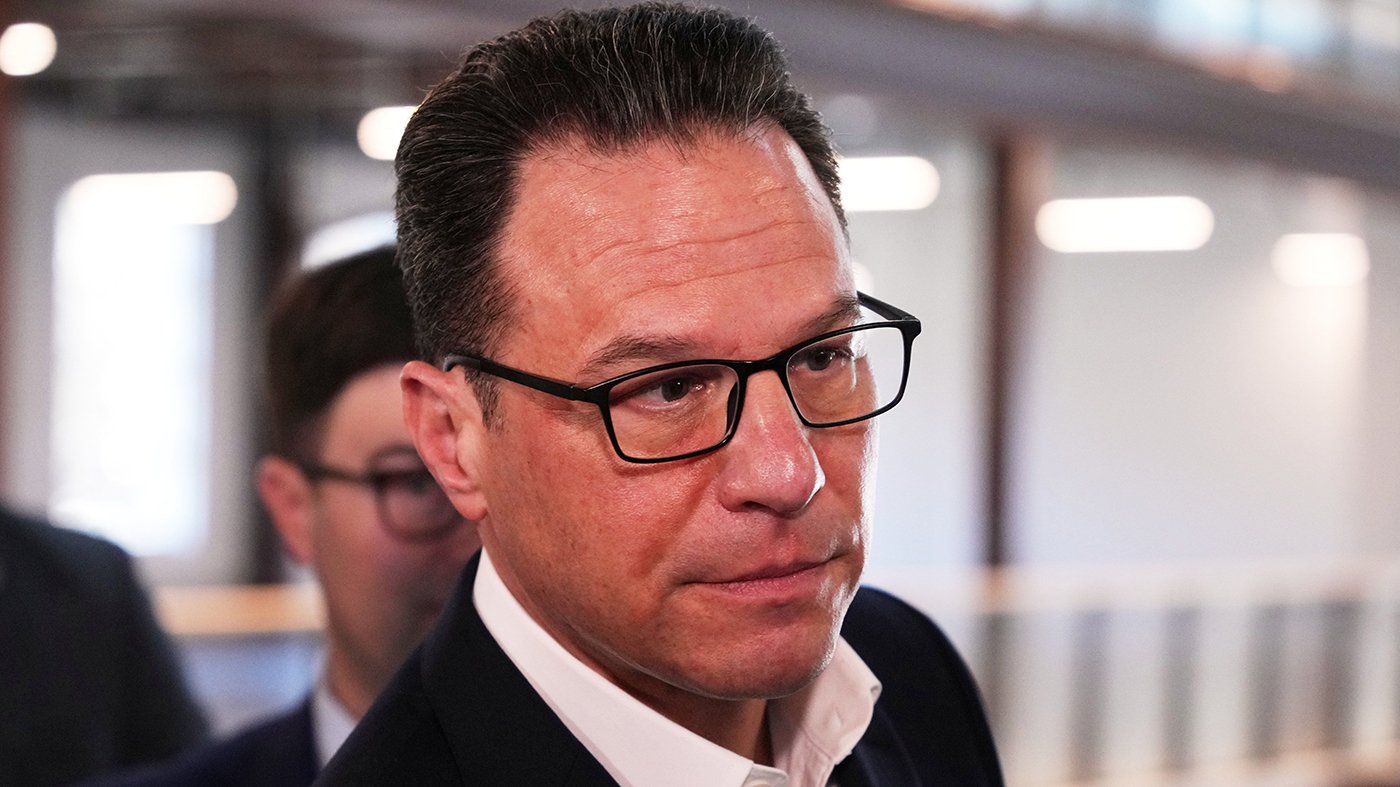
Pennsylvania Governor Josh Shapiro is deliberately framing his support for Israel as regional conflict intensifies and political observers increasingly view him as a potential future presidential candidate. In a series of recent appearances on popular progressive podcasts, the Democratic governor has addressed the issue head-on, navigating a party landscape where backing for Israel has sharply declined and foreign policy has become a major fault line.
Navigating a Party Divide
Shapiro’s strategy appears to be a calculated bet that a significant portion of the Democratic electorate remains receptive to a centrist, pro-Israel perspective, even as the party’s base shifts. He is currently campaigning for reelection in Pennsylvania while simultaneously testing the waters for a potential White House bid in 2028. His approach contrasts with that of many national Democrats who have adopted more cautious or critical positions regarding Israel’s government and military actions.

On the podcast "Pod Save America," hosted by former aides to President Barack Obama, Shapiro challenged listeners who adopt an anti-war stance that questions Israel's right to exist as a Jewish state. "For those who begin by suggesting Israel doesn’t have the right to exist as a Jewish state, I think that is a recipe for permanent war," Shapiro stated. He argued for regional peace while noting the unique scrutiny applied to Israel compared to dozens of majority-Muslim nations with official state religions.
Polling Reveals Sharp Democratic Shift
Shapiro’s positioning runs counter to recent dramatic shifts in Democratic voter sentiment. Gallup polling indicates favorable views of Israel among Democrats have plummeted from 64% in 2022 to just 34% today. Furthermore, Democratic sympathy has swung decisively toward Palestinians: while the sides were evenly split at 40% each in 2022, 65% of Democrats now sympathize more with Palestinians, compared to 17% who side more with Israelis.
Despite this backdrop, Shapiro has maintained a consistent message. In his podcast tour, he rejected characterizations of Israel as an apartheid state while reiterating his longstanding criticism of Israeli Prime Minister Benjamin Netanyahu. He also distinguished between antisemitism, which he called a clear-cut problem, and policy criticism of Israel, which he said is not inherently bigoted. "I fundamentally disagree with your viewpoint, but I don’t think you’re an antisemite," he said on the "Higher Learning" podcast, describing such disagreements as part of an honest struggle with complex issues.
Personal Risk and Political Calculus
The issue carries profound personal weight for Shapiro. Last year, his family was targeted in an arson attack on the governor’s mansion during Passover. The accused individual stated his motivation was the war in Gaza and a desire to protest Shapiro’s perceived stance. This incident underscores the heightened domestic tensions surrounding the conflict, as the State Department has issued global travel alerts amid ongoing regional instability.
Political strategists see Shapiro’s direct engagement as a necessary, if risky, move. "He can’t run away from the fact that he’s a Jew. He cannot run away from the fact that the governor’s mansion was firebombed," Democratic strategist Hank Sheinkopf told The Hill, arguing that addressing a perceived vulnerability head-on is sound campaign strategy. Former Pennsylvania Democratic Party chair T.J. Rooney said Shapiro’s foreign policy knowledge allows him to discuss the topic with confidence, and that authenticity matters more to voters than any single policy disagreement. This comes as other officials, like the former U.S. counterterrorism chief, have publicly accused Israel of complicating U.S. de-escalation efforts with Iran.
Republican strategist Vince Galko framed it as dealing with a "skeleton in your closet" early in a political cycle. The consensus among observers is that Shapiro’s willingness to articulate a nuanced position—supporting Israel’s right to exist and defend itself while criticizing its leadership—is an attempt to define himself on a volatile issue before it defines him. As the conflict continues to evolve, with reports of significant civilian casualties and shifting U.S. diplomatic postures, Shapiro’s stance places him in a distinct lane within a Democratic Party grappling with its identity on the world stage.