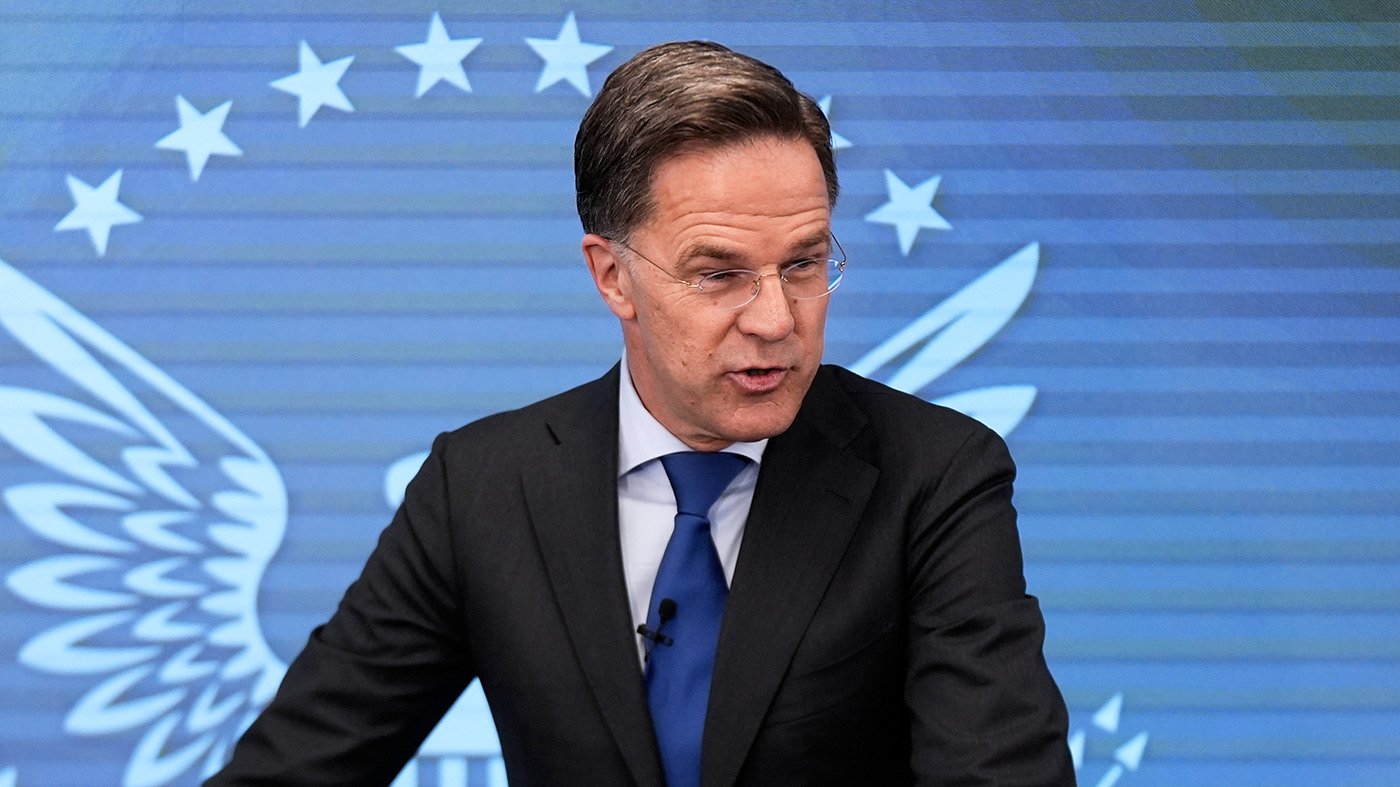
NATO Secretary-General Mark Rutte issued a stark warning Wednesday that the United States's confrontation with Iran risks creating a nuclear proliferation crisis akin to North Korea if diplomatic talks drag on too long. In an interview with CNN, Rutte argued that while European allies prefer a diplomatic resolution, there is a critical window to degrade Iran's nuclear and ballistic missile programs before it becomes impossible.
"We run the risk that this would lead into the North Korea moment," Rutte told host Jake Tapper. "You talk so long that at a certain moment, it's beyond the point where you can still get this done, because then they would get their hands on the nuclear capacity. That is basically a big risk for Europe. It is existential for Israel; it is existential for the Middle East."
Defending NATO's Role Amid Trump's Barrage
Rutte's comments came just hours after a lengthy meeting with President Trump at the White House, and were immediately followed by another volley of criticism from the President targeting the alliance. Despite cultivating a strong working relationship with Trump, Rutte was forced to respond to the President's claim that NATO members "were tested and they failed" in supporting U.S. actions against Iran.
The NATO chief acknowledged that "some" allies had not met their commitments, but emphasized that the majority had provided crucial support. "What the U.S. did to Iran — they could do because so many European countries lived up to those commitments," Rutte stated, framing NATO as "this platform of power projection for the United States."
Trump's frustration was palpable in a Truth Social post Wednesday evening, where he wrote, "NATO WASN'T THERE WHEN WE NEEDED THEM, AND THEY WON'T BE THERE IF WE NEED THEM AGAIN." He bizarrely referenced his past push to acquire Greenland, calling it a "big, poorly run, piece of ice!!!" This continued a pattern of the President threatening to withdraw from the alliance, a move that would require congressional approval. Rutte has previously managed to defuse such tensions, including during the Greenland controversy earlier this year.
Fragile Ceasefire and Regional Tensions
The exchange occurs against the backdrop of a precarious U.S.-Iran ceasefire, with talks led by Vice President Vance scheduled for Islamabad this weekend. The agreement is already fraying, with Tehran reopening and then closing the Strait of Hormuz within 24 hours, citing ongoing Israeli military actions against Hezbollah in Lebanon.
A fundamental dispute over the ceasefire's scope is fueling instability. Iran and Pakistani Prime Minister Shehbaz Sharif assert the agreement covers Lebanon, while the Trump administration insists it does not. Iran's parliamentary speaker accused the U.S. of violating key parts of a ten-point peace plan, prompting a characteristically blunt warning from Trump for Iran to comply "or else the 'Shootin Starts,' bigger and better, and stronger than anyone has ever seen before."
The regional conflict is having tangible economic consequences beyond geopolitics, contributing to volatility in jet fuel markets that is forcing airlines to adjust operations. Furthermore, analysts warn that prolonged instability could exacerbate broader economic headwinds, including a slowing U.S. economy.
Rutte's balancing act—supporting the strategic goal of countering Iran while defending NATO's cohesion against presidential broadsides—highlights the profound strain on the transatlantic alliance. His warning serves both as a justification for current U.S. military pressure and a caution that the international community may soon face a binary choice: accept a nuclear-armed Iran or confront it directly.