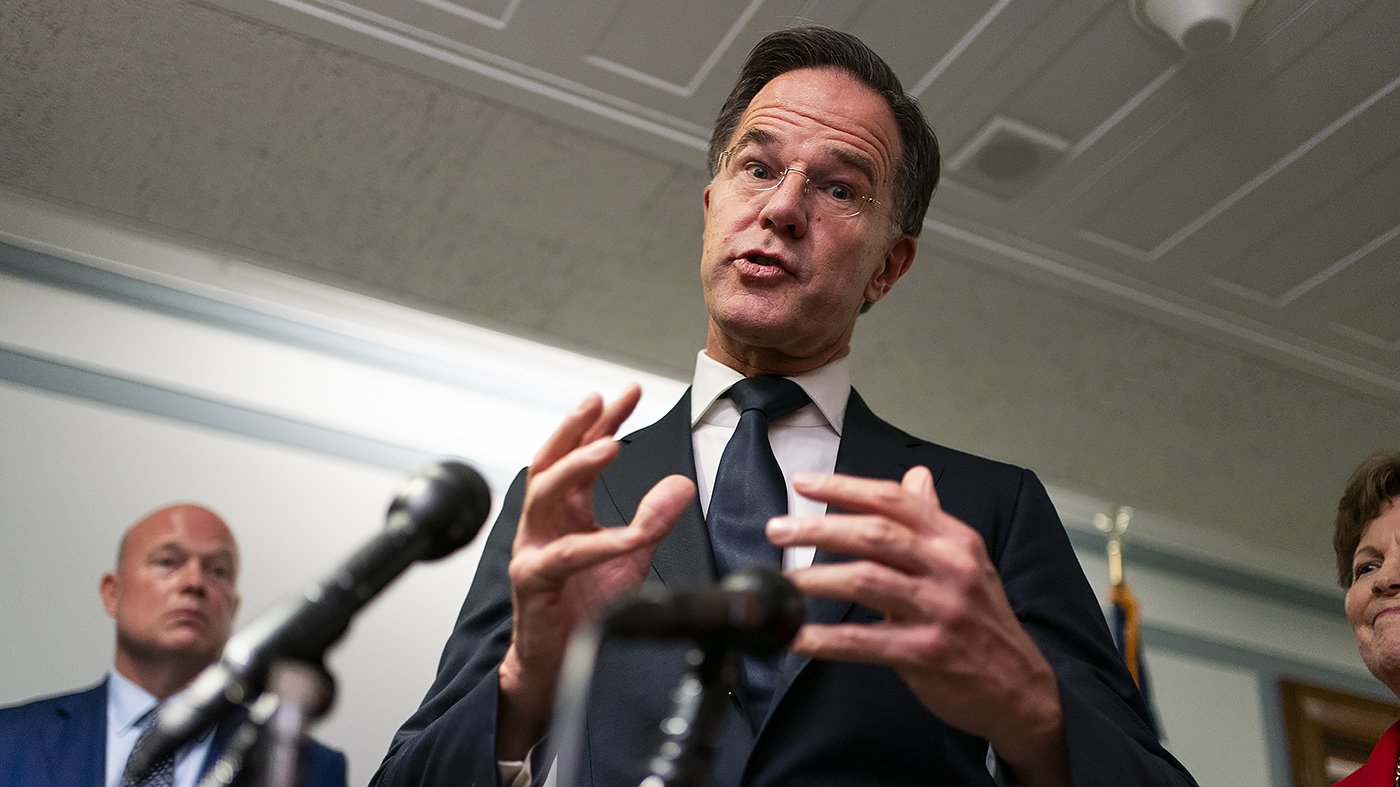
NATO Secretary-General Mark Rutte made a direct public appeal on Sunday for President Donald Trump to show patience with alliance members who have expressed caution about rapidly deploying military assets to reopen the strategically vital Strait of Hormuz. The request follows days of public frustration from the White House over what it perceives as European foot-dragging on a critical energy security issue.
"I understand the president's frustration that it takes some time, but again, I also ask for some understanding," Rutte stated during an interview on CBS's "Face the Nation." He explained that member nations "had to prepare for this, not knowing... about the initial attack on Iran, but now coming together to make sure that we can be able to secure the Strait of Hormuz." His comments reference the recent U.S.-Israeli military action against Iran, which European allies say they were not briefed on in advance.
Economic Stakes and Allied Condemnation
The geopolitical standoff carries immediate economic consequences. Iran's severe restriction of traffic through the chokepoint, which carries roughly one-fifth of the world's seaborne oil, has roiled global markets. Brent crude oil prices surged to $119 per barrel last week before settling near $106. This volatility has translated directly to U.S. gasoline pumps, where the national average price surpassed $3.94 per gallon on Sunday—a increase of more than one dollar in a single month.
In a joint statement last Thursday, the leaders of France, Germany, Italy, Japan, the Netherlands, and the United Kingdom condemned Iran's attacks on Gulf states and its closure of the strait. "We express our readiness to contribute to appropriate efforts to ensure safe passage through the Strait," the statement read, welcoming "the commitment of nations who are engaging in preparatory planning." Despite this declaration, the tangible commitment of European military forces has yet to materialize to Trump's satisfaction.
Trump's Escalating Rhetoric
The president responded to the allied statement with characteristic bluntness on his Truth Social platform. "Without the U.S.A., NATO IS A PAPER TIGER!" he wrote on Friday. He argued that after the U.S. had militarily "won" the conflict with minimal risk to allies, those same nations now "complain about the high oil prices they are forced to pay, but don’t want to help open the Strait of Hormuz, a simple military maneuver that is the single reason for the high oil prices." This outburst is part of a broader pattern of the Trump administration signaling potential de-escalation while simultaneously pressuring allies for greater burden-sharing.
Rutte, while acknowledging the delay, pushed back on the characterization of a fractured alliance. He asserted that NATO would "always come together" and that it was "only logical that European countries needed a couple of weeks" to coordinate a response, given they were not forewarned about the initial strikes. He emphasized that planning is actively underway, with 22 nations—both NATO members and non-members—now involved in discussions to address security in the passageway.
"What do we need? When do we need it? And where do we need it?" Rutte said, outlining the operational questions being worked through. "These three questions are now worked through to answer the president’s call, to make sure that we secure the free sailing through the Strait of Hormuz."
Broader Context of Iran Policy
The dispute over the Hormuz mission occurs against a complex backdrop of shifting U.S. policy toward Tehran. While demanding military action to secure the strait, Trump has also paused further strikes and extended diplomatic ultimatums, creating uncertainty about the administration's ultimate objectives. This mixed messaging has fueled skepticism among European capitals, which are wary of being drawn into an open-ended conflict and are grappling with the domestic political ramifications of a new Middle Eastern deployment.
The Secretary-General's televised plea for "understanding" underscores the delicate state of transatlantic relations. It highlights a fundamental tension between Washington's demand for swift, demonstrative allied action and the deliberate, consensus-based decision-making processes that define NATO. The outcome of this diplomatic maneuvering will not only affect global energy markets but also set a precedent for how the alliance manages future crises initiated by unilateral U.S. action.