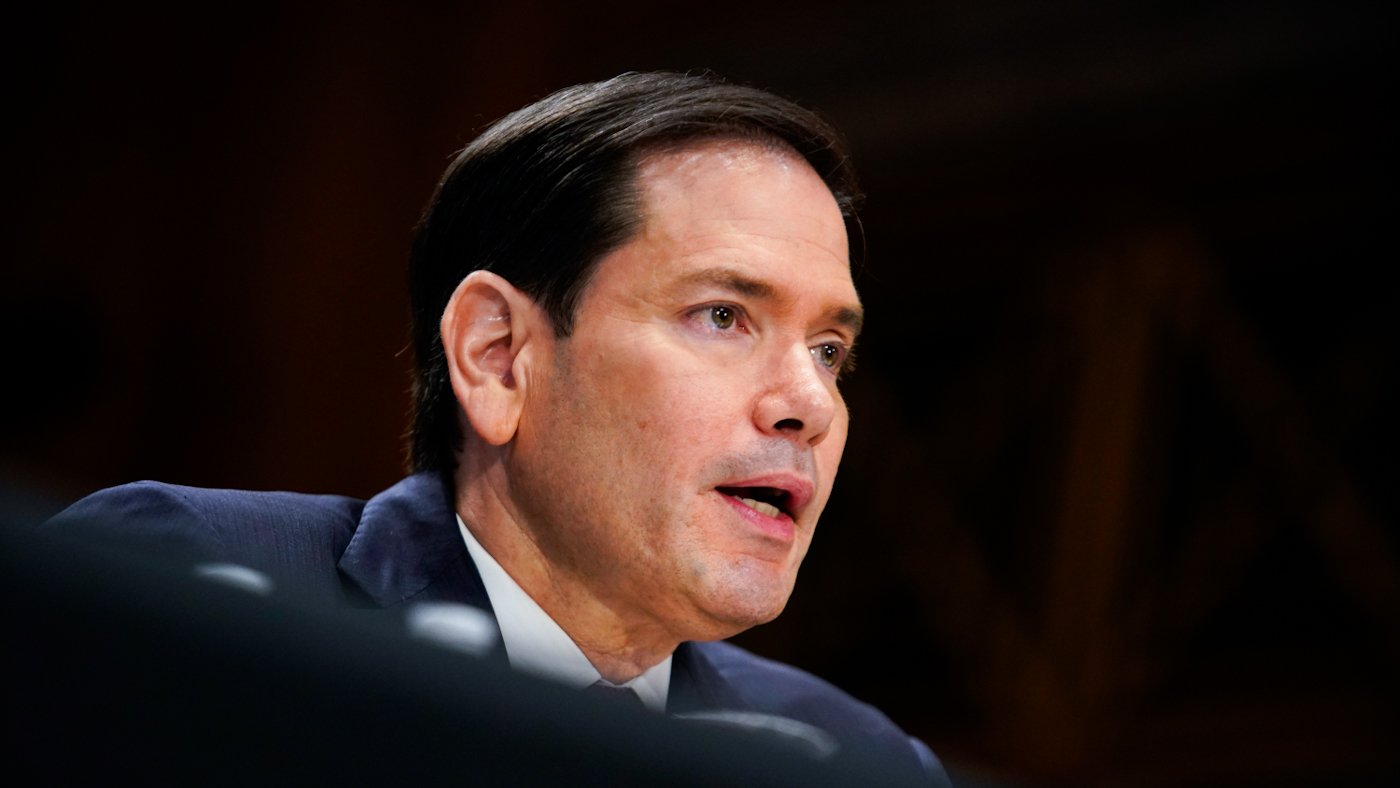
Secretary of State Marco Rubio found himself on the defensive Tuesday as Democrats on Capitol Hill pressed him on the Trump administration's cuts to global health programs, arguing they have hampered the response to a growing Ebola outbreak in several African nations.
During back-to-back budget hearings before the Senate Foreign Relations Committee and the House Appropriations Committee, Rubio fielded pointed questions about the administration's decision to shutter the U.S. Agency for International Development (USAID) and withdraw from the World Health Organization (WHO), which has led the global response to the outbreak.

Rep. Rosa DeLauro (D-Conn.) delivered a blistering critique, warning that the virus does not pause for bureaucratic reshuffling. “Ebola does not wait for bureaucratic reorganizations,” she said. “It spreads when surveillance systems are weakened, health workers are laid off, clinics lack protective equipment and communities lose the trusted partners who help detect and contain outbreaks before they become public health emergencies.”
The WHO declared the outbreak a global public health emergency in May, with over 500 suspected cases of the Ebola Bundibugyo virus reported in the Democratic Republic of Congo. The Trump administration's moves have drawn comparisons to the heated clashes Rubio has had with Democrats over foreign aid cuts in previous hearings.
Rubio countered that the State Department has contributed “well over” $200 million to U.N. partners for the response. He dismissed suggestions that the administration was scrambling, noting the outbreak began in a remote, conflict-ridden area. “This is not a scramble,” Rubio said. “This is something that broke out in a rural area of a war-torn country and was underreported for over a month, not because of anything other than the fact that it was in a rural area in a war-torn country that was highly unstable.”
DeLauro also accused the administration of blocking Americans exposed to Ebola from returning to specialized U.S. facilities. The administration has instead directed them to a facility in Kenya for a 21-day observation period. Rubio described it as an “observation post” and said those who test positive would be moved to treatment centers in Europe or possibly the U.S. This policy has sparked controversy, especially after a Kenyan court extended a suspension of the base, as reported in recent coverage of the legal challenges.
Rubio also revealed the administration is considering appointing a senior official to coordinate the response. “There are a couple people being considered,” he said. “I don’t want to use the term ‘Ebola czar,’ but someone with the qualifications to sort of serve full time in the coordination of the interagency.”
In the Senate hearing, Sen. Cory Booker (D-N.J.) pressed Rubio on the budget proposal, arguing it would make “even deeper cuts into the kind of things that could prevent the next outbreak.” Booker cited State Department personnel who said the U.S. is less prepared than before. Rubio disagreed, saying, “I don’t agree with that assessment. I don’t know who told you that at the State Department.”
The Centers for Disease Control and Prevention has temporarily barred non-U.S. passport holders who have been in affected countries within the last 21 days from entering the United States. The interagency task force meets daily, and the State Department runs a 24/7 response center, but Democrats remain skeptical about the administration's commitment to global health security.